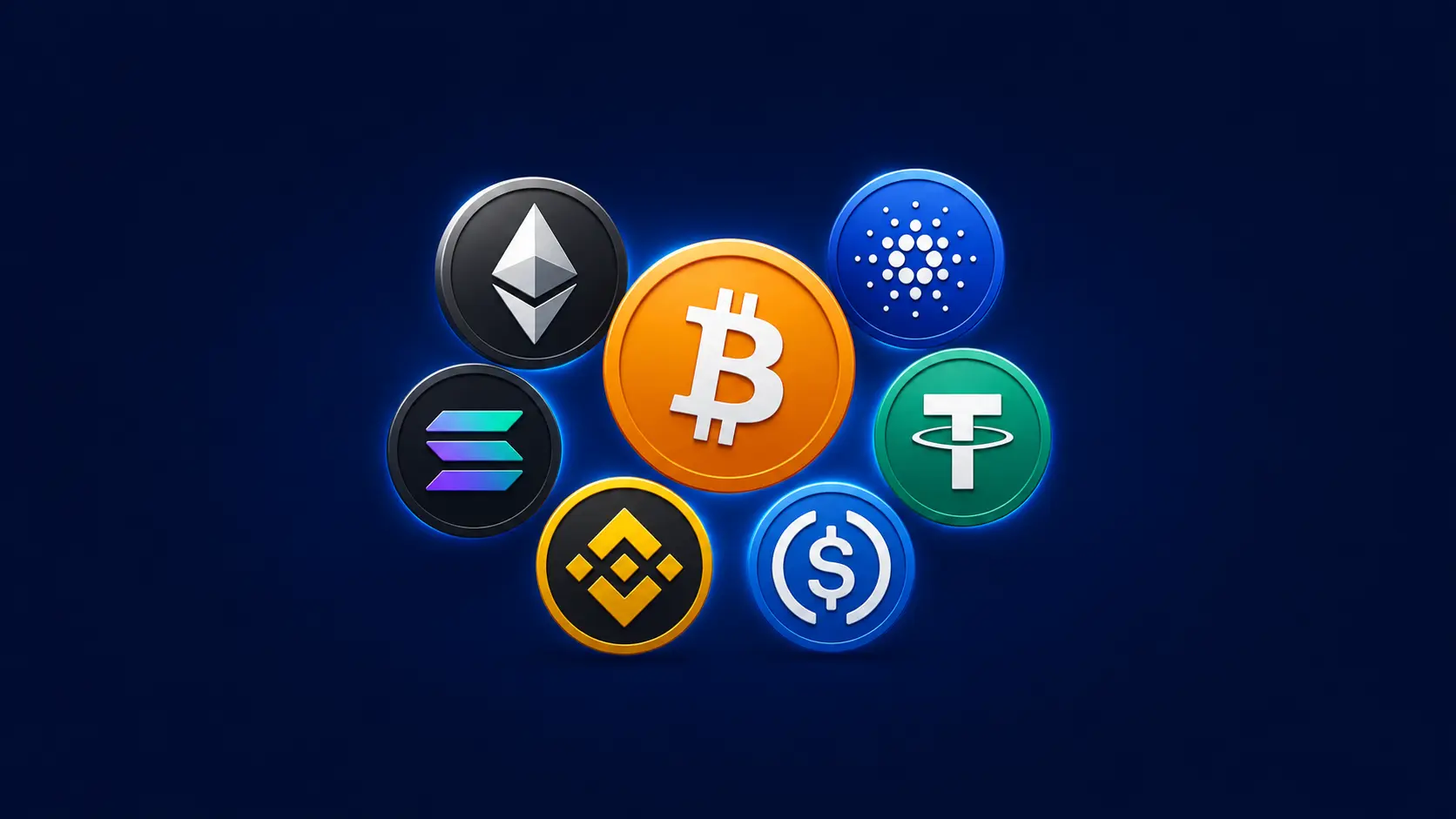
📘 Definition: How to Buy Cryptocurrency — Quick Answer
To buy cryptocurrency in 2026: (1) Choose a regulated exchange, (2) Create and verify your account with ID documents, (3) Enable two-factor authentication, (4) Deposit funds via bank transfer or card, (5) Select your cryptocurrency and place a buy order. The entire process takes 15–30 minutes for most major exchanges.
The most common question from crypto beginners is not "which coin should I buy?" — it is "how do I actually buy it?" The process is simpler than most people expect. You do not need technical knowledge, programming skills, or a large amount of money to get started.
This guide walks you through every step — from choosing a trustworthy exchange to storing your first cryptocurrency safely — in plain language. We also cover the most common mistakes beginners make and how to avoid them, so your first crypto purchase is both smooth and secure.
What You Will Learn
- How to choose a safe, regulated cryptocurrency exchange
- How to complete identity verification (KYC) quickly
- How to deposit money and place your first buy order
- Where to store your cryptocurrency safely after buying
- What fees to expect — and how to minimise them
- 7 mistakes beginners make when buying crypto for the first time
Step 1: Choose a Regulated Cryptocurrency Exchange
📘 Definition: Cryptocurrency Exchange
A cryptocurrency exchange is an online platform where you can buy, sell, and trade digital assets. It connects buyers and sellers and processes your transactions. Think of it as the equivalent of a stock brokerage — but for crypto. Choosing a safe, regulated exchange is the most important decision you will make before buying cryptocurrency.
Not all exchanges are equal. Some are regulated and transparent. Others have been hacked, collapsed, or operated fraudulently. The consequences of choosing the wrong exchange can mean losing all your funds — so take this step seriously.
What to Look for in a Crypto Exchange
| Criteria | What Good Looks Like | Red Flag |
|---|---|---|
| Regulation & compliance | Licensed in your country. Follows KYC/AML rules. Transparent ownership. | Anonymous team, no regulatory licence, "no ID required" promises |
| Security features | Cold storage for most funds. 2FA. Insurance fund. Regular audits. | History of hacks. No 2FA. Funds stored entirely online. |
| Trading fees | 0.1% or below for spot trading (maker/taker model) | Fees above 1.5% per transaction or hidden withdrawal charges |
| Supported currencies | 100+ coins including BTC, ETH, major altcoins | Fewer than 20 coins, only obscure tokens |
| Withdrawal methods | Bank transfer, card, multiple options available in your country | Limited to one payment method or high withdrawal minimums |
| Customer support | 24/7 live chat. Knowledgeable responses. Clear escalation path. | Email-only support with 5-day response times |
| Liquidity | High trading volume — your orders fill quickly at accurate prices | Low volume — wide bid-ask spreads, slow order fills |
Also see: Best Crypto Exchanges Reviewed — AAFX.IO Full Comparison
Step 2: Create Your Account
- Go to the exchange’s official website (always double-check the URL — bookmark it).
- Click "Register" or "Sign Up" and enter your email address and a strong, unique password.
- Verify your email address by clicking the confirmation link sent to your inbox.
- Complete any basic onboarding questions about your trading experience and goals.
💡 Pro Tip: Use a password manager (Bitwarden, 1Password) to generate a strong, unique password for your exchange account. Never reuse a password from another website. Your exchange account holds real money — treat its security accordingly.
Step 3: Verify Your Identity (KYC)
📘 Definition: KYC — Know Your Customer
KYC is the identity verification process required by regulated exchanges. It is a legal requirement designed to prevent money laundering, fraud, and terrorist financing. You will need to submit a government-issued ID and often a selfie or proof of address.
Identity verification is not optional on any properly regulated exchange — and that is a good thing. Exchanges with no verification requirements are either unregulated, operating illegally in many jurisdictions, or both.
What You Will Need for KYC Verification
- Government-issued photo ID — passport, national ID card, or driver’s licence
- Proof of address — utility bill, bank statement, or official letter dated within 3 months
- Selfie — some exchanges require a photo holding your ID to prevent identity theft
- Video verification — some exchanges use live video verification for faster approval
Approval time varies from a few minutes (automated AI verification) to 1-2 business days (manual review). Submit clear, well-lit photos to avoid rejection and delays.
Step 4: Secure Your Account
⚠️ Warning: Skipping account security is the #1 avoidable cause of crypto theft. Hackers do not need to break into the exchange — they just need your password and email access. Spend 5 minutes on security now and protect everything you deposit.
- Enable Two-Factor Authentication (2FA): Use an authenticator app (Google Authenticator, Authy) — NOT SMS-based 2FA, which can be SIM-swapped.
- Secure your email: Enable 2FA on your email account too. Your email is the master key to everything.
- Set up an anti-phishing code: Most major exchanges let you set a code that appears in all their emails to you — if the code is missing, the email is fake.
- Whitelist withdrawal addresses: Lock withdrawals to only go to wallets you have pre-approved.
- Never share your password or 2FA codes: No legitimate exchange employee will ever ask for these.
Step 5: Deposit Funds
Once your account is verified and secured, you are ready to add money. Here are the most common deposit methods:
| Deposit Method | Processing Time | Typical Fee | Best For |
|---|---|---|---|
| Bank Transfer (SEPA/SWIFT) | 1-3 business days | Low or free | Larger amounts, lower fees preferred |
| Debit/Credit Card | Near instant | 1.5%–3.5% | Speed matters, first-time buyers |
| PayPal/e-Wallet (varies by region) | Near instant | 1%–3% | Convenience |
| Stablecoin Transfer (USDT, USDC) | Minutes (blockchain) | Network gas fee only | Crypto-to-crypto users already holding stablecoins |
| P2P Trading | Minutes to hours | 0%–1% | Countries with limited banking access to exchanges |
⚠️ Warning: Start with a small deposit — $50 to $200 — until you are comfortable with the platform. Once you have completed a full cycle (deposit → buy → check portfolio → withdraw a small amount to verify withdrawal works), you can deposit larger amounts with confidence.
Step 6: Choose Which Cryptocurrency to Buy
With funds in your account, you now need to decide what to buy. This is where most beginners overthink things and make emotional decisions. Here is a structured framework:
The 5 Questions to Answer Before Buying Any Cryptocurrency
- What does this project actually do? (Not "what is its potential" — what does it do today?)
- Who is using it? (Developer activity, transaction volume, real-world adoption — not Twitter followers.)
- What is its market capitalisation? (Larger market cap = generally more stable, lower cap = higher risk/reward.)
- What is the trading volume? (Higher volume = easier to buy and sell at fair prices.)
- Why am I buying this, and when will I reassess? (A reason to buy and a plan to exit are both required.)
BTC vs ETH vs Altcoins — Quick Comparison for Beginners
| Cryptocurrency | 2026 Use Case | Risk Level | Good For | Market Cap Tier |
|---|---|---|---|---|
| Bitcoin (BTC) | Digital store of value, institutional adoption | Lower (relative to crypto) | Long-term holding, first purchase | Largest |
| Ethereum (ETH) | Smart contracts, DeFi, NFTs, staking | Medium | Tech exposure, long-term hold | 2nd Largest |
| Solana (SOL) | Fast transactions, DeFi, gaming | Medium-High | Higher growth potential | Top 10 |
| BNB | Exchange token, Binance ecosystem | Medium | Exchange discounts, ecosystem play | Top 10 |
| Small-Cap Altcoins | Varies — many speculative | Very High | Experienced traders only | Variable |
Step 7: Place Your First Buy Order
Ready to buy. Here is exactly what to do on most major exchanges:
- Go to the trading section or "Buy Crypto" section on your exchange.
- Select the cryptocurrency you want to buy (e.g., Bitcoin).
- Choose your order type: for beginners, a market order is simplest — it buys immediately at the current price.
- Enter the amount you want to spend (in your deposited currency) or the amount of crypto you want to receive.
- Review the order summary: check the price, fees, and total cost carefully.
- Click "Buy" or "Confirm Order." Your cryptocurrency will appear in your exchange wallet within seconds.
💡 Pro Tip: For your first purchase, try buying a very small amount — $20-$50. This lets you practice the full flow (buy → confirm → see it in your wallet) without significant financial exposure. Once you understand the process, you can increase your amounts.
Step 8: Store Your Cryptocurrency Safely
📘 Definition: Crypto Wallet
A crypto wallet is an application or device that stores the private keys needed to access and transact your cryptocurrency. Despite the name, it does not "hold" your crypto — your coins live on the blockchain. The wallet holds the keys that prove ownership.
| Storage Option | Security | Convenience | Best For | Examples |
|---|---|---|---|---|
| Exchange wallet (custodial) | Medium — depends on exchange security | Highest — ready to trade instantly | Short-term traders, small amounts | Binance, Coinbase |
| Software wallet (hot) | Good — you control keys | High — mobile or desktop app | Regular users moving crypto between platforms | MetaMask, Trust Wallet, Exodus |
| Hardware wallet (cold) | Highest — offline storage | Low — needs physical device | Long-term holders, large amounts | Ledger, Trezor |
| Paper wallet | Highest if stored securely | Very low — no digital access | Very long-term cold storage | Printed private key |
⚠️ Warning: Never store your wallet recovery phrase digitally — not in email, photos, cloud storage, or notes apps. Write it on paper and store it in two separate physical locations. Anyone who has your recovery phrase has full access to your cryptocurrency.
Understanding Crypto Fees — What You Will Actually Pay
| Fee Type | When It’s Charged | Typical Amount | How to Minimise |
|---|---|---|---|
| Trading fee (maker) | When you add liquidity with a limit order | 0.02%–0.1% | Use limit orders instead of market orders |
| Trading fee (taker) | When you remove liquidity with a market order | 0.05%–0.2% | Trade with higher volume for fee discounts |
| Deposit fee | When adding funds to exchange | Usually free (bank transfer) | Use bank transfer where available |
| Withdrawal fee (fiat) | When sending money back to bank | $0–$25 depending on method | Consolidate withdrawals to minimise trips |
| Network gas fee | When sending crypto on-chain | Varies — ETH can be $1–$50 | Transfer during low network congestion |
| Spread | Difference between buy and sell price | 0.1%–1% on major pairs | Use exchanges with tight spreads and high volume |
7 Mistakes Beginners Make When Buying Cryptocurrency
1. Buying Based on Price Per Coin
A coin priced at $0.001 is not "cheaper" than Bitcoin at $100,000. What matters is market capitalisation, not price per unit. A $0.001 coin with $500 billion circulating supply is more "expensive" in every meaningful sense than Bitcoin.
2. Skipping Security Setup
Enabling 2FA takes 3 minutes. Losing your entire crypto balance to a hacker because you skipped it is not recoverable. Do the security setup before you deposit.
3. Sending Crypto to the Wrong Address or Wrong Network
Sending Ethereum to a BSC address, or BTC to an ETH address, can result in permanent loss. Always triple-check the full wallet address before confirming. Send a test transaction of a tiny amount first when sending to a new address.
4. Investing Money You Cannot Afford to Lose
Crypto prices can drop 80-90% from peak in bear markets and stay there for years. If you invest your rent money and the market crashes, you cannot wait for recovery. Only invest genuinely discretionary capital.
5. Buying on Social Media Hype
By the time a coin is trending on social media, the early buyers are ready to sell to you. Research comes before buying, not after. If you cannot explain what the project does in two sentences, do not buy it.
6. Panic Selling at the Bottom
Sharp crypto drawdowns can trigger emotional decisions, but holding is not automatically safer: some assets never recover. Reassess the project, liquidity, time horizon and your original risk limit using current evidence. Never rely on hope or use money needed for essential expenses.
7. Ignoring Tax Implications
In most countries, selling, trading, or spending cryptocurrency is a taxable event. Keeping accurate records of every transaction from day one saves enormous headaches during tax season. Tools like Koinly or CoinTracker automate this.
Editorial Sources
- Investor.gov — Crypto Assets
- Investor.gov — Crypto Asset Custody Basics
- U.S. Federal Trade Commission — Cryptocurrency and Scams
- UK Financial Services Register — Verify a Firm
Risk warning: Crypto assets can be highly volatile, platform and custody protections vary, and a purchase can lose most or all of its value. This guide is educational and does not recommend any asset or platform.
Frequently Asked Questions — How to Buy Cryptocurrency
How do I buy cryptocurrency for the first time?
To buy cryptocurrency for the first time: (1) Choose a regulated exchange. (2) Create and verify your account with a government ID. (3) Enable two-factor authentication. (4) Deposit funds via bank transfer or debit card. (5) Select the cryptocurrency you want (BTC and ETH are widely traded examples, not recommendations). (6) Place a buy order. The process takes 15-30 minutes and your crypto appears in your exchange wallet immediately after purchase.
What is the safest place to buy cryptocurrency?
A lower-risk way to buy cryptocurrency is through an established, appropriately regulated exchange with a strong operating history and security practices (cold storage, 2FA, insurance funds), and full KYC compliance. Always verify a platform’s regulatory status before depositing funds. Avoid unknown platforms promising unusually high returns or no identity verification.
How much money do I need to start buying crypto?
Most major exchanges allow purchases starting from $10-$20. You do not need to buy a whole Bitcoin — you can buy any fraction. For learning purposes, starting with $50-$100 is enough to experience the full process without significant financial risk. Only invest money you can afford to lose entirely.
Do I need to verify my identity to buy crypto?
Yes. All properly regulated cryptocurrency exchanges require identity verification (KYC) before you can buy or withdraw significant amounts of cryptocurrency. This is a legal requirement in most countries and protects both you and the exchange from fraud. Any exchange allowing large purchases without ID verification is likely operating outside regulatory boundaries.
Should I keep my crypto on an exchange or in a wallet?
For small amounts you plan to trade actively: keeping crypto on an exchange is acceptable and convenient. For larger amounts or long-term holdings: transfer to a personal wallet where you control the private keys. The general rule is: "not your keys, not your coins." Exchange wallets depend on the exchange remaining solvent and secure.
What is the best cryptocurrency for beginners to buy?
Bitcoin (BTC) and Ethereum (ETH) are among the most widely researched and liquid crypto assets, but that does not make either one suitable for every beginner. Compare volatility, custody, fees and your ability to absorb a total loss before buying. Smaller tokens generally require deeper due diligence and can carry materially higher liquidity and project risk.
What fees do crypto exchanges charge?
Typical crypto exchange fees include: trading fees (0.05-0.2% per trade), deposit fees (usually free for bank transfers, 1.5-3.5% for card payments), withdrawal fees ($0-$25 depending on method), and blockchain network fees when transferring crypto on-chain. Always review the fee schedule of any exchange before depositing.
Is it safe to buy cryptocurrency in 2026?
Using an appropriately regulated, established exchange can reduce platform-related risk, but no exchange or custody arrangement is risk-free. The investment risk — meaning the possibility of your cryptocurrency losing value — remains significant. Crypto prices are highly volatile. The safety of the activity depends on your exchange choice, account security practices, and investment approach. Never invest money you cannot afford to lose.
Sources & Methodology
Primary-source standard: Market-moving facts should link to original data releases, regulator notices, company filings or official project announcements whenever available. Secondary reporting is used for additional context, not as a substitute for original evidence.
Page last reviewed: