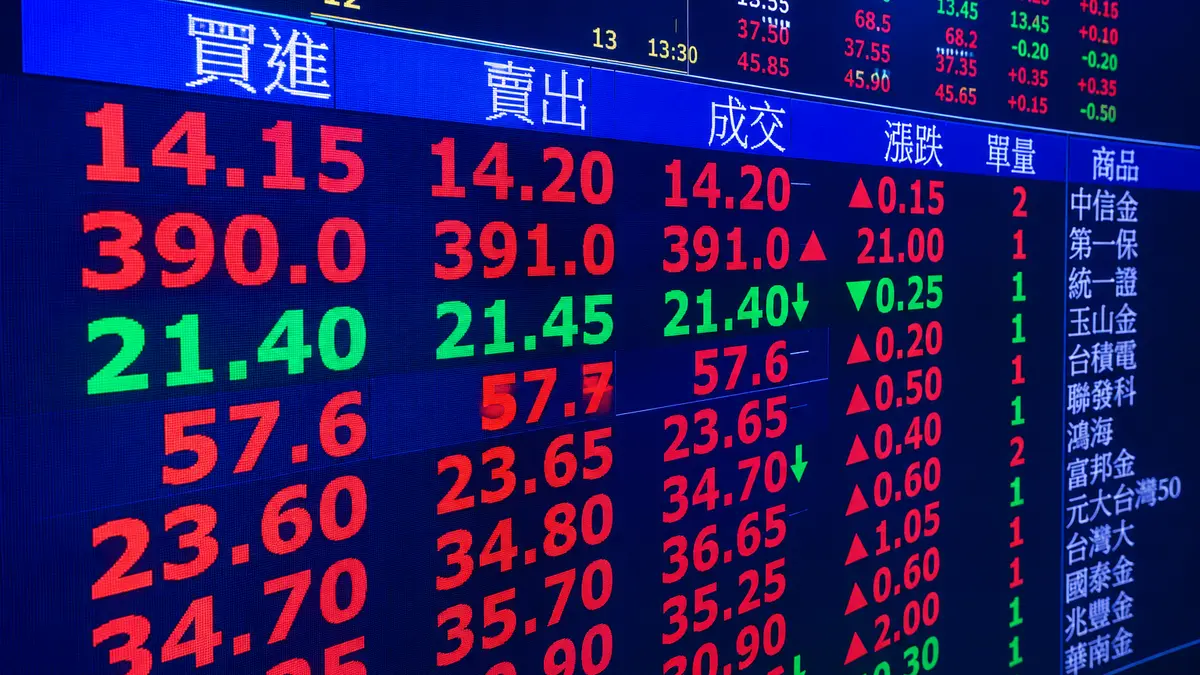
Asian equities advanced Monday as Japan’s Nikkei and Korea’s KOSPI rebounded with chipmakers after U.S. July payrolls fell 23,000, slashing September Fed rate-hike odds to ~43-44%. Oil rose on Hormuz uncertainty; Treasury Wine jumped on U.S. restructuring.
Asian equities mostly advanced on Monday, tracking Wall Street’s record close after a weaker-than-expected U.S. July jobs report sharply reduced odds of a near-term Federal Reserve rate hike. Japan’s Nikkei 225 and South Korea’s KOSPI led gains on a recovery in semiconductor shares, while higher oil prices amid lingering Strait of Hormuz uncertainty kept some investors cautious. Nasdaq 100 futures edged higher and S&P 500 futures were little changed in early trade.
Asian Markets Mixed as Nikkei, KOSPI Rebound on Chip Recovery; Australia Slips Amid Oil Gains
Japan’s Nikkei 225 climbed between roughly 1.3% and 2% (one early reading showed it up 2% near 66,931), while the broader TOPIX gained about 0.4%. Semiconductor-related names recovered after a weak prior week, with Kioxia, TDK, Sony and others advancing more than 1% in some cases.
South Korea’s KOSPI rose about 0.4–1.5% (after advancing over 2% earlier), supported by SK Hynix (up more than 1.5%) and Samsung Electronics (up about 0.4%).
Hong Kong’s Hang Seng gained around 0.5–0.7%. Mainland Chinese markets were mixed: the Shanghai Composite rose roughly 0.4–0.5% in some reports, while the CSI 300 slipped modestly. Chinese tech was mixed, with Alibaba advancing more than 2% and Cambricon Technologies falling more than 5%.
Australia’s S&P/ASX 200 fell about 0.5%, though lithium stocks outperformed (European Lithium up nearly 6%, Global Lithium Resources more than 5%). Treasury Wine Estates jumped as much as 7.9% (reaching its highest level since early December 2025) after announcing a major U.S. restructuring that includes an additional post-tax charge of about A$558 million (roughly US$395 million) for asset and brand write-downs plus inventory actions to address excess supply.
India’s Nifty 50 futures pointed lower by about 0.3%. Singapore’s market was closed for the National Day holiday.
Oil prices strengthened, with Brent crude rising about 1% toward $84.50 a barrel and WTI near $78.80, as investors reassessed prospects for reopening the Strait of Hormuz.
Weak U.S. Jobs Data Slashes Fed Hike Odds, Boosts Risk Assets Despite Hormuz Oil Concerns
The U.S. Bureau of Labor Statistics reported that employers cut 23,000 nonfarm payrolls in July—well below the roughly 80,000 gain economists had expected. Hiring figures for May and June were revised lower by a combined 103,000 jobs. The unemployment rate edged down to 4.1%, though labor-force participation also declined.
The softer data pushed market-implied odds of a September Fed rate hike down to about 43–44%, from roughly 64–67% a week earlier. Lower expected policy rates supported risk assets, especially growth-oriented tech and chip stocks that had sold off amid questions about AI valuations and sustainability of the prior rally. Wall Street’s record closes on Friday for the S&P 500 and Nasdaq provided the immediate cue for Asia.
Offsetting the positive sentiment was renewed caution over oil supply: Iran said a deal with Oman to define new shipping lanes was in its final stages but maintained that the Strait of Hormuz would reopen only after the U.S. met additional conditions.
Chip Rebound, Falling Yields and Hormuz Tensions Shape Asian Market Backdrop
Asian chip stocks had endured a bruising stretch as investors reassessed lofty AI-driven valuations and the durability of semiconductor demand. The rebound on Monday reflected both the shift in U.S. rate expectations and some bargain-hunting.
Treasury yields fell sharply on the jobs data, with the two-year yield recording its steepest weekly decline since May in some accounts, while the dollar eased toward multi-month lows at points, offering potential support for Asian currencies. The yen traded near 157.90–158.25 per dollar in early Asian dealing.
Geopolitically, the Strait of Hormuz—through which a significant share of global oil has historically flowed—remains a focal point after earlier disruptions. Higher energy prices add complexity to the inflation outlook just ahead of key U.S. data.
Focus Shifts to U.S. CPI, AI Earnings and Hormuz Developments This Week
Markets will closely watch Wednesday’s U.S. July consumer price index report. Economists expect headline inflation to rise 0.1% and core inflation (excluding food and energy) to increase 0.2%. A hotter-than-expected reading could revive September rate-hike expectations.
A lighter U.S. earnings slate this week, including results from Applied Materials, Cisco and CoreWeave, will provide fresh signals on the AI investment cycle. Ongoing developments around the Strait of Hormuz and any further comments from Iranian or U.S. officials will also influence energy prices and broader risk sentiment.
Sources & Methodology
Primary-source standard: Market-moving facts should link to original data releases, regulator notices, company filings or official project announcements whenever available. Secondary reporting is used for additional context, not as a substitute for original evidence.
Page last reviewed: