Nvidia reported fiscal second-quarter 2027 revenue of $96.2 billion, more than doubling year-over-year and beating estimates, powered by explosive demand for AI chips. Data center sales hit $89.0 billion, up 117%. The company guided third-quarter revenue to $108 billion ±2% and, in a rare long-term outlook, forecast approximately 70% revenue growth for fiscal 2028—well above Wall Street’s roughly 44% consensus—sending shares higher in after-hours trading.
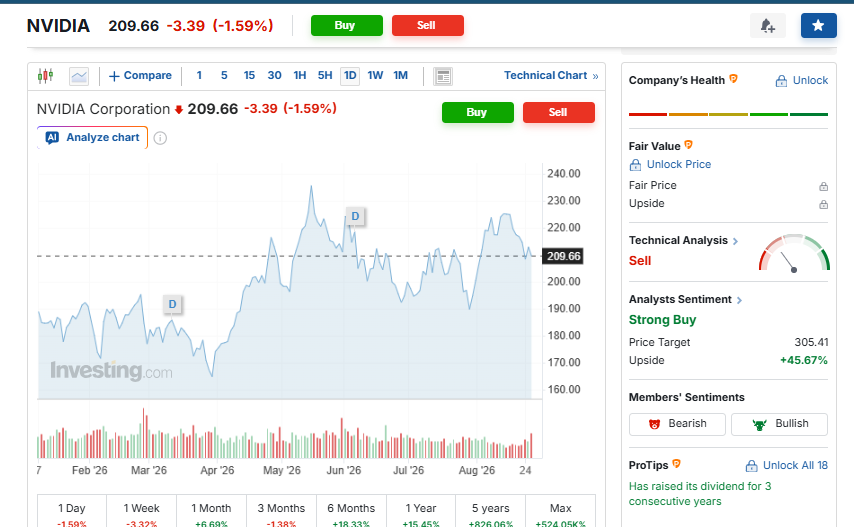
Nvidia Q2: $96.2B Revenue (+106%), Guides 70% FY28 Growth
For the quarter ended July 26, 2026, Nvidia posted GAAP and non-GAAP revenue of $96.221 billion, up 106% from $46.743 billion a year earlier and 18% sequentially from $81.615 billion. Non-GAAP diluted EPS reached $2.22 (vs. consensus around $2.08–$2.10); GAAP diluted EPS was $2.46. GAAP net income climbed 126% to $59.688 billion; non-GAAP net income was $53.954 billion. Gross margin held at 75.0% (GAAP and non-GAAP), up about 2.5–2.6 points year-over-year.
Data center revenue, the core of the business, surged 117% year-over-year to $89.023 billion (about 92% of total sales) and rose 18% sequentially, driven by the ramp of Blackwell Ultra infrastructure. Within data center: Hyperscale revenue was $48.710 billion (up 13% sequentially, more than doubling year-over-year); AI Clouds, Industrial & Enterprise (ACIE) revenue hit $40.313 billion (up 25% sequentially and 138% year-over-year). Edge Computing contributed $7.198 billion, up 27% year-over-year. Operating income reached $63.734 billion GAAP (up 124%). Free cash flow was $21.3 billion. Supply and capacity commitments rose sharply to $279 billion.
CFO Colette Kress stated Nvidia expects fiscal 2028 revenue growth of approximately 70%, a supply-constrained outlook; CEO Jensen Huang noted demand is “much greater than 70%” and that supply limits delivery to that level. Huang described AI as having “reached its inflection point,” with “tokens productive and profitable” and “compute is revenue.” The company also announced an expanded partnership with Amazon Web Services to deploy an additional 2 million Nvidia GPUs (Blackwell Ultra, Rubin, and Rubin Ultra) across AWS’s global infrastructure in 2027–2028, on top of a prior 1 million commitment, plus deeper collaboration on CPUs, networking, open models, data processing, robotics, and U.S. government AI factories.
For the third quarter of fiscal 2027, Nvidia guided revenue to $108.0 billion ±2% (above consensus estimates near $104–$105 billion), with GAAP and non-GAAP gross margins of 74.0% ±50 basis points. The outlook assumes no data-center compute revenue from China. Operating expenses are expected at approximately $9.2 billion GAAP / $9.0 billion non-GAAP. Management flagged longer-term margin pressure from rising memory prices, with gross margins expected to bottom in the 71–72% range in the January quarter before settling around 72–73% in fiscal 2028 as price increases take effect.
Nvidia Shares Jump Up to 5.6% After-Hours on 70% FY28 Growth Outlook
Shares initially dipped or were little changed after the release amid high expectations and the softer near-term margin guide, but reversed sharply higher—rising as much as about 4–5.6% in after-hours trading—once the fiscal 2028 70% growth outlook and Amazon partnership details emerged on the earnings call. This marked a positive earnings reaction after several quarters of more muted responses. The long-term guidance, far exceeding the ~44% Wall Street consensus, reassured investors that AI infrastructure demand remains robust and broadening beyond hyperscalers into ACIE (sovereign AI, neoclouds, startups, enterprises). Analysts and investors highlighted the diversification (top customers’ share declining) and the signal that hyperscaler and enterprise capex continues at massive scale.
AI Capex Scrutiny Intensifies as Hyperscalers Eye $1.3T Spend, Nvidia Faces Margin and Concentration Pressures
Nvidia’s results arrive amid intense scrutiny of the AI trade. Hyperscalers (Microsoft, Meta, Alphabet, Amazon and others) have outlined enormous capital expenditure plans—collectively hundreds of billions of dollars annually—to build AI infrastructure, with some estimates of top-five hyperscaler capex rising toward $1.3 trillion in the following year. Concerns about returns on that spending and potential overbuild had pressured semiconductor stocks earlier, including a sharp drop in the Philadelphia Semiconductor Index. Nvidia remains the dominant supplier of AI accelerators; its Blackwell architecture (and upcoming Vera Rubin) underpins much of the current buildout. The company has also faced questions about customer concentration, financing arrangements with AI firms, and geopolitical limits on China sales (explicitly excluded from the current guide). Rising high-bandwidth memory costs, driven by the same AI demand surge, are pressuring near-term margins even as they signal scarcity and strong underlying demand. Diversification into ACIE is a key theme, with that segment already contributing roughly half of data-center revenue in some commentary and expected to grow faster.
What’s Next: $108B Q3 Guide, Margin Trough, Vera Rubin Ramp & ACIE Growth in Focus
Investors will watch sequential delivery against the $108 billion Q3 guide, the trajectory of gross margins through the expected trough, progress on unlocking additional supply (Huang emphasized ongoing work with the supply chain), the ramp of Vera Rubin (expected to contribute meaningfully), and further evidence of ACIE/non-hyperscaler growth. Broader hyperscaler earnings and capex updates, memory pricing trends, any China-related developments, and the pace of AI application monetization will also influence sentiment. Nvidia continues to invest heavily in capacity and ecosystem partnerships while returning capital to shareholders (record returns noted in the period) and paying a quarterly dividend of $0.25 per share.
Sources & Methodology
Primary-source standard: Market-moving facts should link to original data releases, regulator notices, company filings or official project announcements whenever available. Secondary reporting is used for additional context, not as a substitute for original evidence.
Page last reviewed: