
Shares of Alnylam Pharmaceuticals fell nearly 4.9% in pre-open trading on Friday as the European Society of Cardiology Congress 2026 opened in Munich, with the full dataset from AstraZeneca and Ionis’ Phase 3 CARDIO-TTRansform trial of Wainua (eplontersen) formally presented in the opening Hot Line session. The detailed results reinforced the earlier top-line failure of the gene-silencing drug in ATTR cardiomyopathy and raised questions about the broader RNA-silencing class, including Alnylam’s Amvuttra (vutrisiran). The decline came alongside a Wells Fargo price-target cut and lingering pressure from July’s guidance reduction.
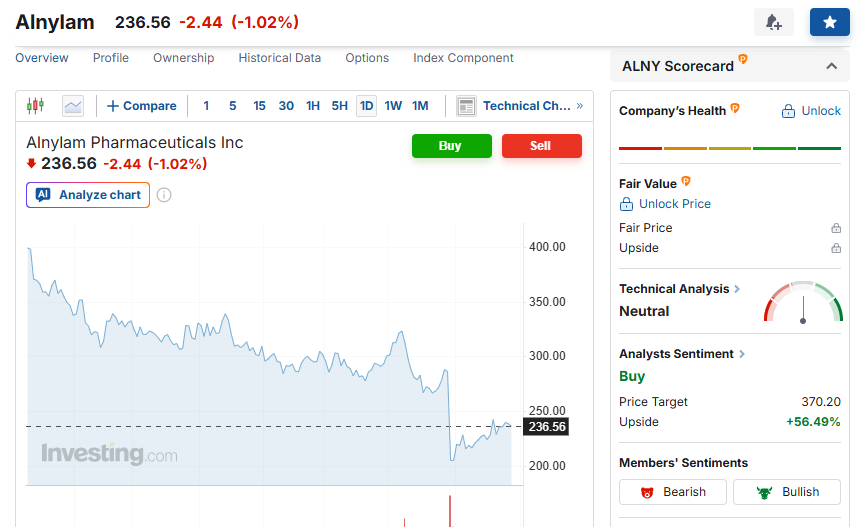
Alnylam Shares Pressured as Full ESC Data Confirm Wainua Failure in ATTR-CM, Wells Fargo Cuts Target to $256
- The CARDIO-TTRansform trial, the largest ever in ATTR-CM with 1,432 patients across 130 sites in 20 countries, did not meet its primary composite endpoint of cardiovascular mortality and recurrent cardiovascular events through Week 140 versus placebo.
- 57% of patients in each arm were already on a TTR stabilizer at baseline, with another 24% starting one during the trial. No incremental benefit was seen when eplontersen was added to stabilizer therapy.
- A pre-specified monotherapy subgroup showed a nominally significant hazard ratio of 0.71 on the primary endpoint. Secondary, imaging, and biomarker analyses favored eplontersen overall, with large sustained TTR reductions, and the drug was well tolerated. Full data were presented Friday morning in Munich’s main auditorium.
- Wells Fargo cut its Alnylam price target to $256 from $316 while maintaining an Equal Weight rating, citing unfavorable risk/reward into ESC and lower out-year estimates.
- On July 30, Alnylam lowered 2026 TTR net product revenue guidance to $4.2–$4.5 billion (from $4.4–$4.7 billion), a $200 million midpoint reduction, due to normalization of second-line ATTR-CM volumes after initial pent-up demand. Total net product revenue guidance was revised to $4.7–$5.1 billion. Q2 TTR revenues reached about $1.03 billion, with Amvuttra contributing $1.01 billion (up 106% year-over-year). The guidance cut triggered a roughly 28% single-day stock drop.
- BridgeBio’s stabilizer Attruby continues gaining first-line traction; the company has guided to more than $1 billion in worldwide Attruby/Beyonttra sales in 2026, with Q2 U.S. sales of $222.4 million.
- Alnylam’s 52-week range stands at $197.81–$495.55; recent closes have hovered near $235–$240, with market cap around $32 billion.
ESC Wainua Data Casts Shadow Over RNA Silencers, Compounding Pressure on Alnylam
Investors viewed the detailed CARDIO-TTRansform data as casting a shadow over the entire RNA-silencing therapeutic class. Alnylam’s Amvuttra uses a mechanistically similar approach to silence transthyretin production in the liver. With stabilizers now the dominant standard of care, the lack of clear incremental cardiovascular benefit from adding a silencer raised questions about whether silencers can deliver meaningful outcomes in patients already receiving stabilizers.
The Wells Fargo cut and unresolved overhang from the July guidance reduction (which erased substantial market value) compounded the pressure. Broader markets offered no cover: the S&P 500 was essentially flat, the Dow Jones marginally positive, and the Nasdaq off about 0.3%. The presentation is seen as a pivotal moment that may further shift physician and investor sentiment toward stabilizer therapies.
ATTR-CM Market Evolves as Stabilizers Dominate and Alnylam Defends Silencer Franchise
ATTR-CM is a progressive, under-recognized cause of heart failure caused by misfolded transthyretin protein depositing in the heart. The treatment landscape has evolved rapidly: Pfizer’s tafamidis (Vyndaqel/Vyndamax) established stabilizers as foundational therapy, followed by BridgeBio’s Attruby (acoramidis) and Alnylam’s Amvuttra, which received ATTR-CM approval in 2025 after positive HELIOS-B results. HELIOS-B showed consistent benefit with or without background stabilizer. Alnylam has positioned Amvuttra as a foundational therapy, with first-line starts driving the majority of category growth and high adherence.
However, the company has acknowledged that second-line demand normalized after an early launch period that benefited from pent-up demand from patients progressing on stabilizers. Analyst targets have been reduced across the board since the guidance cut (examples include Oppenheimer to $350 from $500, others to the $300–$375 range), though many maintain Buy or Outperform ratings with consensus targets still implying upside. Alnylam continues to present supportive Amvuttra data at ESC, including HELIOS-B analyses in patients on background stabilizers, and remains confident in its next-generation silencer nucresiran (TRITON-CM outcomes trial ongoing, potential 2030 launch).
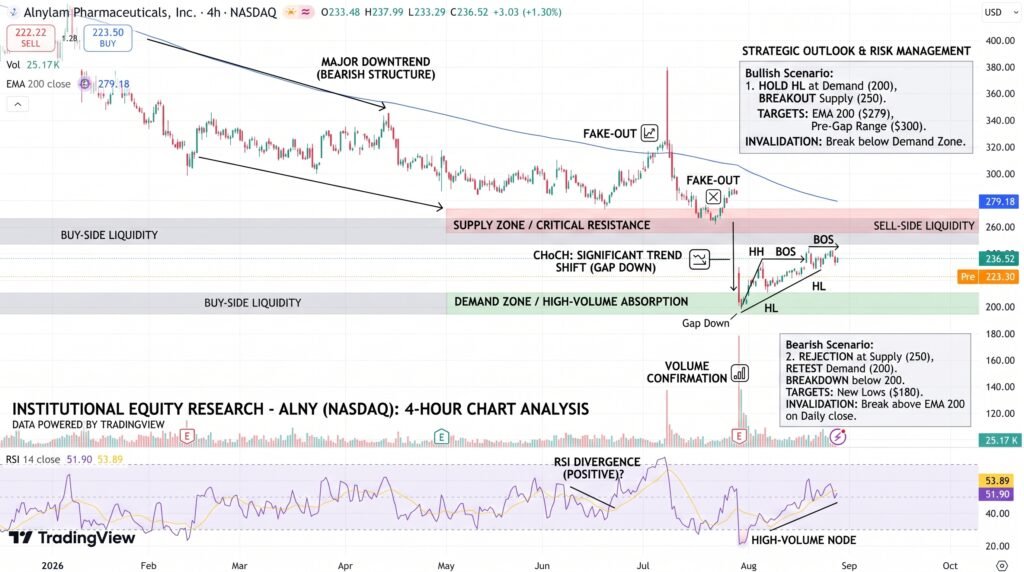
What’s Next: Scrutiny of Full ESC Data and Path Forward for Silencers in ATTR-CM
Investors and clinicians will scrutinize the full CARDIO-TTRansform subgroup, biomarker, and imaging details for clues on knockdown depth, patient selection, and combination potential. Alnylam will watch for any implications for TRITON-CM design or positioning of Amvuttra and nucresiran. Further ESC presentations from Alnylam and competitors, real-world evidence, and evolving first-line share data for Attruby versus silencers will shape near-term sentiment. The next major Alnylam catalyst is Q3 results (expected late October). Longer term, the ATTR-CM market remains large and growing as diagnosis rates rise, but the balance between stabilizers and silencers—and the viability of combination therapy—will be closely watched.
Sources & Methodology
Primary-source standard: Market-moving facts should link to original data releases, regulator notices, company filings or official project announcements whenever available. Secondary reporting is used for additional context, not as a substitute for original evidence.
Page last reviewed: