
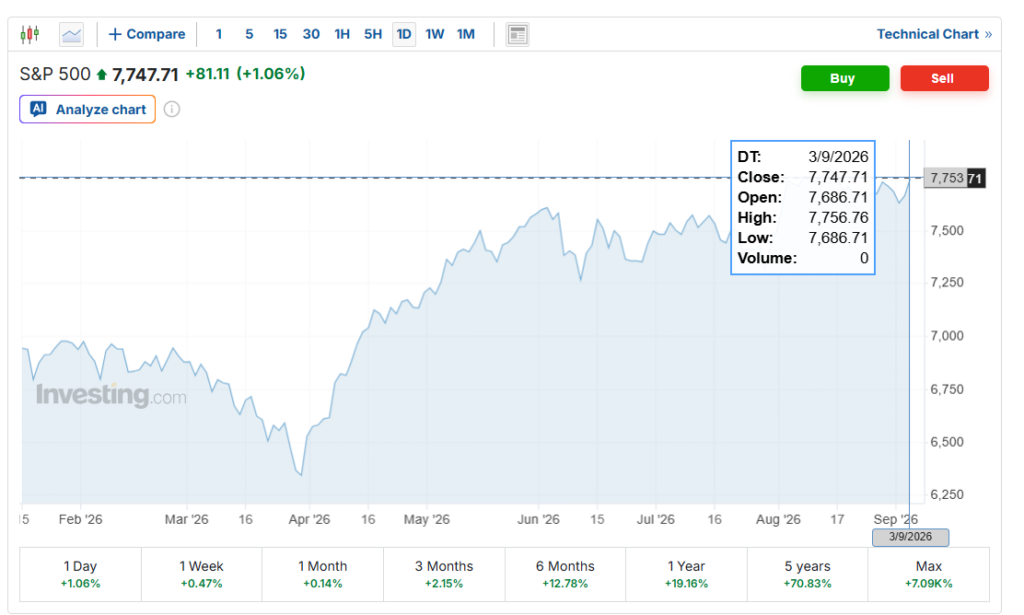
U.S. stock index futures held steady Friday, September 4, as investors awaited the August jobs report due at 8:30 a.m. ET, the data set to shape whether the Federal Reserve raises interest rates at its Sept. 15–16 meeting. S&P 500 futures slipped to 7,752.25 points, Nasdaq 100 futures eased 0.07% to 29,503.50, and Dow Jones futures held flat at 53,737.0. The pause follows a volatile week that still leaves the S&P 500 up 0.5%, the Nasdaq up 0.7% and the Dow up 0.2%.
Iran Conflict Drives Oil Above $90
Direct military exchanges between U.S. forces and Iran near the Strait of Hormuz — a waterway that carries roughly a quarter of the world’s seaborne crude trade, per the Congressional Research Service — pushed energy prices sharply higher this week. Brent crude touched roughly $96 a barrel and WTI crude traded near $92, with both benchmarks gaining more than 7% over five sessions, according to CNBC. U.S. Energy Secretary Chris Wright said over 17 million barrels transited Hormuz on Monday under military escort, a wartime record. The fighting also drove a selloff in government debt, pushing the 10-year Treasury yield to 4.81%, its highest since October 2023, and the 30-year yield above 5.25%, compressing valuations across richly priced technology stocks.
Waller Comments Shift Rate Odds
Sentiment reversed Thursday: the S&P 500 climbed 1.06% to move within sight of its August record, the Nasdaq Composite surged 1.4%, and the Dow added 1.18%. The rally followed remarks from Fed Governor Christopher Waller, who said recent data points to early signs of disinflation and that he would back holding rates steady at the Sept. 15–16 meeting if that trend holds through the next two weeks. New York Fed President John Williams offered a similarly cautious view, noting inflation continues to ease as tariff effects fade. Both followed a hawkish Jackson Hole speech from Fed Chair Kevin Warsh, who signaled the central bank still had work to do on inflation. Markets adjusted quickly:
- September hike odds fell to roughly 50%, down from 63%–68% earlier in the week, per CME FedWatch data
- Treasury yields eased from multi-year highs, easing pressure on mega-cap growth and semiconductor stocks
Payrolls Report Is a Decisive Test
Friday’s nonfarm payrolls report for August is the last major data point before next week’s consumer price index release. Economists surveyed by Dow Jones expect a gain of roughly 56,000 jobs, with unemployment holding at 4.1%.
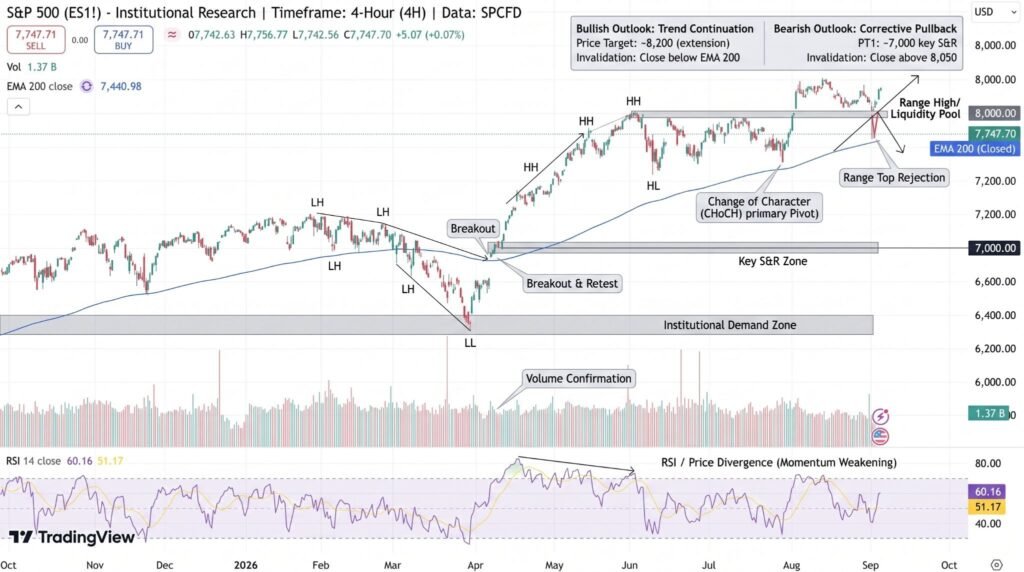
That would mark a rebound from July, when payrolls unexpectedly fell by 23,000 and prior months were revised down by a combined 103,000 jobs, according to the Bureau of Labor Statistics. Private-sector hiring also slowed in August, per ADP data. A soft print would support Waller’s case for a pause; a hotter-than-expected number could revive hike bets and test this week’s gains.
Conclusion
Friday’s jobs report is the single data point standing between Wall Street and clarity on the Fed’s next move: a soft print reinforces Waller’s disinflation argument, keeps a September hold in reach, and gives the S&P 500 room to close in on its August record, while a stronger-than-expected number revives the roughly 50% odds of a hike, pressures Treasury yields higher still, and puts this week’s 0.5%–0.7% gains at risk — all against a backdrop of oil near $92 a barrel and a live military conflict along the Strait of Hormuz, meaning the Fed is weighing a labor-market signal against an energy shock it does not control, with the Sept. 15–16 decision now less than two weeks away and this single report positioned to reset the market’s direction for the rest of September.
Sources & Methodology
Primary-source standard: Market-moving facts should link to original data releases, regulator notices, company filings or official project announcements whenever available. Secondary reporting is used for additional context, not as a substitute for original evidence.
Page last reviewed: