
European shares edged lower Friday ahead of the U.S. August jobs report, while Volkswagen surged after its supervisory board approved the biggest restructuring in the automaker’s 89-year history. The pan-European STOXX 600 fell 0.2% to 648.08 points, Germany’s DAX slipped 0.1%, London’s FTSE 100 dropped 0.2%, and France’s CAC 40 eased 0.2%. Volkswagen jumped 5.7%, the DAX’s top gainer, after its board struck a turnaround deal averting a clash with unions and shareholder Lower Saxony.
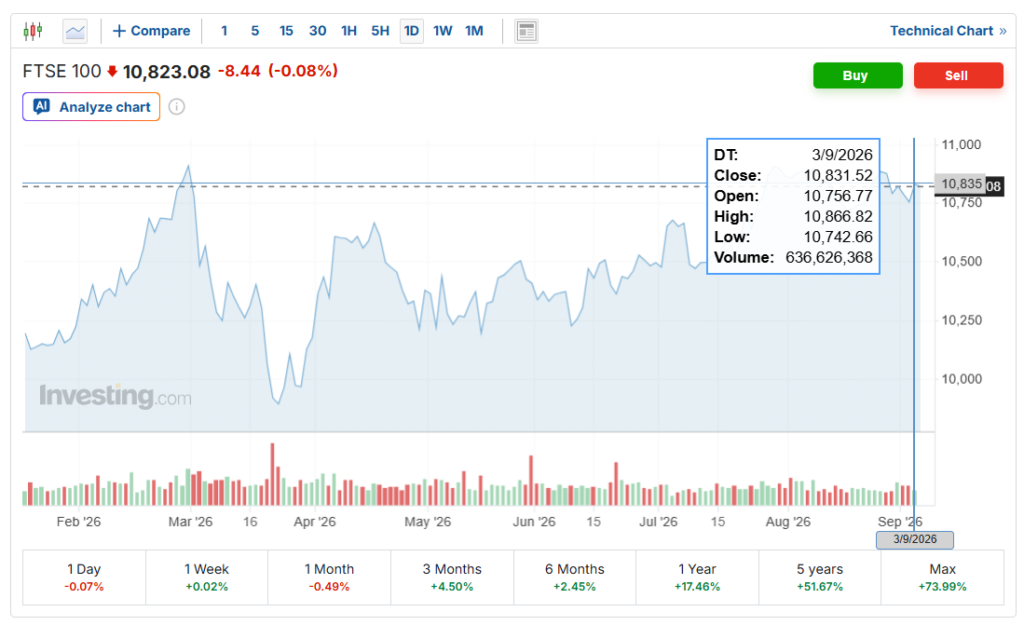
Source: investing.com
Volkswagen Cuts 50,000 More Jobs
Volkswagen’s supervisory board unanimously approved a “Future Plan” late Thursday that will cut roughly 50,000 additional positions worldwide, bringing total planned reductions to about 100,000, according to Reuters. The deal, the most extensive restructuring in the company’s history, leaves the future of four German plants unresolved and simplifies Volkswagen’s corporate structure while limiting the supervisory board’s influence over management decisions. The agreement heads off a threatened shareholder vote that management had considered calling to bypass opposition from unions and Lower Saxony, which together hold a board majority. The broader European autos index climbed 4.3% on the news, though Volkswagen shares remain down more than 20% for the year, having lost ground to U.S. tariffs, a stagnant home market, and aggressive Chinese competitors.
Waller Remarks Cool Bank Stocks
European banking stocks fell 0.7%, giving back some recent gains after Federal Reserve Governor Christopher Waller signaled Thursday that he could support holding U.S. rates steady in September if inflation data keeps cooling. “His comments just helped the markets rein in Federal Reserve rate hike expectations,” said Fiona Cincotta, senior market analyst at City Index. Investors are now awaiting the U.S. nonfarm payrolls report, due later Friday, for further direction on the Fed’s next move. The moves point to two distinct dynamics playing out at once:
- European bank stocks pared recent gains on reduced expectations for a tighter U.S. rate path
- The euro zone’s own rate outlook is moving the opposite direction, with tightening now expected into December
Oil Gains Fuel ECB Hike Bets
Brent crude traded around $96 a barrel, on track for its steepest weekly gain since mid-July, as the conflict between U.S. forces and Iran kept pressure on Middle East supply routes. Because the euro zone imports the bulk of its energy, the region’s economies are especially exposed to the rally. J.P. Morgan and BNP Paribas now expect the European Central Bank to deliver a third consecutive rate increase in December, lifting the deposit rate to 2.75%, after what JPMorgan calls a “near-certain” second hike to 2.5% at next week’s meeting. Both banks had previously expected the ECB’s tightening cycle to end without a December move, underscoring how quickly the energy shock has reshaped the rate outlook.
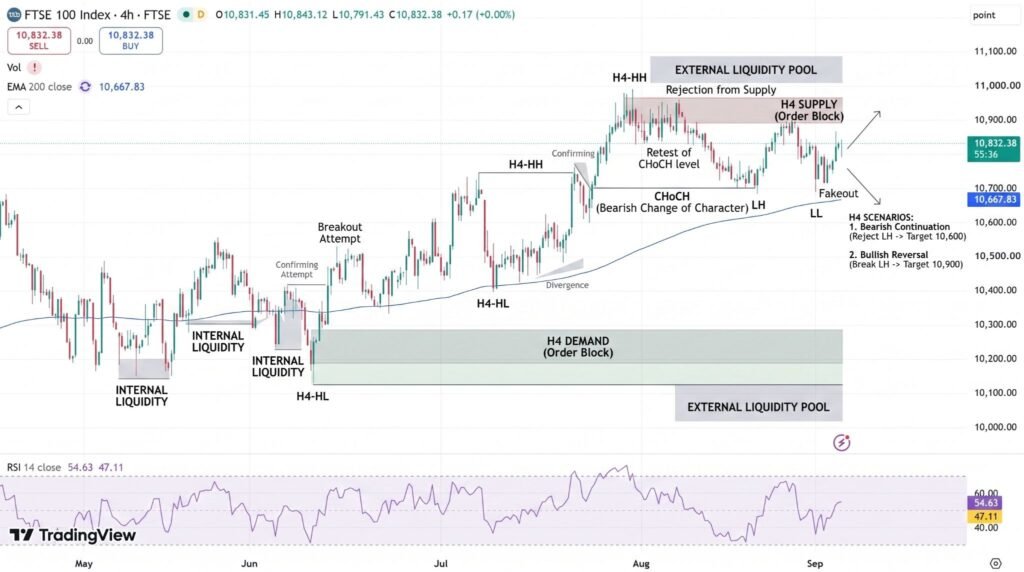
FTSE 100 INDEX Price Chart – Source: Tradingview
Conclusion
Friday’s session captures two separate stories pulling European markets in different directions: a company-specific relief rally in Volkswagen after months of boardroom conflict, and a broader, energy-driven repricing of interest rate risk across the euro zone. The STOXX 600’s modest 0.2% dip masks that divergence — autos stocks surged while banks retreated — and both threads now run through the same catalyst, oil prices near $96 a barrel. With the ECB expected to hike next week and again in December, and the Fed’s own rate path hinging on Friday’s payrolls data, European investors face a stretch where monetary policy on both sides of the Atlantic is being rewritten in real time by a Middle East conflict outside anyone’s control.
Sources & Methodology
Primary-source standard: Market-moving facts should link to original data releases, regulator notices, company filings or official project announcements whenever available. Secondary reporting is used for additional context, not as a substitute for original evidence.
Page last reviewed: