Quick Answer
Forex fundamental analysis studies the economic and political forces that can change the value of one currency relative to another. The biggest drivers usually include central-bank policy, interest-rate expectations, inflation, employment, growth, fiscal policy, trade, elections and geopolitical risk. The crucial word is expectations: a currency often moves because new information is better or worse than the market had priced in, not simply because the headline is ‘good’ or ‘bad.’ Global events can also change risk sentiment, energy prices and capital flows, creating sharp moves across several currency pairs at once.
What Is Fundamental Analysis in Forex?
Fundamental analysis in forex is the process of asking why one currency may strengthen or weaken relative to another. Instead of looking only at chart patterns, a fundamental trader studies the economic outlook, central-bank policy, political risk and cross-border flows behind the price move.
This matters because the foreign-exchange market is enormous and highly interconnected. The Bank for International Settlements reported that global over-the-counter FX turnover averaged about $9.5 trillion per day in April 2025. The same BIS research found that policy uncertainty and tariff announcements in April 2025 contributed to unusually high volatility, dollar weakness and a surge in hedging activity. In other words, global events do not just create headlines – they can change the demand for currencies and the way institutions manage risk.
The most useful way to analyse an event is to follow the transmission mechanism: What changed? How does it affect expected interest rates, growth, inflation or risk appetite? Which currency is most exposed? And how much of the story was already priced into the market?
The Main Drivers of Forex Markets
| Driver | Why it moves currencies | What traders watch |
|---|---|---|
| Interest rates & central banks | Changes expected returns and funding costs between currencies | Rate decisions, guidance, speeches, bond yields |
| Inflation | Can change the expected path of monetary policy and real returns | CPI, PCE, wage growth, inflation expectations |
| Employment | Signals economic strength and wage pressure | Nonfarm payrolls, unemployment, wages, revisions |
| Growth | Changes expectations for investment, policy and capital flows | GDP, PMIs, retail sales, industrial data |
| Fiscal & trade policy | Can change growth, inflation, trade flows and sovereign risk | Budgets, tariffs, sanctions, trade negotiations |
| Elections & politics | Can change policy direction and risk premiums | Polls, election results, coalition/fiscal plans |
| Geopolitical shocks | Can drive safe-haven demand, commodity prices and risk-off flows | Wars, sanctions, shipping disruption, energy supply |
| Market positioning | Determines how much of the event is already priced in | Consensus forecasts, futures pricing, options, positioning |
1. Central Banks and Interest-Rate Expectations
Central banks are among the most powerful forex drivers because currency values respond to relative interest-rate expectations. If traders suddenly expect one central bank to keep rates higher for longer than another, the first currency can gain support because the expected return on assets denominated in that currency becomes more attractive.
But a rate hike does not automatically make a currency rise. If the market had already priced in the hike, the reaction may be small. If the bank raises rates but signals that cuts are coming, the currency can even fall. The comparison is always relative: EUR/USD reflects both the European Central Bank outlook and the Federal Reserve outlook, not one central bank in isolation.
A Simple Central-Bank Example
Suppose markets expect the Federal Reserve to keep policy unchanged, but the statement suddenly signals that inflation risks are higher and future rate cuts are less likely. U.S. bond yields may rise and the dollar may strengthen. EUR/USD could fall even though nothing happened to the euro itself – the change came from the U.S. side of the pair.
2. Inflation and Employment Data
Inflation and labour-market reports matter because they can change what traders expect central banks to do next. U.S. CPI, PCE inflation and the Employment Situation report are closely followed because surprises can quickly reprice Federal Reserve expectations. The monthly U.S. Employment Situation combines establishment data such as nonfarm payrolls with household-survey measures such as unemployment.
The first reaction is usually driven by the surprise versus consensus, but the details matter. A strong payroll headline can be offset by weak wage growth or downward revisions. A hotter CPI can support a currency if it pushes rate expectations higher, but not if markets believe the central bank will tolerate the increase or if growth is collapsing at the same time.
Historical NFP Reaction: Why Context Matters
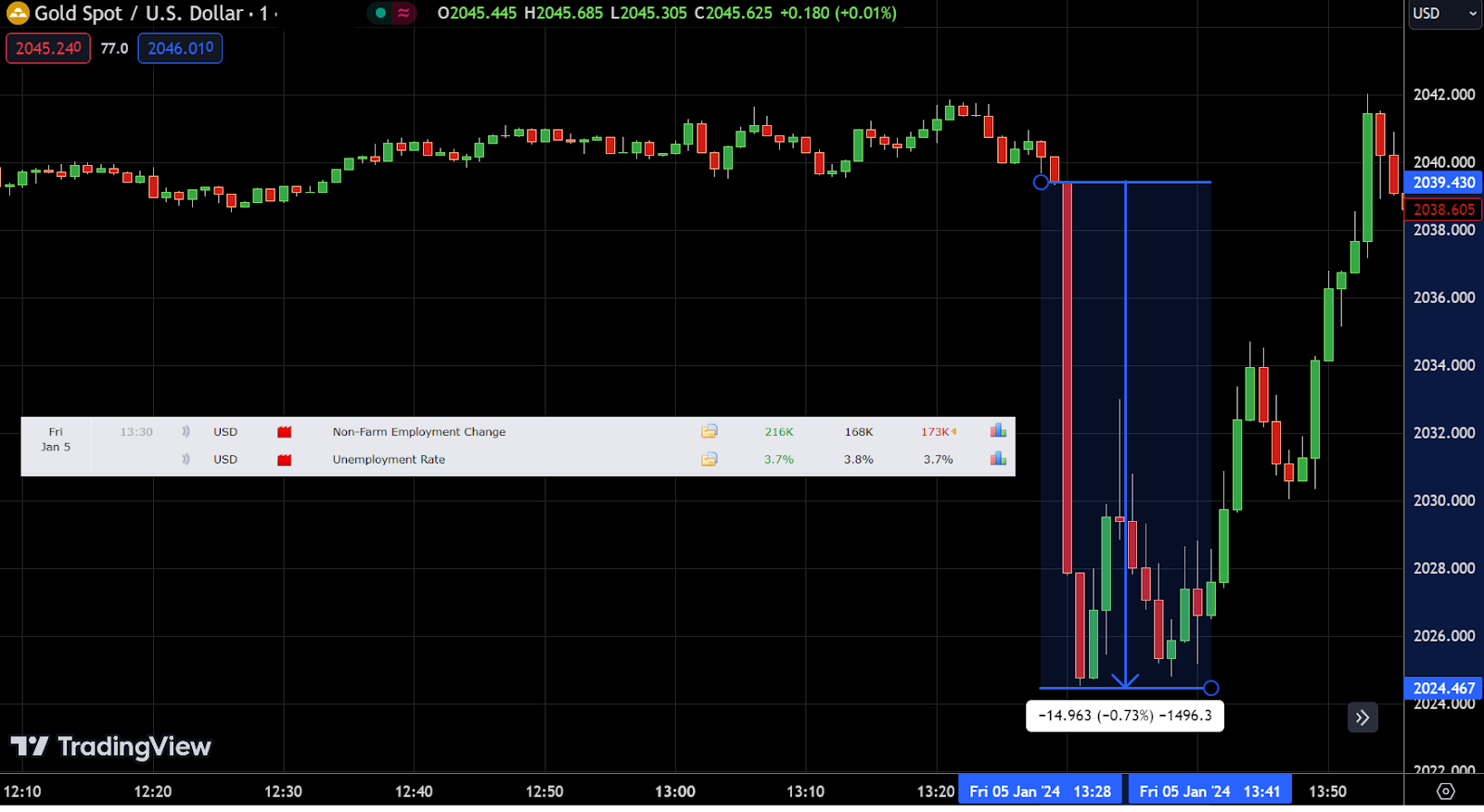
This historical example is useful because it shows the speed of the first move. Gold is not a currency pair, but it is highly sensitive to the U.S. dollar and yields, so it illustrates the same transmission mechanism forex traders watch around major U.S. data. The lesson is not ‘strong jobs always make gold fall.’ The lesson is that data can move several related markets at the same time when it changes the expected path of policy.
3. Elections, Trade Policy and Geopolitical Events
Political events can change exchange rates through several channels: expected fiscal policy, trade rules, regulation, sovereign risk, foreign investment and confidence. The market response can be especially large when the outcome was considered unlikely before the event.
Brexit: A Classic Currency Shock
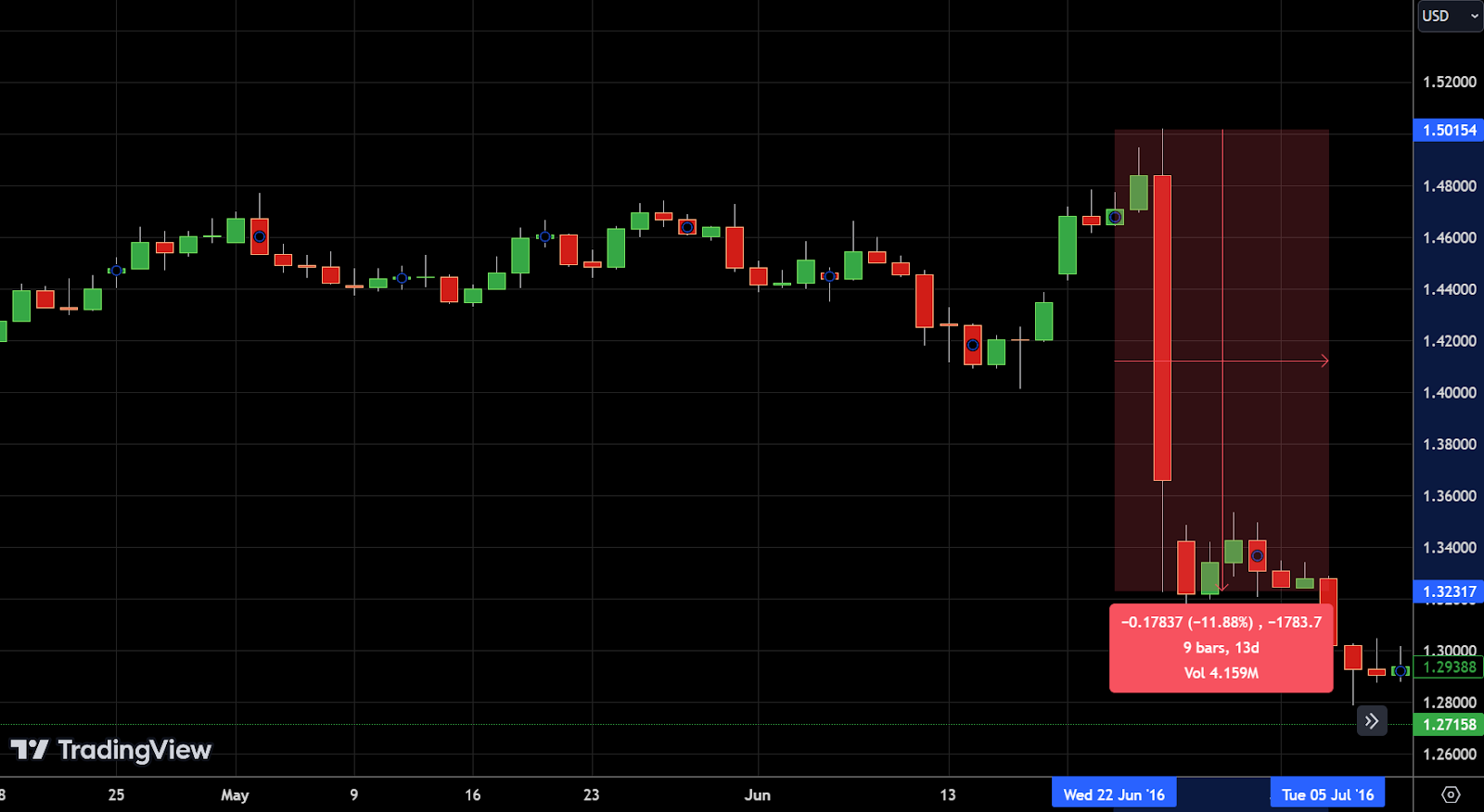
The 2016 Brexit referendum remains one of the clearest examples. The Bank of England reported that sterling’s effective exchange-rate index fell about 9% between 23 June and 1 July 2016, while sterling-dollar volatility surged. The move reflected a rapid reassessment of UK growth, trade, risk premiums and future monetary policy.
A More Recent Example: 2025 Tariff Uncertainty
Global trade policy can be just as important. BIS analysis of April 2025 found that U.S. tariff announcements were associated with heightened FX volatility, an unexpected depreciation of the dollar and unusually strong demand for hedging through spot, forwards and options. This is a useful reminder that the dollar is not guaranteed to rise in every risk-off event: the source of the shock matters.
4. Crises, Wars and Commodity Shocks
Wars, pandemics, financial crises and natural disasters can affect currencies through risk sentiment, energy and food prices, government spending, trade routes and expected central-bank responses. The same event can help one currency and hurt another.
During the COVID-19 shock in 2020, markets experienced extreme demand for liquidity and safe assets as the economic outlook deteriorated rapidly. WHO characterised COVID-19 as a pandemic on 11 March 2020. The event is a useful case study because currency moves were driven not by one data release but by a chain of health restrictions, fiscal responses, emergency rate cuts, funding stress and shifting risk appetite.
Commodity-linked currencies can also react differently from traditional safe-haven currencies. A surge in oil prices may support an oil-exporting economy while hurting an energy importer. That is why geopolitical analysis should include the country’s trade exposure rather than relying on a generic ‘risk-on/risk-off’ label.
Why ‘Good News’ Can Make a Currency Fall
This is one of the most important lessons in forex fundamental analysis. Markets trade expectations, not headlines. If economists expect payrolls to rise by 250,000 and the actual result is 200,000, employment still grew – but the release is weaker than expected. The currency can fall because the surprise is negative.
The same logic applies to central banks. A 0.25 percentage-point rate hike can be bearish if traders had expected 0.50. Strong GDP can fail to lift a currency if inflation collapses at the same time. Always compare the result with consensus, prior revisions and what futures or bond markets had priced before the release.
How to Use an Economic Calendar for Forex
Check the event time and convert it to your local time zone.
Identify the currency most directly exposed to the release.
Record the consensus forecast, previous reading and any important revisions.
Decide in advance what would count as a hawkish, dovish, stronger-growth or weaker-growth surprise.
Mark nearby technical support and resistance so you know where price may react.
Expect spreads and slippage to increase around high-impact releases.
After the release, read the details rather than trading only the headline number.
Watch whether bond yields and related markets confirm the currency move.
Trading Global Events: Risk Management Matters More Than Prediction
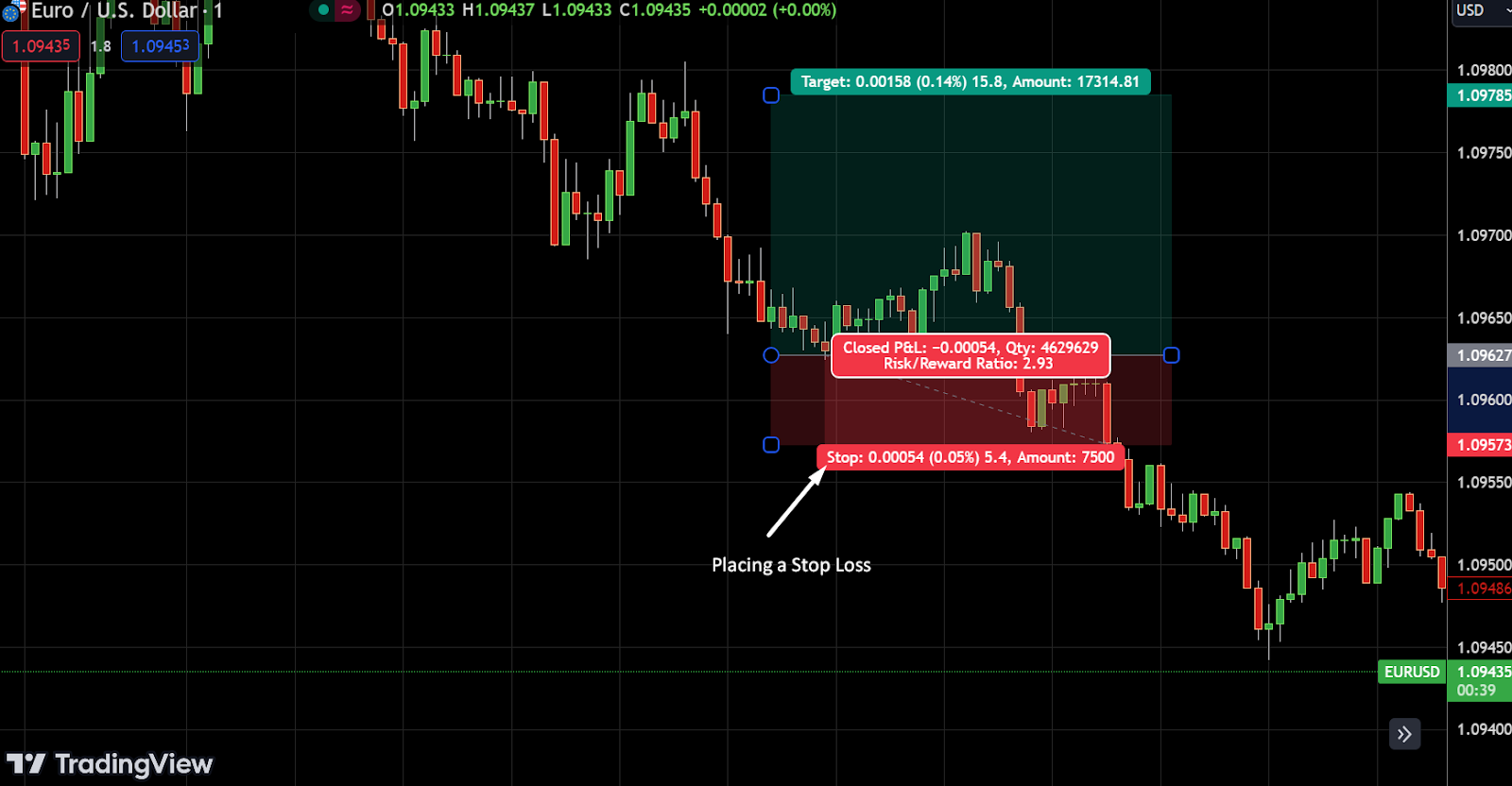
Event trading is difficult because liquidity can disappear just when volatility rises. A stop-loss can limit the size of a normal adverse move, but it does not guarantee the exact exit price during a gap. Traders should think about position size, spread widening, slippage and the possibility that the first move reverses.
Execution costs also depend on how brokers price spreads, fees and commissions.
A Practical Pre-Event Checklist
What event is coming, and what is the consensus expectation?
Which currency pairs are most directly exposed?
What outcome is already priced into rates and the currency?
Where are the nearest technical support and resistance levels?
How much could I lose if slippage makes the exit worse than expected?
Is my position size appropriate for the event’s volatility?
Would waiting for the first move and confirmation be safer than predicting the headline?
Fundamental vs. Technical Analysis: Use Them for Different Jobs
Fundamental analysis can explain the catalyst and the medium-term direction of pressure. Technical analysis can help define where a trade becomes attractive or invalid. A trader might have a bearish fundamental view on GBP after a policy shock but still wait for a break of support, a failed rebound or another technical confirmation before entering.
Neither approach removes uncertainty. Fundamentals can be correct but already priced in; technical levels can fail when unexpected news arrives. Combining the two can make the trading plan clearer because one answers ‘why?’ and the other helps answer ‘where?’ and ‘when?’
Frequently Asked Questions
What is fundamental analysis in forex?
It is the study of economic, monetary and political forces that can change the relative value of currencies. Traders focus on central-bank policy, inflation, employment, growth, fiscal policy, trade and geopolitical risk.
What news affects forex the most?
Interest-rate decisions, inflation, employment reports, central-bank guidance and major political or geopolitical shocks tend to create the largest short-term reactions. The impact depends on how much the result differs from expectations.
How do interest rates affect forex?
Higher expected interest rates can support a currency by increasing expected returns on assets denominated in that currency, but the reaction depends on relative rates, inflation, growth and what the market had already priced in.
Why does a currency sometimes fall after good economic data?
Because the data may still be weaker than the consensus, the good result may already be priced in, or another part of the report may change the policy outlook in the opposite direction.
How do geopolitical events affect forex?
They can change risk appetite, energy and commodity prices, trade flows, government policy and capital movements. The currencies most exposed depend on where the shock originates and each country’s economic structure.
Is fundamental or technical analysis better for forex?
They answer different questions. Fundamentals help explain the catalyst and macro backdrop, while technical analysis helps identify price structure, entries, exits and invalidation. Many traders use both.
How should beginners trade forex news?
Beginners should first learn how releases affect spreads, slippage and volatility in a demo environment. Rather than trying to predict every headline, focus on understanding expectations, position sizing and how the market reacts after the release.
Bottom Line
Global events move forex markets when they change expectations for interest rates, inflation, growth, trade, fiscal policy or risk. The headline itself is only the starting point; what matters is the surprise relative to expectations and the transmission channel into capital flows and policy.
For traders, the strongest process is to combine an economic calendar with scenario planning, technical levels and disciplined risk management. Historical episodes such as Brexit, COVID-19 and the 2025 tariff shock show that currency markets can reprice extremely quickly when the assumptions behind the market suddenly change.
AAFX.io provides educational forex guides and market analysis designed to help readers connect macroeconomic events with price action without treating any single indicator as a guaranteed trading signal.
Editorial Sources
Primary verification: Bank for International Settlements 2025 Triennial Central Bank Survey; BIS December 2025 FX analysis; Bank of England July 2016 Financial Stability Report; U.S. Bureau of Labor Statistics Employment Situation release schedule; and World Health Organization COVID-19 pandemic timeline.
Risk Warning
Forex and leveraged derivatives involve substantial risk. Economic releases and geopolitical events can cause rapid price moves, spread widening and slippage. Stop-loss orders do not guarantee execution at the requested price. This article is educational and does not constitute personalised financial advice.
Sources & Methodology
Primary-source standard: Market-moving facts should link to original data releases, regulator notices, company filings or official project announcements whenever available. Secondary reporting is used for additional context, not as a substitute for original evidence.
Page last reviewed: