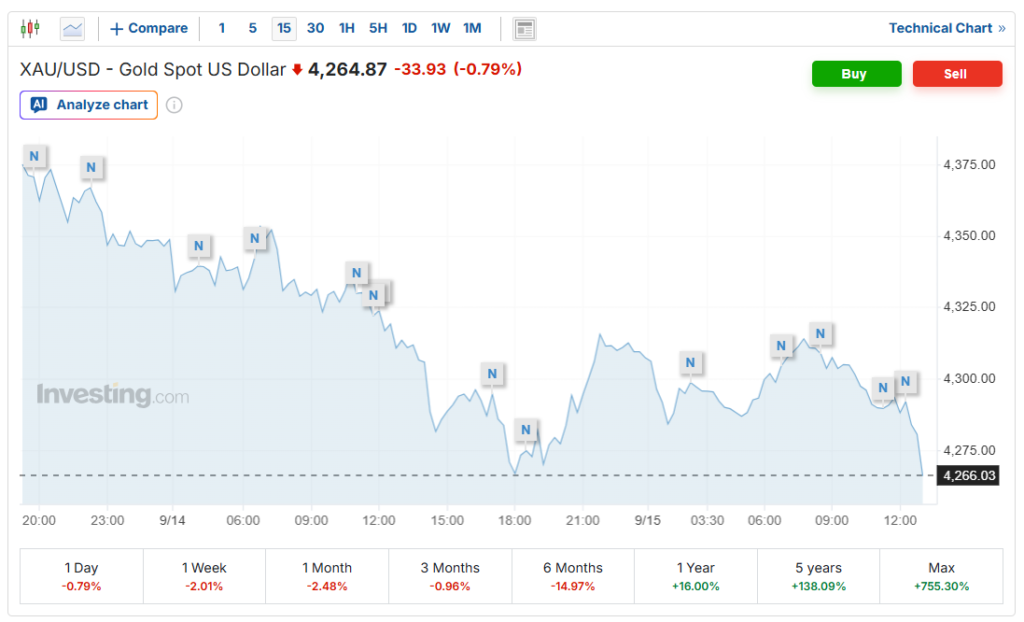
Gold prices steadied near $4,306 an ounce Tuesday after losing more than 1% in the previous session, as a fresh jump in oil prices reinforced expectations for tighter U.S. monetary policy. The combination of higher energy costs, rising Treasury yields and a firmer dollar has reduced gold’s appeal in the short term, even as structural investment demand continues to support the longer-term outlook.
Spot gold was around $4,306.86, while December Gold Futures traded near $4,346.65 in the supplied market snapshot. Silver was around $63.42 and platinum near $1,764.36, while the US Dollar Index climbed to 99.60.
Oil Shock Raises Fed Pressure
The latest weakness in bullion is closely tied to energy markets. Reuters reported Tuesday that Brent crude rose to $106.93 a barrel and WTI advanced to $102.65 after attacks left Saudi Arabia’s strategic East-West pipeline offline. The route can handle about 4 million barrels per day, or roughly 4% of global supply, making any prolonged disruption significant for inflation expectations.
The oil shock matters because it can keep consumer prices elevated and make it harder for the Federal Reserve to loosen monetary policy. Markets are now pricing roughly a 90% probability of a rate increase at the September 15–16 meeting, while a Reuters economist poll found 85% expect a 25-basis-point hike.
Higher interest rates generally pressure gold because bullion provides no yield. When bond yields rise, investors have a stronger incentive to hold interest-bearing assets instead.
The U.S. 10-year Treasury yield also crossed 5% on Monday for the first time since October 2023. Reuters attributed the move to renewed inflation concerns, higher oil prices, heavy debt issuance and growing fiscal concerns.
Gold Faces Three Market Headwinds
Gold has fallen more than 3% during September after reaching above $4,600 in late August. The decline reflects repeated shifts in expectations for the Fed rather than a collapse in long-term demand.
A stronger dollar adds another challenge because gold is priced in U.S. dollars. A higher dollar makes bullion more expensive for buyers using other currencies, potentially limiting international demand.
The near-term pressures are concentrated around three factors:
- Oil: Supply disruptions are keeping inflation expectations elevated.
- Yields: The 10-year Treasury has moved above 5%.
- Dollar: A firmer U.S. currency is weighing on precious metals.
Yet the broader gold story remains supported by portfolio diversification, central-bank purchases and geopolitical uncertainty. OCBC said in August that gold’s long-term appeal remained intact, citing continued central-bank buying, reserve diversification and fiscal risks.
Structural Demand Limits Downside Risk
The immediate market focus is whether gold can stabilize above the $4,300 area after Monday’s sharp decline. Holding that psychological level would give buyers a platform for recovery if oil prices retreat or Fed expectations become less hawkish.
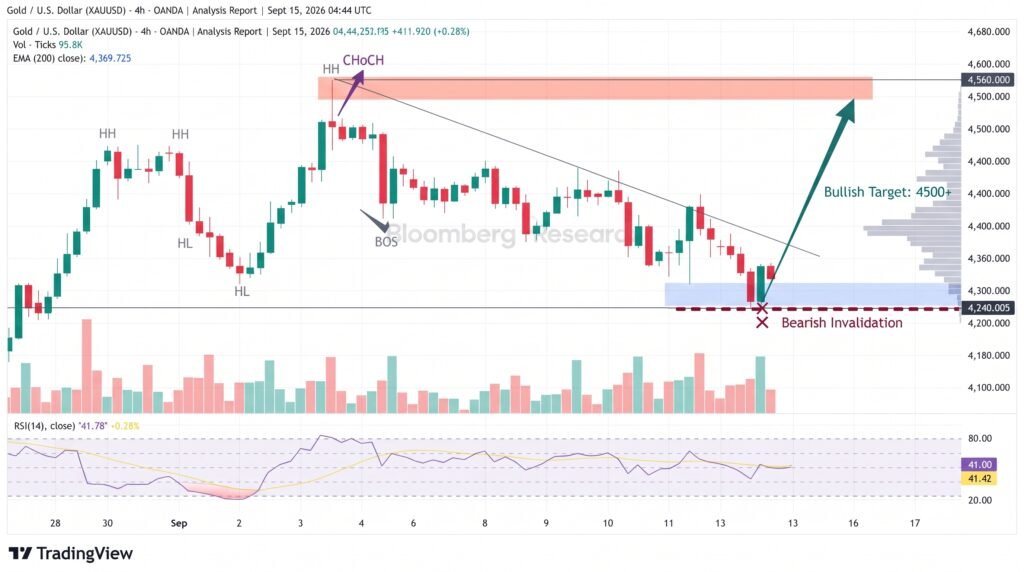
A sustained break below $4,300 would put the recent correction under greater scrutiny, particularly because higher real yields could continue to attract capital toward fixed-income assets. Conversely, easing energy prices and softer rate expectations would remove two of gold’s biggest short-term obstacles.
Longer-term demand remains a major counterweight. OCBC’s published research continues to identify central-bank demand and diversification as structural supports for gold, even though the bank expects periods of near-term volatility.
Conclusion
Gold is caught between a difficult short-term macro environment and stronger structural demand. Oil above $100, Treasury yields above 5% and high Fed-hike expectations are keeping pressure on XAU/USD, while geopolitical risks and central-bank accumulation provide longer-term support. The $4,300 level is now an important psychological test. A sustained hold could stabilize the market, but a deeper oil-driven rise in yields and the dollar would increase the risk of another leg lower before bullion regains upward momentum.
Sources & Methodology
Primary-source standard: Market-moving facts should link to original data releases, regulator notices, company filings or official project announcements whenever available. Secondary reporting is used for additional context, not as a substitute for original evidence.
Page last reviewed: