
Oil rises for a fourth day as Strait of Hormuz risks support Brent above $91, while rerouted cargoes and U.S. inventories shape the crude outlook.
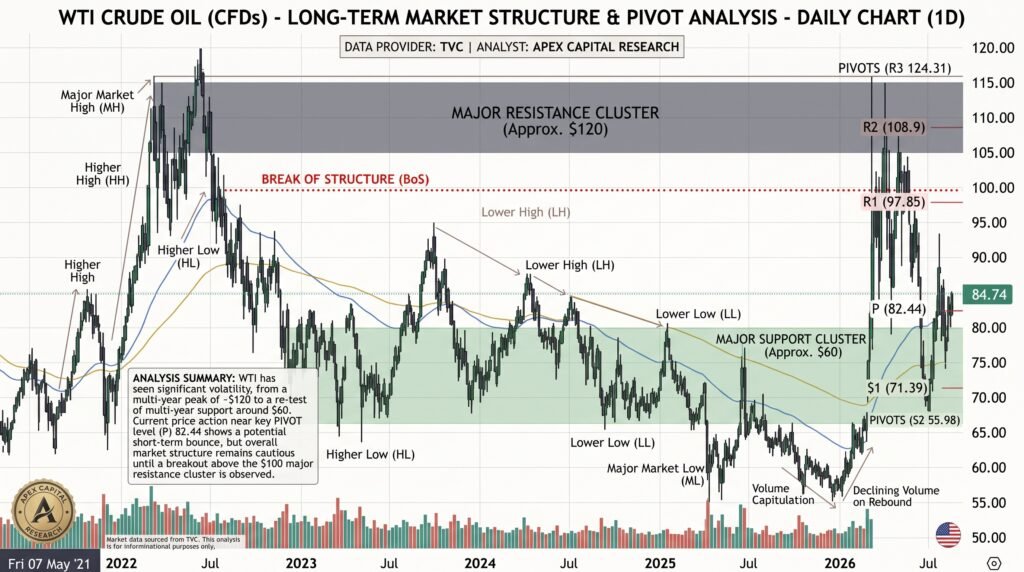
Oil prices rose for a fourth straight session on Wednesday as uncertainty over shipping through the Strait of Hormuz kept supply concerns at the center of the market. Brent crude gained 26 cents, or 0.3%, to $91.28 a barrel, while U.S. West Texas Intermediate rose 37 cents, or 0.4%, to $85.31. Both benchmarks had reached their highest closing levels since July 24 on Tuesday.
Hormuz Disruption Keeps Oil Prices High
The main issue for traders is not simply whether the Strait of Hormuz is technically open, but whether commercial vessels can move through it safely and consistently. President Donald Trump said Tuesday that the waterway was open and that no talks with Iran were taking place. Tehran maintained that the strait remained closed under its conditions, leaving shipowners with conflicting signals about maritime access.
The uncertainty has already reduced shipping activity. Tanker operators have diverted vessels away from Hormuz and the Bab el-Mandeb Strait, increasing transportation costs and extending delivery routes. The Bab el-Mandeb is another important energy corridor because some Gulf producers use routes through the Red Sea to avoid Hormuz.
The scale of the disruption is significant. The U.S. Energy Information Administration estimates that crude oil and petroleum liquids moving through Hormuz averaged only 4.9 million barrels per day in the second quarter of 2026, down from 21.6 million barrels per day in the fourth quarter of 2025.
Iraq and Gulf Producers Reroute Exports
Oil producers are responding by developing alternatives to the waterway. Iraq approved a mechanism to export crude through international and local companies using multiple outlets, with contracts scheduled to begin September 1. Chinese shipping companies have also redirected oil tankers away from Hormuz and Bab el-Mandeb, instead collecting cargoes outside the Gulf.
Alternative routes can reduce the immediate impact of a disruption, but they cannot fully replace Hormuz. EIA data shows that Saudi Arabia has used its East-West pipeline to move crude toward Yanbu on the Red Sea, while other routes through the Suez Canal and Sumed pipeline have higher costs, longer transit times and capacity limitations.
- EIA estimates July production shut-ins averaged 5.5 million barrels per day.
- Hormuz flows are expected to remain severely constrained through August.
- EIA expects global oil inventories to keep falling during the third quarter.
U.S. Stocks Add a Conflicting Signal
U.S. inventory data provides a counterweight to the geopolitical risk premium. The latest EIA report showed commercial crude inventories jumped 17.4 million barrels to 424.4 million barrels for the week ended August 7, the largest weekly increase since January 2023. U.S. crude exports fell to 3.06 million barrels per day, their lowest level since November 2025.
That large stock build shows that physical supply conditions in the United States can move in the opposite direction from international geopolitical risks. Gasoline inventories fell by 1.0 million barrels in the same week, while distillate stocks declined by 0.1 million barrels.
The next direction for oil will depend heavily on whether Hormuz traffic improves or remains restricted. EIA expects Brent to average about $85 a barrel in the third quarter, before declining toward $78 in the fourth quarter if shipping gradually normalizes and shut-in production returns.
For now, Brent above $91 and WTI above $85 reflect a market pricing continued supply risk rather than a confirmed global shortage. A credible reopening of Hormuz would remove part of that premium, while further attacks or prolonged restrictions could push crude higher. Until shipping conditions become clearer, geopolitical developments remain the strongest near-term driver for oil prices.
Sources & Methodology
Primary-source standard: Market-moving facts should link to original data releases, regulator notices, company filings or official project announcements whenever available. Secondary reporting is used for additional context, not as a substitute for original evidence.
Page last reviewed: