The operators securing Solana are voting on two separate ways to shrink the network’s future token supply, and the results are splitting sharply. A proposal to slow new SOL creation is narrowly passing, while a second plan to sharply increase token burns is falling short of the two-thirds support it needs. Both measures matter to holders because fewer new tokens circulating means less dilution of existing ones. All three votes have now cleared quorum as part of Solana’s first-ever onchain governance system.
Two Votes, One Goal: Less Dilution
Solana currently creates new SOL every day to reward the validators securing the network, so any reduction to that issuance rate slows total supply growth over time. Solana Governance Proposal (SGP)-0001, the network’s foundational “constitution” setting the rules for how future votes are conducted, is passing easily with 95.35% support and just 0.22% opposed. SGP-0002, which would cut the annual rate of new SOL issuance from 15% to 30% faster than the current schedule, sits at 68.77% support with 47.72% participation — enough to clear the threshold, but not by a wide margin. If it passes, the issuance rate would hit its 1.5% annual floor around 2029 instead of 2032, resulting in roughly 18.9 million fewer SOL created over six years.
Why the Burn Proposal Is Falling Short
SGP-0003 takes a different approach: it would charge transactions based on computing work required and eliminate that portion of the fee, lifting daily SOL burns from roughly 650 SOL to between 7,500 and 9,000 SOL — worth about $800,000 a day at the upper end based on this week’s prices. CoinDesk previously reported that even 9,000 SOL burned daily would remain well below the roughly 60,000 new SOL the network currently mints each day. Despite that modest scale, the proposal is struggling:
- Support stands at 62.72%, below the required two-thirds threshold
- Abstentions account for 20.75% of the vote, notably higher than the other two proposals
- Because abstentions count toward participation but not approval, they make the threshold harder to reach
Opposition has been public. Solana Company, the Nasdaq-listed SOL treasury firm trading as HSDT, said on August 21 it backed the constitution but opposed both supply-focused proposals, arguing institutions need predictable economic rules for multi-year planning. Voting had been expected to close Thursday afternoon UTC but remained open into Friday as the final epoch continued, since Solana votes run for three epochs rather than a fixed clock-based window.
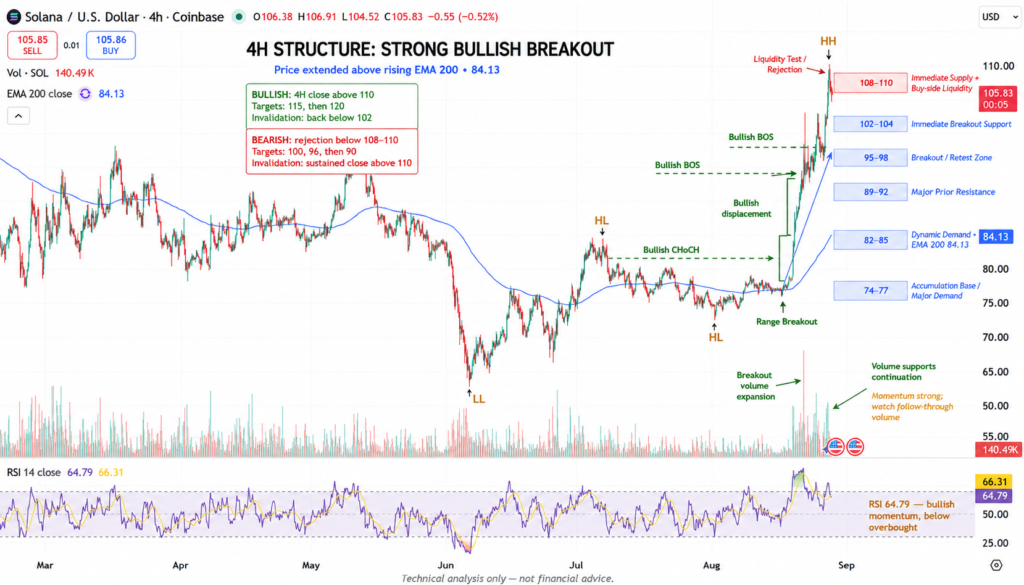
Conclusion: Governance Still a Mandate
None of these three votes changes Solana’s code by itself. Each approved SGP functions as a mandate to proceed, with the detailed technical implementation still to be written and shipped separately. That distinction matters for SGP-0002: even a narrow passage sets a new disinflation trajectory in motion, while SGP-0003’s shortfall suggests validators and institutional holders remain divided on how aggressively to alter the network’s fee and burn structure. With participation still below 50% on both supply proposals, the final tally—and what it signals about Solana’s appetite for economic change—won’t be settled until voting closes.
Sources & Methodology
Primary-source standard: Market-moving facts should link to original data releases, regulator notices, company filings or official project announcements whenever available. Secondary reporting is used for additional context, not as a substitute for original evidence.
Page last reviewed: