
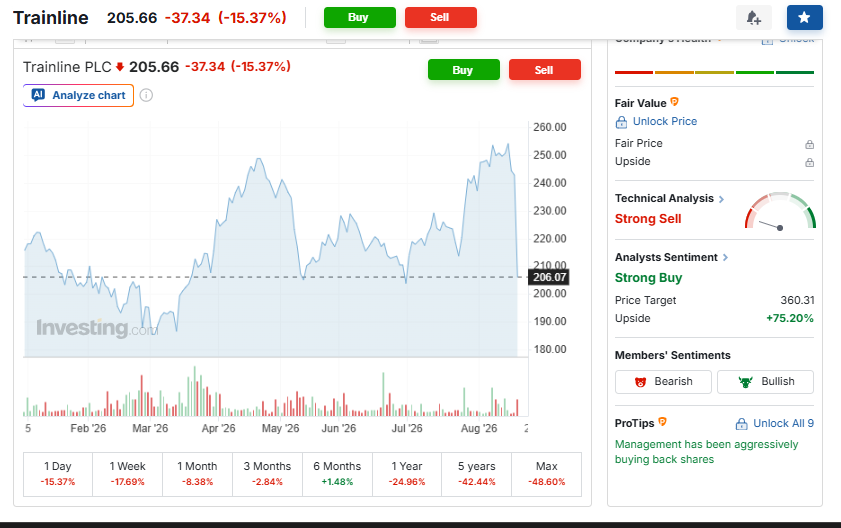
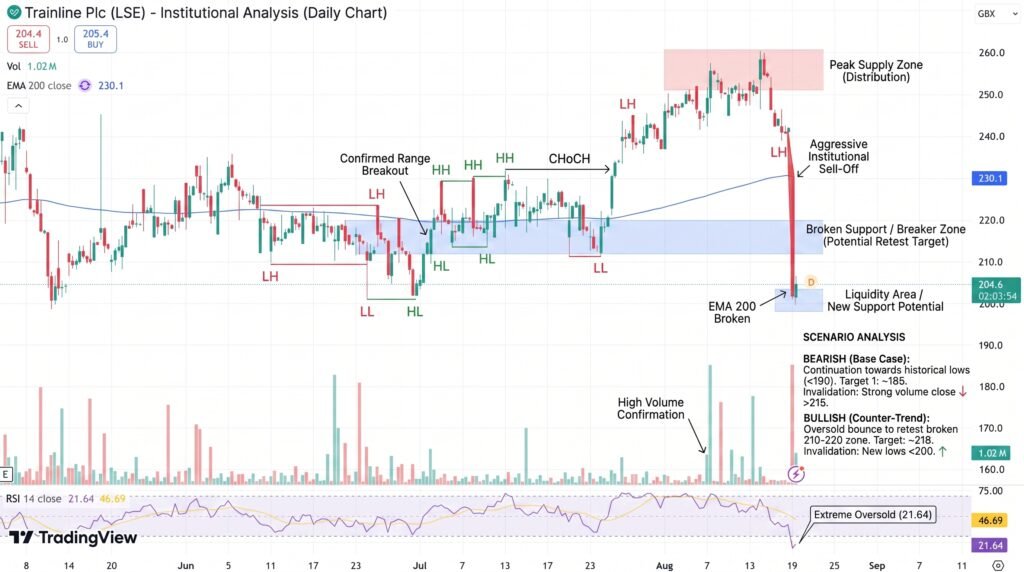
tion and willShares in Trainline plunged as much as 15% on Wednesday after the UK’s Competition and Markets Authority (CMA) launched a formal investigation into whether the rail and coach ticketing platform failed to include mandatory fees in the upfront prices shown to customers. The probe, part of a wider clampdown on “drip pricing,” also targets Virgin Atlantic and RED Driving School. Trainline, the only listed company among the three, saw its stock fall to around 206p, making it the worst performer in the FTSE 250.
CMA Probes Trainline (Fees 59p–£2.79), Virgin Atlantic & RED (>£7) — Fines Up to 10% Turnover
The CMA opened three simultaneous consumer protection investigations on 18 August 2026 under the Digital Markets, Competition and Consumers Act 2024. For Trainline, the regulator is examining whether all mandatory fees were included in the total prices displayed at the start of the booking process on its app and website for advance train and coach tickets.
The CMA said it had observed transactions involving fees ranging from 59p to £2.79 for train travel and a £1.50 booking fee for coach journeys—costs that can accumulate for frequent travellers.
Virgin Atlantic faces scrutiny over whether mandatory resort fees and local taxes (which the CMA said can run to hundreds of pounds) were included in upfront prices for package holidays. RED Driving School is being investigated over the display of a mandatory booking fee and “digital” fee of more than £7 per booking for driving lessons.
All three firms had previously received advisory letters under the CMA’s strengthened enforcement powers but concerns remained after ongoing monitoring. The CMA stressed it has reached no conclusions and that the investigations are at an early stage. If infringements are found, the watchdog can order compensation for affected customers and impose fines of up to 10% of a company’s global turnover.
Trainline responded in a stock-exchange statement that it is “committed to offering customers a transparent booking experience with clear pricing and genuine value,” noting its 4.9-star app rating. The company said it had “proactively engaged with the CMA over several months” and was “taking steps to enhance the presentation of certain fees,” while pledging full cooperation. Virgin Atlantic said it was reviewing the concerns and would cooperate fully.
Trainline Shares Plunge Up to 15% to 206p — Worst FTSE 250 Stock as CMA Probe Hits £6.3bn Ticket Platform
Trainline is the only publicly listed company of the three under investigation, so the news hit its share price hardest. Shares fell as much as 15% (reports ranged from nearly 13% to 15.3%), dropping to around 206–211p in early trading and making Trainline by far the weakest stock in the FTSE 250, which itself was only marginally lower. The 12-month range stood at 178p–307.60p prior to the drop.
Investors reacted to the dual risk of potential fines (capped at 10% of global turnover) and compulsory customer refunds, plus possible reputational damage and pressure to change fee presentation that could affect margins. Trainline’s FY2026 results (year ended 28 February 2026) showed group net ticket sales of £6.3 billion (up 7%), revenue of £453 million (up 2%), adjusted EBITDA of £177 million (up 11%), and operating profit of £122 million (up 43%). UK Consumer net ticket sales alone reached £4.1 billion. Any forced changes to fee structures or significant redress could pressure future profitability in a business that earns revenue from commissions and booking fees.
CMA Cracks Down on Drip Pricing, Securing £1.95m Refunds and £6.2m in Fines Since 2025
Drip pricing—separating mandatory charges from the headline price or adding them later in the purchase process—has been a priority for the CMA under its enhanced powers that came into force in 2025. The practice leaves consumers facing unexpected costs and can distort competition by making a firm appear cheaper than rivals.
Since the new powers took effect, the CMA has secured more than £1.95 million in refunds for UK consumers and levied fines close to £6.2 million. Notable prior cases include:
- AA and BSM driving schools: fined £4.2 million and ordered to refund more than 80,000 learners around £760,000 in total.
- StubHub UK: fined £889,200 and ordered to refund more than 51,000 customers over £590,000 (average ~£10 per transaction).
Trainline has faced earlier scrutiny. In 2023 the Office of Rail and Road raised concerns that it and other third-party sellers were not being fully transparent about fees. The company remains Europe’s leading independent rail platform and the UK’s number-one travel app, with around 18 million active UK customers, 27 million across Europe, and a 4.9-star app rating. It processes tickets across more than 270 rail and coach operators in over 40 countries.
The CMA has also run a Clear Pricing campaign giving businesses a three-step checklist to ensure prices are shown clearly and upfront.
CMA Trainline Probe Runs to January 2027 with Possible Fines Up to 10% of Turnover
The CMA’s initial investigation phase for Trainline runs from August 2026 to January 2027, focused on information and evidence gathering, with the next formal case update expected in January 2027. The regulator will engage with the companies and assess whether consumer protection law has been infringed.
Outcomes could range from no further action, to required changes in pricing presentation, customer compensation, and fines of up to 10% of global turnover. Trainline has already said it is enhancing fee presenta continue constructive engagement. Similar probes into Virgin Atlantic and RED Driving School will follow parallel timelines. The broader CMA clampdown on drip pricing is expected to continue across sectors including travel, events and retail.
Sources & Methodology
Primary-source standard: Market-moving facts should link to original data releases, regulator notices, company filings or official project announcements whenever available. Secondary reporting is used for additional context, not as a substitute for original evidence.
Page last reviewed: