
Key takeaways
- Trading means profiting from short- to medium-term price movements in financial assets.
- The four most-traded markets are stocks, forex, commodities, and cryptocurrencies.
- The main strategies are day trading, swing trading, and position trading.
- Success depends on a strategy, the right tools, a regulated broker, and disciplined risk management.
- Trading differs from investing, which focuses on holding assets for years.
Whether you want to diversify your income or build long-term wealth, understanding how trading works is the first step. This guide breaks down the markets, strategies, tools, and risks, and shows you how to start safely. (AAFX.IO also helps you compare regulated brokers matched to your goals: see the disclosure at the end.)
What is trading?
Trading is the act of buying and selling financial assets to profit from price fluctuations. For example, a trader might buy shares in a company expecting the price to rise, or trade a forex pair such as EUR/USD to capture currency movement. Unlike long-term investing, trading usually involves shorter time horizons and more frequent transactions.
At its core, trading is driven by supply and demand. When demand for an asset rises- say, a company posts strong earnings- its price typically climbs, creating opportunities. When prices dip, traders may see an opportunity to buy at a lower price. Every trade happens through a broker or exchange that connects you to the market.
Trading matters to the wider economy because it:
- Enables price discovery: markets determine an asset’s fair value through supply and demand.
- Provides liquidity: assets can be bought and sold quickly without large price swings.
- Supports growth: companies and governments raise capital from investors.
How does trading work?
A trade follows four simple steps: you open an account with a regulated broker, fund it, open a position (buy or sell an asset), and close the position later to lock in a profit or loss. If you buy an asset and its price rises before you sell, you profit; if it falls, you take a loss. You can also profit from falling prices by “going short”: selling first and buying back later at a lower price. (Learn more in long vs. short positions.)
Most retail traders now access markets online through a trading platform, using tools like charts and real-time data to decide when to enter and exit.
The main types of trading markets (asset classes)
Trading spans several asset classes, each with its own character and opportunities.
| Market | What you trade | Trading hours | Example |
|---|---|---|---|
| Stocks | Shares of listed companies (NASDAQ, NYSE) | Exchange hours | Buying Tesla (TSLA) before a product launch |
| Forex | Currency pairs like EUR/USD, GBP/JPY | 24/5 | Selling GBP/USD on a weak UK data print |
| Commodities | Gold, oil, agricultural goods | Varies | Buying crude oil futures on supply cuts |
| Cryptocurrencies | Digital assets like Bitcoin, Ethereum | 24/7 | Buying BTC in a dip before an ETF inflow |
| Options | Contracts to buy/sell at a set price | Exchange hours | A call option on Amazon before earnings |
New to a market? Start with our deep dives on the best forex pairs for beginners, trading commodities like gold and oil, and the best cryptocurrencies for beginners.
Types of trading strategies
Your strategy defines how long you hold positions and how much time trading demands. The three core styles:
1. Day trading
Day traders open and close all positions within the same day, profiting from small intraday moves. It relies heavily on technical analysis, fast decisions, and constant screen time. Popular in liquid markets like forex and large-cap stocks. Example: buying TSLA at the open and selling hours later on a small uptick.
2. Swing trading
Swing traders hold positions for several days or weeks to capture larger moves, blending technical and fundamental analysis. It suits people who can’t watch charts all day. Example: buying gold during a dip, expecting a rebound on rising geopolitical tension.
3. Position (long-term) trading
Position traders hold for months, focusing on major trends and fundamentals. It sits closest to investing: see trading vs. investing for the full comparison. Example: buying Bitcoin in a downturn and holding through an adoption cycle.
The two ways traders analyze markets
Technical analysis
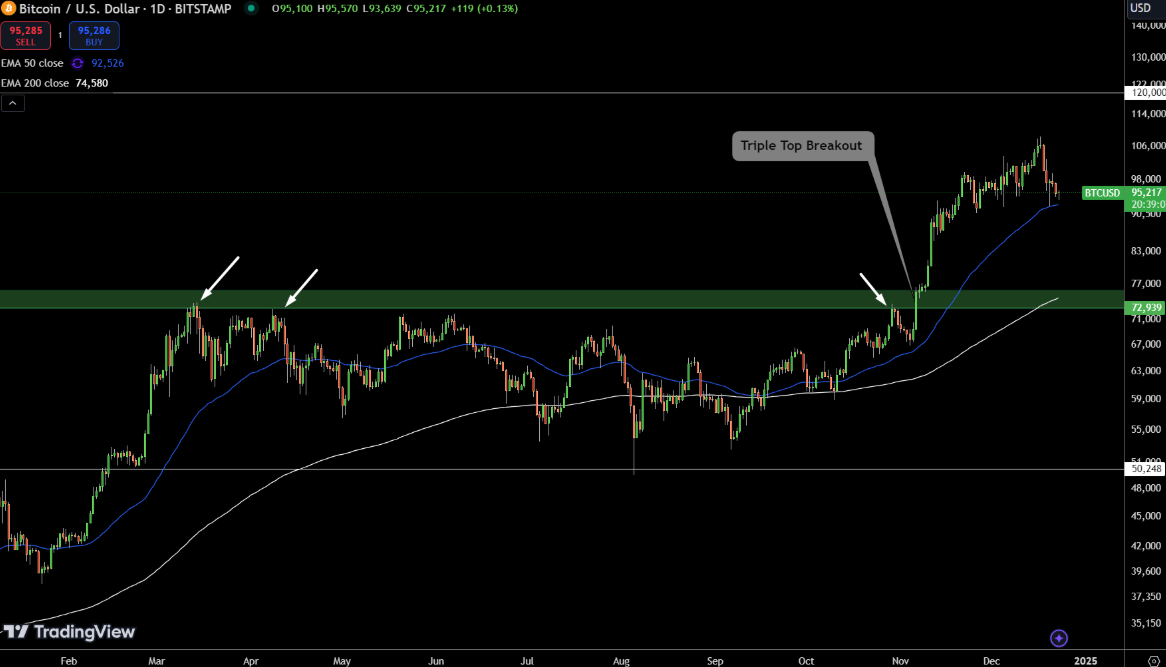
Technical analysis studies price charts and patterns to anticipate future moves. Common tools include moving averages, Bollinger Bands, and the RSI indicator. Example: Bitcoin spent months testing resistance near $73,000; when it finally broke out, it ran toward $95,000: a move chart-readers could anticipate.
Learn the basics in our technical analysis guide and how to read trading charts.
Fundamental analysis
Fundamental analysis weighs an asset’s intrinsic value using economic data and financial health. Key inputs include:
- Economic indicators: GDP, CPI, and jobs data (a strong U.S. NFP report often lifts the USD).
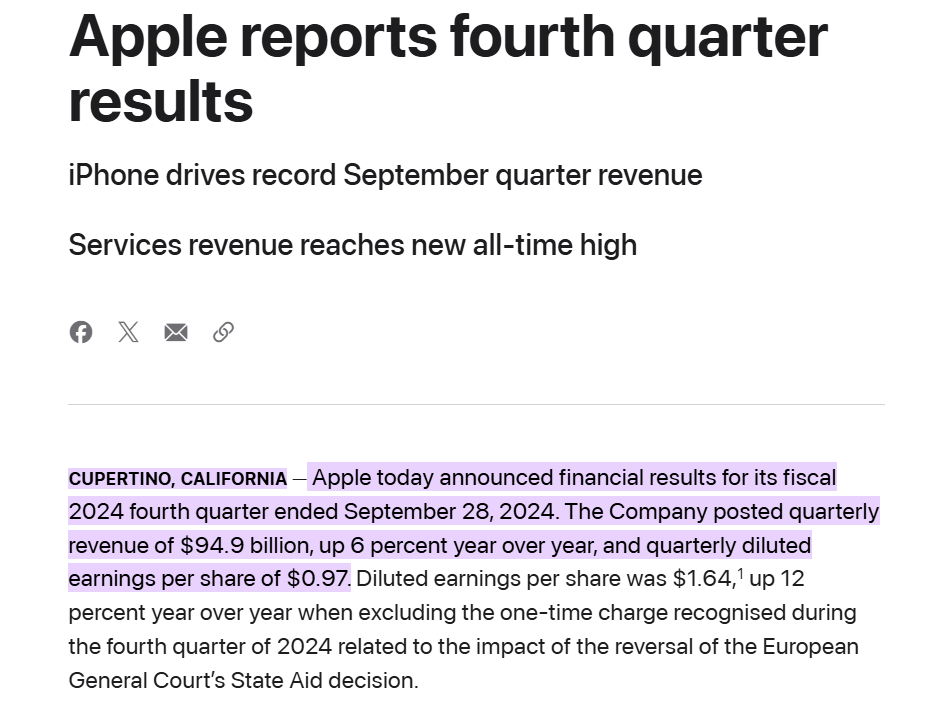
- Earnings and industry trends: when Apple reported a 6% revenue rise to $94.9B in fiscal 2024, it signaled financial strength.
Most successful traders combine both approaches.
Benefits of trading
- Income potential: skilled traders can grow capital and build a secondary income stream.
- Flexibility: trade from anywhere with an internet connection.
- Skill building: trading sharpens discipline, risk management, and decision-making.
- Wealth accumulation: compounding and reinvestment can grow capital over time.
Risks of trading (and how to manage them)
Trading carries real risk, and being aware of it is essential:
- Volatility: prices can swing sharply; a geopolitical shock can spike oil in hours.
- Emotional decisions: fear and greed drive panic-selling and overtrading.
- Leverage: leverage amplifies gains and losses, and can wipe an account if misused.
- Market events: rate decisions or elections can move markets fast.
Manage these with proven habits: set stop-losses, size positions sensibly, use only regulated brokers, and never risk money you can’t afford to lose. Our risk management guide covers this in depth.
How to start trading in 6 steps
- Learn the basics: understand markets, strategies, and risks before risking money.
- Choose your market: match it to your goals and risk tolerance. See how to choose the right trading market.
- Open a trading account: pick a broker regulated by the SEC, FCA, or ASIC. See how to choose a broker.
- Master the essentials: order types, risk management, and analysis.
- Start small: trade a modest amount while you learn.
- Practice on a demo account: rehearse with virtual funds before going live.
Essential tools for trading
- Trading platforms: MetaTrader 5 and TradingView for charts, data, and execution.
- Charting tools: candlesticks, Bollinger Bands, and RSI to spot trends and reversals.
- News sources: Bloomberg and Reuters for market-moving events like Fed decisions.
- A regulated broker: for secure market access, competitive spreads, and fund safety. See how to check if a broker is licensed.
- A trading journal: to track trades and refine your approach.
Trading regulation and safety
Trading is regulated by agencies such as the SEC (USA), FCA (UK), and ASIC (Australia), which oversee brokers and protect traders. Choosing a regulated broker helps keep your funds secure and the environment fair. Understand your local rules and pair them with disciplined risk management. Learn more in regulated vs. unregulated brokers.
Common mistakes beginners make
New traders often overtrade, skip stop-losses, and let fear or greed drive decisions: a fast route to losses. The fix is education, discipline, and a clearly defined, tested strategy.
Editorial sources
- Investor.gov — How Stock Markets Work
- FINRA — Investing and Trading Basics
- CFTC — Eight Things to Know Before Trading Forex
Conclusion
Trading is a dynamic way to grow wealth and diversify income, but it rewards preparation. Learn the fundamentals, pick a market and strategy that fit your goals, use a regulated broker, and manage risk on every trade. Build consistency, and adapt as markets change.
Disclosure: AAFX.IO may earn a commission if you open an account with a broker we compare. This never affects our editorial guidance, and this article is educational, not financial advice.
Frequently asked questions
What is trading in simple words?
Trading means buying and selling financial assets, like shares, currencies, or crypto, to profit from price changes. You buy something you expect to rise (or sell something you expect to fall) and close the position for a gain.
How does trading work?
You open an account with a broker, fund it, and open a position by buying or selling an asset. The price moves with supply and demand, and you close the position later to realize a profit or loss.
Is trading the same as investing?
No. Trading is typically short-term and active, aiming to profit from price swings over seconds to weeks. Investing is long-term, holding assets for years to build wealth. See our trading vs. investing guide.
How much money do I need to start trading?
Many brokers let you start with as little as $50–$100, especially in forex and crypto. It’s wise to start small and scale up only once you’re consistently profitable on a demo account.
Can beginners make money trading?
Yes, but it’s hard, and most beginners lose money early on. Consistent results come from education, risk management, a tested strategy, and practice on a demo account first.
What is the best market for beginners?
Major forex pairs and large-cap stocks are common starting points because they’re liquid and well-covered by news and analysis. Choose the market that best fits your goals and schedule.
Is trading risky?
Yes. Prices can move against you, and leverage can magnify losses. Risk management: stop-losses and sensible position sizing are essential to trade sustainably.
Do I need a broker to trade?
Yes. Retail traders access the markets through a regulated broker or exchange. Always choose one licensed by a reputable authority such as the SEC, FCA, or ASIC.
Sources & Methodology
Primary-source standard: Market-moving facts should link to original data releases, regulator notices, company filings or official project announcements whenever available. Secondary reporting is used for additional context, not as a substitute for original evidence.
Page last reviewed: