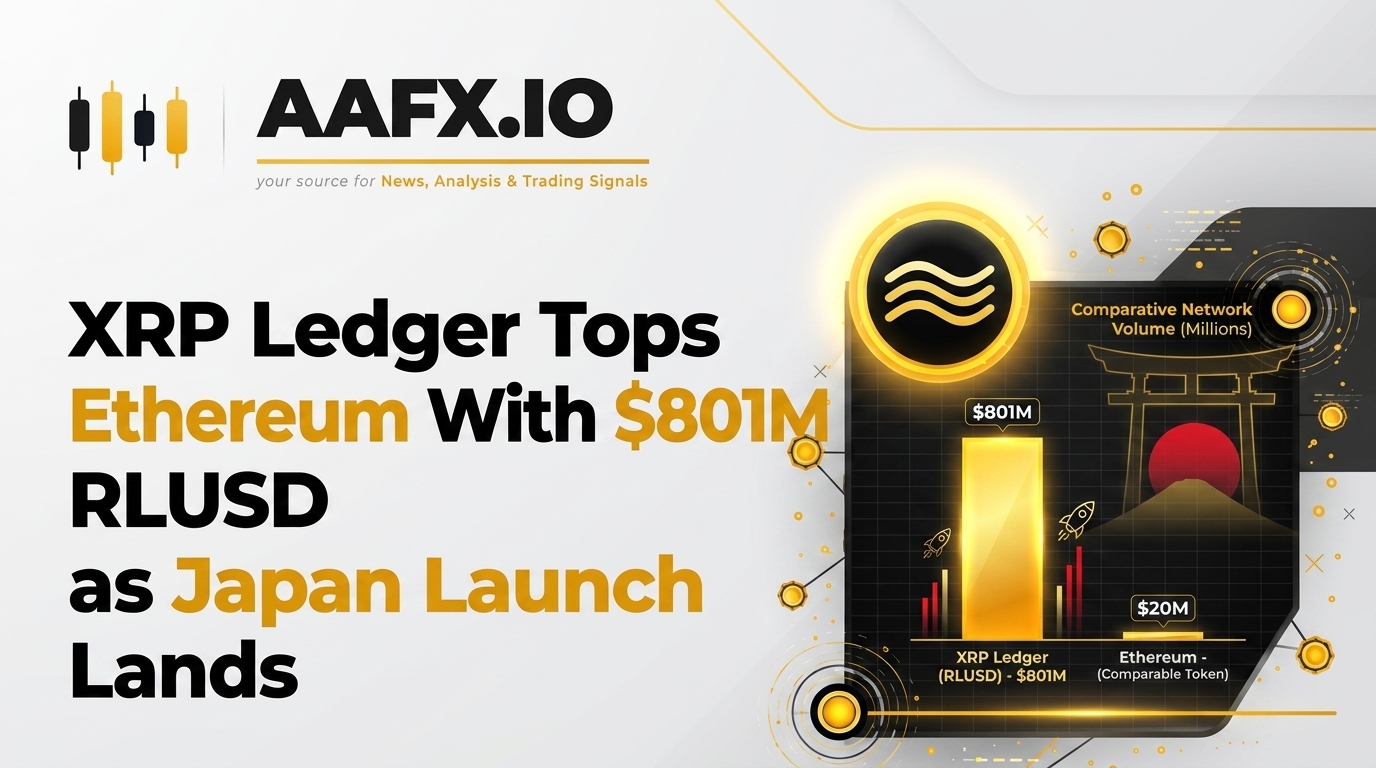
Ripple’s RLUSD stablecoin has hit an early milestone. The XRP Ledger now holds more RLUSD in circulation than Ethereum, which was the original launch platform. This change shows XRPL is gaining traction as Ripple moves into one of Asia’s biggest financial markets.
XRPL Overtakes Ethereum in Supply
The Ripple USD Tracker shows about $801.79 million worth of RLUSD is now on the XRP Ledger, just above the $795.59 million on Ethereum. This is the first time XRPL has surpassed Ethereum in RLUSD supply since the stablecoin launched, which is notable since RLUSD started on Ethereum.
This timing is no accident. On June 25, Ripple announced that RLUSD is now available in Japan through a partnership with SBI Holdings and the crypto exchange SBI VC Trade. This strengthens Ripple’s ties with SBI Group and aims to help with cross-border payments, asset tokenization, and collateral management. RLUSD has also received approval from Japan’s Financial Services Agency, so it can operate as an official electronic payment instrument under Japan’s Payment Services Act.
Jack McDonald, Ripple’s Senior Vice President of Stablecoins, described the launch as a way to give Japanese institutions, consumers, and businesses better access to regulated, dollar-backed stablecoins. Right now, SBI VC Trade supports RLUSD transactions on Ethereum, but plans to add XRP Ledger support soon.
Why XRPL’s Lead Matters for Adoption
Vet, an XRP Ledger validator who runs a dUNL node, was one of the first to point out the supply shift. He noted that XRPL now holds more RLUSD on-chain than Ethereum. Vet believes the stablecoin is a key entry point for financial institutions interested in XRPL, calling RLUSD a strong way to encourage wider adoption of the network.
This effect could go beyond just RLUSD. Vet suggested that once institutions start using XRPL for the stablecoin, it will be easier for other XRPL-issued assets to get support from these institutions too. This could help the whole network grow faster.
Ethereum’s Role Isn’t Disappearing
Even with this supply change, Ethereum still holds a strong place in the stablecoin world. Vet pointed out that Ethereum and its ERC-20 token standard are deeply integrated in the industry, going back before the latest SEC enforcement period. He also said that new services usually launch on Ethereum first because big institutions tend to be cautious, and XRPL integration usually comes later.
This pattern is already happening in other parts of Ripple’s network. SBI Group recently launched its own yen-based stablecoin, JPYSC, on Ethereum. This shows that both blockchains are working together in Ripple’s overall stablecoin strategy, instead of competing for dominance.
Key data points:
- XRPL RLUSD supply: $801.79 million
- Ethereum RLUSD supply: $795.59 million
- RLUSD now FSA-approved in Japan under the Payment Services Act
Sources & Methodology
Primary-source standard: Market-moving facts should link to original data releases, regulator notices, company filings or official project announcements whenever available. Secondary reporting is used for additional context, not as a substitute for original evidence.
Page last reviewed: