

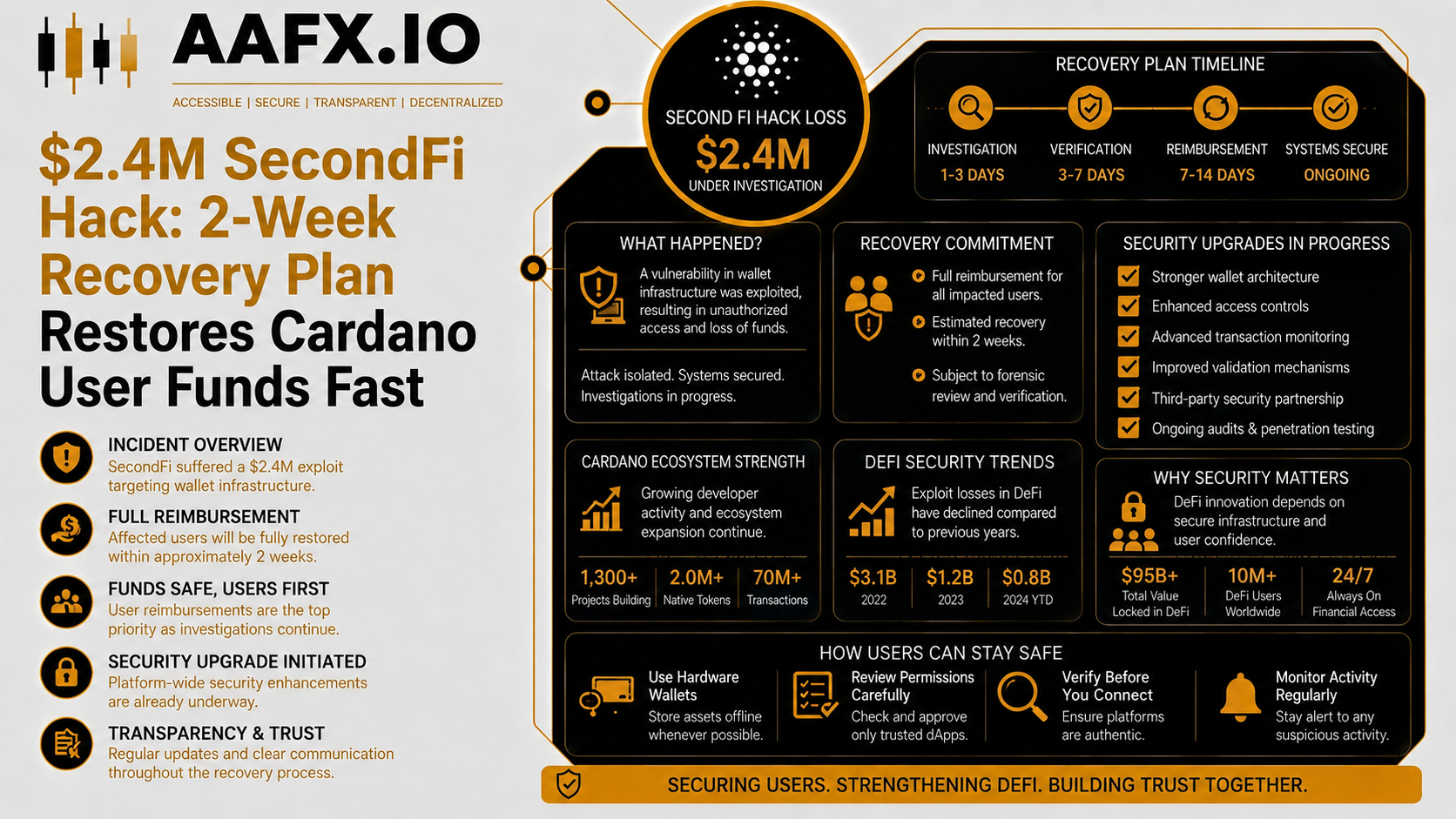
SecondFi unveils a two-week recovery plan after a $2.4M Cardano exploit, promising full user reimbursement while strengthening wallet security and DeFi defenses.
SecondFi Begins User Recovery
SecondFi, a decentralized finance (DeFi) platform built on the Cardano blockchain, has launched an aggressive recovery strategy after a $2.4 million security breach compromised part of its wallet infrastructure.
The company says all verified users affected by the incident are expected to receive full reimbursement within two weeks, reinforcing its commitment to restoring trust while improving platform security.
According to the development team, engineers quickly identified the source of the exploit, isolated the affected systems, and initiated forensic investigations to track the movement of stolen assets. Security specialists are also assisting with blockchain analysis to understand how the attack unfolded and prevent similar incidents from occurring again.
Although the financial loss is relatively small compared with some of the largest cryptocurrency hacks in recent years, the breach highlights the ongoing security risks facing decentralized finance platforms. As DeFi adoption continues to expand, protecting wallet infrastructure and application-layer services has become just as important as securing the underlying blockchain.
Security Upgrades Underway
SecondFi confirmed that user compensation will begin after investigators complete balance verification and forensic reviews. At the same time, the platform is implementing a broad security overhaul designed to strengthen its operational defenses before services fully return.
The planned improvements include:
- Enhanced wallet architecture with stronger access controls.
- Advanced transaction monitoring to detect suspicious activity.
- Improved transaction validation before execution.
- Comprehensive reviews of internal security procedures.
- Expanded collaboration with blockchain security experts.
These measures reflect a broader trend across the cryptocurrency industry, where platforms increasingly invest in proactive security instead of relying solely on incident response. Continuous monitoring, independent audits, and regular penetration testing have become standard practices among leading DeFi projects seeking to reduce operational risk.
Developers throughout the Cardano ecosystem have also intensified efforts to improve smart contract security through independent code audits, bug bounty programs, and ongoing vulnerability assessments before launching new decentralized applications.
DeFi Still Faces Security Risks
Despite significant advances in blockchain technology, cybersecurity experts emphasize that most successful cryptocurrency attacks do not target blockchain consensus mechanisms. Instead, hackers typically exploit weaknesses in wallet software, user permissions, decentralized applications, and cross-chain infrastructure.
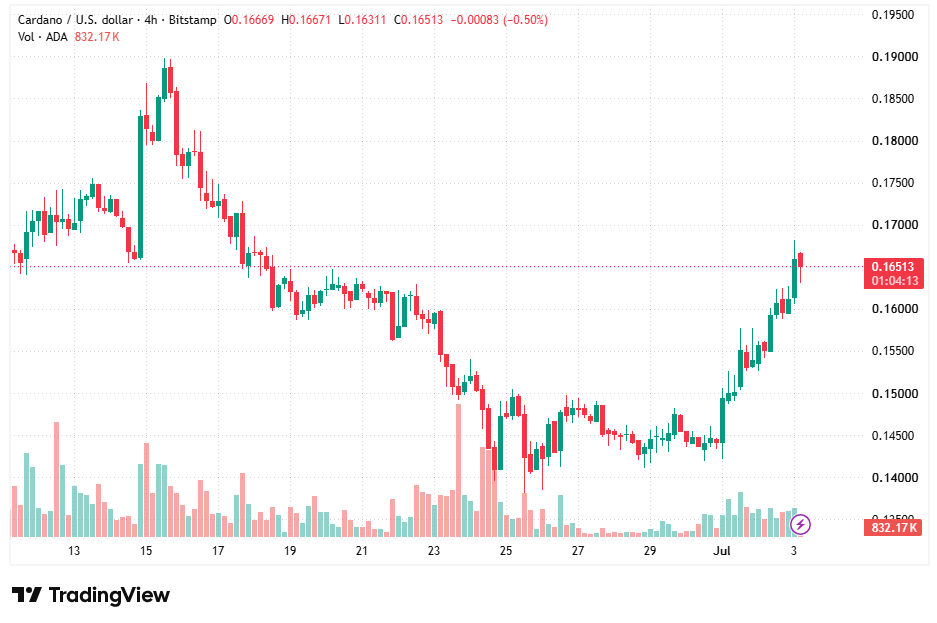
Decentralized finance enables users to borrow, lend, trade, and earn returns without traditional financial institutions by relying on blockchain-based smart contracts. While networks such as Cardano provide strong cryptographic protection, supporting applications remain attractive targets for sophisticated attackers.
Industry data indicates exploit-related losses have generally declined over the past several years as security standards continue to improve. However, cybercriminals have adapted their tactics by focusing on application-level vulnerabilities rather than attempting to compromise blockchain networks directly.
For investors and everyday users, cybersecurity professionals recommend several best practices to reduce risk:
- Use hardware wallets for long-term asset storage.
- Verify the authenticity of every decentralized application.
- Review wallet permissions before approving transactions.
- Monitor account activity regularly for unauthorized transfers.
- Avoid interacting with unknown smart contracts or suspicious links.
SecondFi’s recovery initiative demonstrates that rapid incident response and transparent communication remain essential during security events. While the company works toward reimbursing affected users, the incident serves as another reminder that maintaining robust wallet security and continuously strengthening application infrastructure will remain critical as the DeFi ecosystem continues to mature.
