Cardano’s $16M ADA wallet exploit raises concerns over governance security as EMURGO exits Pentad, highlighting risks within voting and delegation systems.
Wallet Security Meets Governance
Cardano’s governance model was designed to give ADA holders a direct voice in shaping the network’s future. However, a recent wallet-layer exploit has revealed a critical vulnerability in the ecosystem, demonstrating how user-facing security can influence the effectiveness of decentralized governance.
The incident centers on the SecondFi exploit, which resulted in confirmed losses of approximately 16 million ADA. In response, EMURGO—one of Cardano’s founding organizations—announced it would step down from its position in Pentad, the five-member body responsible for coordinating infrastructure funding. The company said it would redirect resources toward recovery efforts and support affected users.
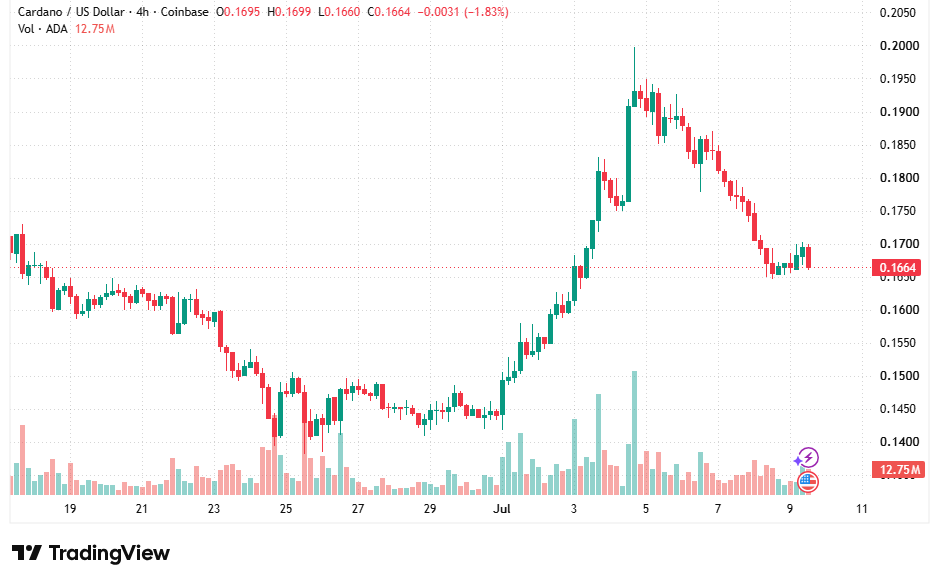
While the exploit did not directly compromise Cardano’s blockchain infrastructure, it struck a component closely tied to governance participation. Governance-compatible wallets serve as the primary gateway through which ADA holders delegate voting power, interact with delegated representatives (DReps), and participate in treasury decisions. As a result, the event has intensified discussion around the relationship between wallet security and decentralized decision-making.
Governance Activity Continues
Cardano’s governance framework, established under CIP-1694 during the Voltaire era, relies on several interconnected groups. These include ADA holders, stake pool operators, DReps, and the Constitutional Committee. Participation begins when users select a governance-enabled wallet and engage in delegation or voting activities.
Recent governance metrics highlight the scale of engagement across the network:
- 28 active governance actions
- 379 active delegated representatives (DReps)
- 3,217 votes cast during the past 30 days
- 87.52 billion ADA voting power exercised
These figures demonstrate that governance participation has become a significant component of the Cardano ecosystem. Because wallets function as the entry point for these activities, any weakness at the user layer can affect confidence in governance processes, even when the underlying blockchain remains secure.
The incident underscores an increasingly important reality across decentralized networks: governance security extends beyond protocol code and includes the tools users depend on every day.
EMURGO Exit Raises Questions
The timing of EMURGO’s departure from Pentad has drawn additional attention because it comes during an active infrastructure funding cycle. Earlier this year, the Cardano Foundation requested 23 million ADA through the Critical Integrations V2 program to support key ecosystem initiatives, including Circle USDCx, LayerZero, Pyth, Dune, and native Fireblocks integration.
That proposal was sponsored through Pentad by the Cardano Foundation, Input Output, EMURGO, and Midnight, with Intersect serving as administrator. EMURGO’s withdrawal reduces the number of entities actively coordinating treasury-backed infrastructure decisions at a crucial stage of the funding process.
Beyond the confirmed losses, forensic analysis conducted using Bitquery data suggested a broader pool of swept funds exceeding 129 million ADA. Analysts caution that this figure represents a wider investigation and should not be confused with the publicly confirmed losses tied to affected users.
On average, the confirmed losses equate to roughly 42,800 ADA per impacted wallet. Although this amount represents only about 0.018% of the 87.52 billion ADA involved in recent governance voting activity, the event highlights how individual security failures can influence trust in systems designed to distribute power across an entire blockchain community.
As Cardano’s governance ecosystem expands, strengthening wallet-layer protections may become just as important as advancing the protocol itself.
Sources & Methodology
Primary-source standard: Market-moving facts should link to original data releases, regulator notices, company filings or official project announcements whenever available. Secondary reporting is used for additional context, not as a substitute for original evidence.
Page last reviewed: