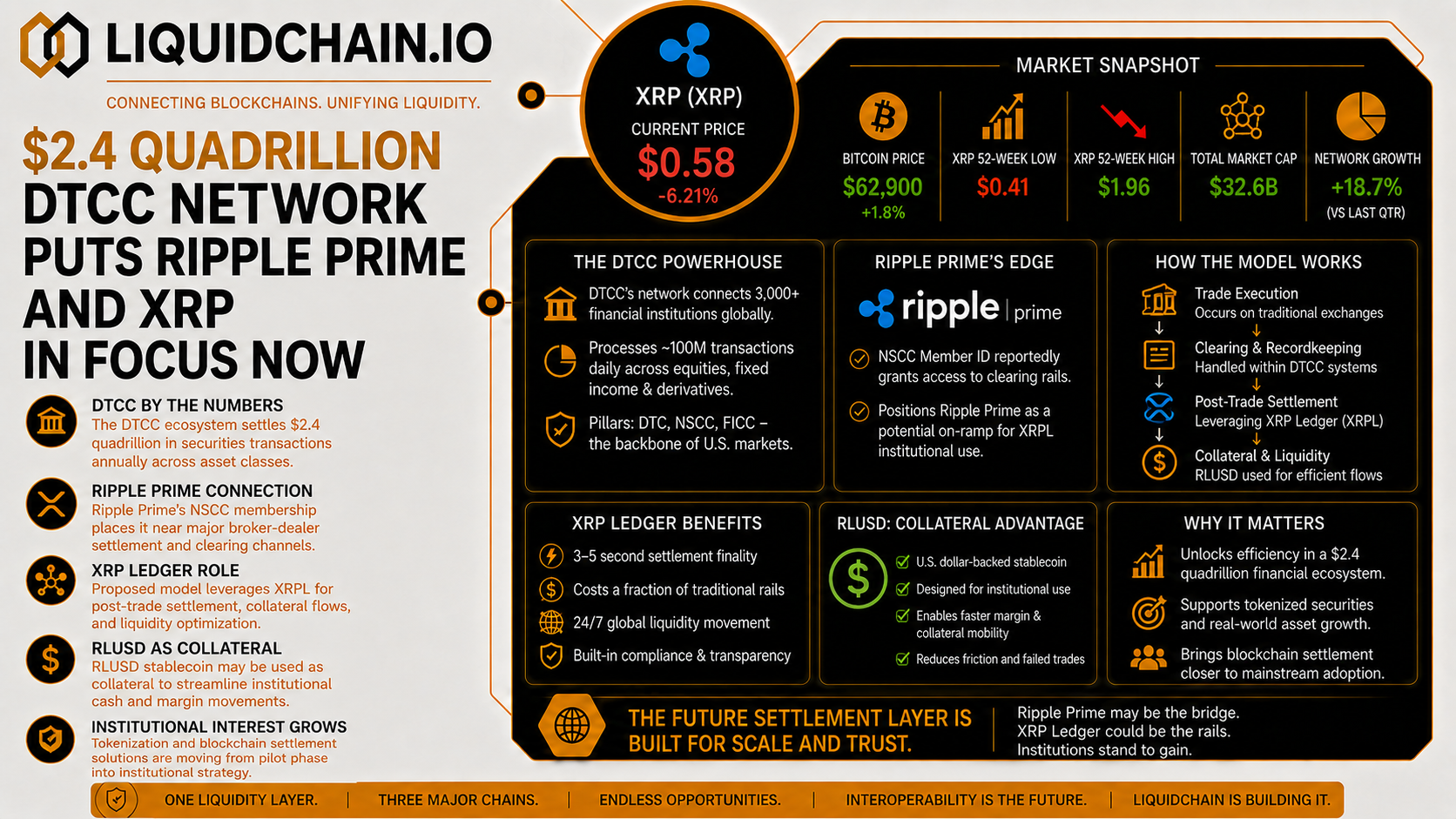
Ripple Prime’s connection to DTCC-linked infrastructure sparks XRP Ledger speculation as institutions explore faster settlement and tokenized asset flows.
Ripple Prime Sparks Wall Street Debate
Ripple Prime has emerged as a focal point in discussions surrounding the future of institutional blockchain adoption. Market observers are increasingly examining whether the platform could serve as a bridge between traditional financial infrastructure and distributed ledger technology.
The attention stems from reports that Ripple Prime has connections to U.S. clearing networks through listings associated with the National Securities Clearing Corporation (NSCC), a key component of the broader financial settlement ecosystem.
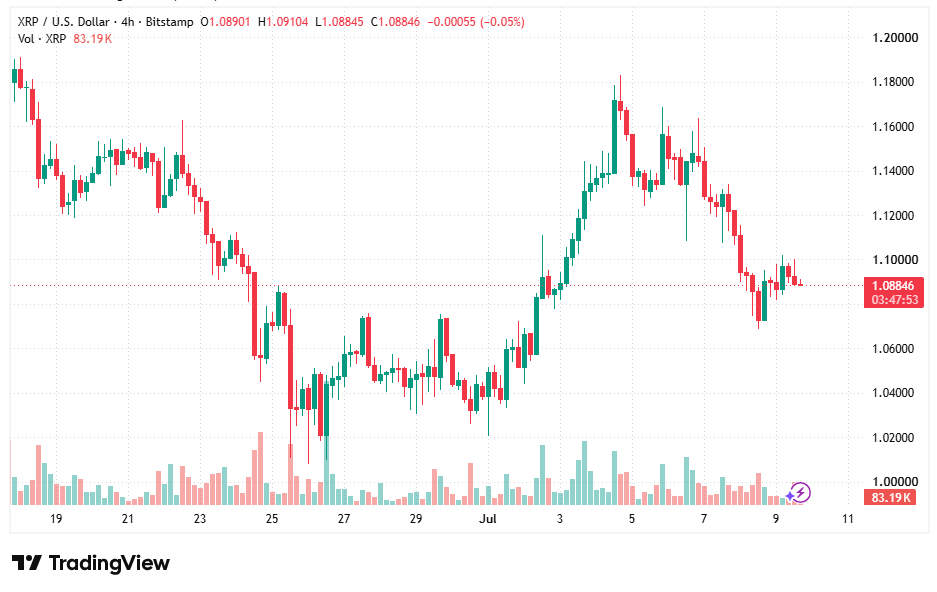
The development has fueled speculation about how institutional investors and broker-dealers could eventually interact with the XRP Ledger (XRPL). While no official confirmation suggests that major clearing organizations are directly integrating XRPL into their core infrastructure, the conversation highlights growing interest in blockchain-powered settlement solutions among financial institutions.
The debate is particularly significant because the clearing and settlement market underpins trillions of dollars in daily transactions. Any technology capable of improving efficiency, reducing costs, or shortening settlement times naturally attracts attention from both Wall Street firms and fintech innovators.
DTCC Infrastructure and XRPL
At the center of the discussion is the relationship between Ripple Prime and infrastructure connected to the Depository Trust & Clearing Corporation (DTCC). Through its subsidiaries, including NSCC and the Fixed Income Clearing Corporation (FICC), DTCC plays a critical role in processing securities transactions across U.S. markets.
The FICC’s Government Securities Division is especially important because it supports clearing activities linked to the U.S. Treasury market, one of the largest and most liquid financial markets in the world. Daily transaction volumes frequently reach hundreds of billions of dollars, making operational efficiency a top priority.
Key points being discussed include:
- Ripple Prime’s reported proximity to institutional settlement channels.
- Potential use of blockchain technology for post-trade processes.
- Growing interest in tokenized securities and digital asset infrastructure.
- Increased focus on settlement efficiency and collateral management.
Despite the attention, analysts emphasize that current discussions should not be interpreted as evidence that DTCC is migrating its core systems to the XRP Ledger. Instead, the focus remains on how blockchain networks could complement existing financial infrastructure.
XRP Settlement Use Cases Expand
According to market commentary, tokenized securities would continue to remain within established record-keeping and clearing systems. The XRP Ledger’s role would likely begin after trade execution and clearing have already occurred. This approach positions XRPL as a potential tool for post-trade settlement, liquidity movement, and collateral transfers.
Another aspect drawing interest is RLUSD, Ripple’s U.S. dollar-backed stablecoin. Some analysts believe stablecoins could eventually support collateral functions in tokenized financial markets, helping institutions move value more efficiently between counterparties.
The broader trend reflects a shift toward modernization across capital markets. Financial firms are increasingly exploring tokenization, blockchain settlement, and programmable assets as ways to streamline operations.
While the long-term role of XRPL remains uncertain, discussions surrounding Ripple Prime demonstrate that institutional interest in blockchain-based settlement infrastructure continues to grow.
As traditional finance and digital assets move closer together, platforms that connect both worlds are likely to remain under close scrutiny from investors, regulators, and market participants alike.
Sources & Methodology
Primary-source standard: Market-moving facts should link to original data releases, regulator notices, company filings or official project announcements whenever available. Secondary reporting is used for additional context, not as a substitute for original evidence.
Page last reviewed: