
Gold (XAU/USD) struggled to build on its intraday recovery from an over one-week low and traded below the $4,050 level through the first half of the European session on Wednesday, July 29, 2026. Spot prices hovered around $4,030–$4,034 after testing lows near $4,010 earlier, as a softer US Dollar offered limited support while fresh Middle East hostilities and rising oil prices revived inflation concerns ahead of the Federal Reserve’s rate decision.
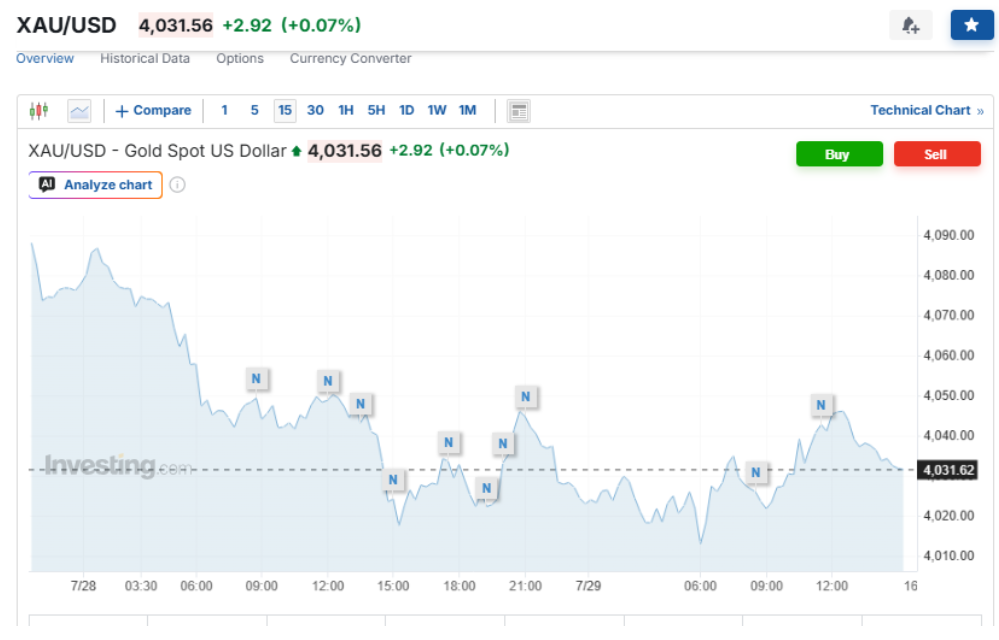
Gold Closes Near $4,033–$4,034 After Testing $4,010 Low – Key developments
- Spot gold recovered modestly from its over one-week low near the $4,000–$4,010 zone but failed to sustain moves above $4,050, with session ranges showing highs near $4,047–$4,048 and closes around $4,033–$4,034.
- The US Dollar Index (DXY) remained depressed for a second straight day, trading near 101.28–101.35 and below its recent monthly high, as traders awaited the outcome of the two-day FOMC meeting.
- Iran’s Islamic Revolutionary Guard Corps (IRGC) launched a surprise attack late Tuesday, firing multiple ballistic missiles at US forces in the Middle East (reportedly targeting sites including in Jordan). US Central Command (CENTCOM) stated all missiles were successfully intercepted and that forces remain at a high state of readiness.
- In response, US and Saudi forces conducted joint strikes on multiple Iran-aligned terrorist logistics and weapons sites in eastern Iraq, retaliating against more than 30 drone attacks over the prior three days.
- President Donald Trump reiterated warnings that the US would resume strong military action against key Iranian infrastructure if diplomacy fails to resolve the crisis quickly.
- Yemen’s Iran-aligned Houthis claimed they fired missiles at a Saudi oil tanker (NCC Ghazal) for allegedly violating a maritime navigation ban on Saudi vessels.
- Crude oil staged a recovery from multi-week lows amid fears of disruptions to global energy supplies, particularly around the Strait of Hormuz, where Iran continues to assert influence.
Why Gold Stalled: Soft USD Support Offset by Oil Rebound and Rising Rate-Hike Bets
A weaker USD typically supports non-yielding assets like gold by lowering opportunity costs for holders. However, the fresh escalation in US-Iran tensions boosted the dollar’s safe-haven appeal and limited deeper losses. Simultaneously, the rebound in oil prices—driven by risks to energy flows through the Strait of Hormuz and Houthi actions—reignited inflation fears. This strengthened market bets for at least one additional US interest-rate hike later in the year, raising real yields and capping gold’s upside. Geopolitical risk premiums thus created a tug-of-war: supportive for gold via uncertainty, yet offset by firmer USD and rate expectations.
Gold Corrects From $5,600 Peak as US-Iran Conflict and Fed Hold Expectations Shape Market
Gold has corrected sharply from its January 2026 peak above $5,600, reflecting earlier shifts in real-rate expectations and risk sentiment. Prices had dipped below $4,000 earlier in July before the recent bounce. The broader US-Iran conflict, sometimes referred to in analyses as part of ongoing 2026 hostilities, has involved repeated missile and drone exchanges, US strikes on Iranian capabilities, and threats to shipping lanes. CENTCOM has conducted multiple nights of precision operations earlier in the month.
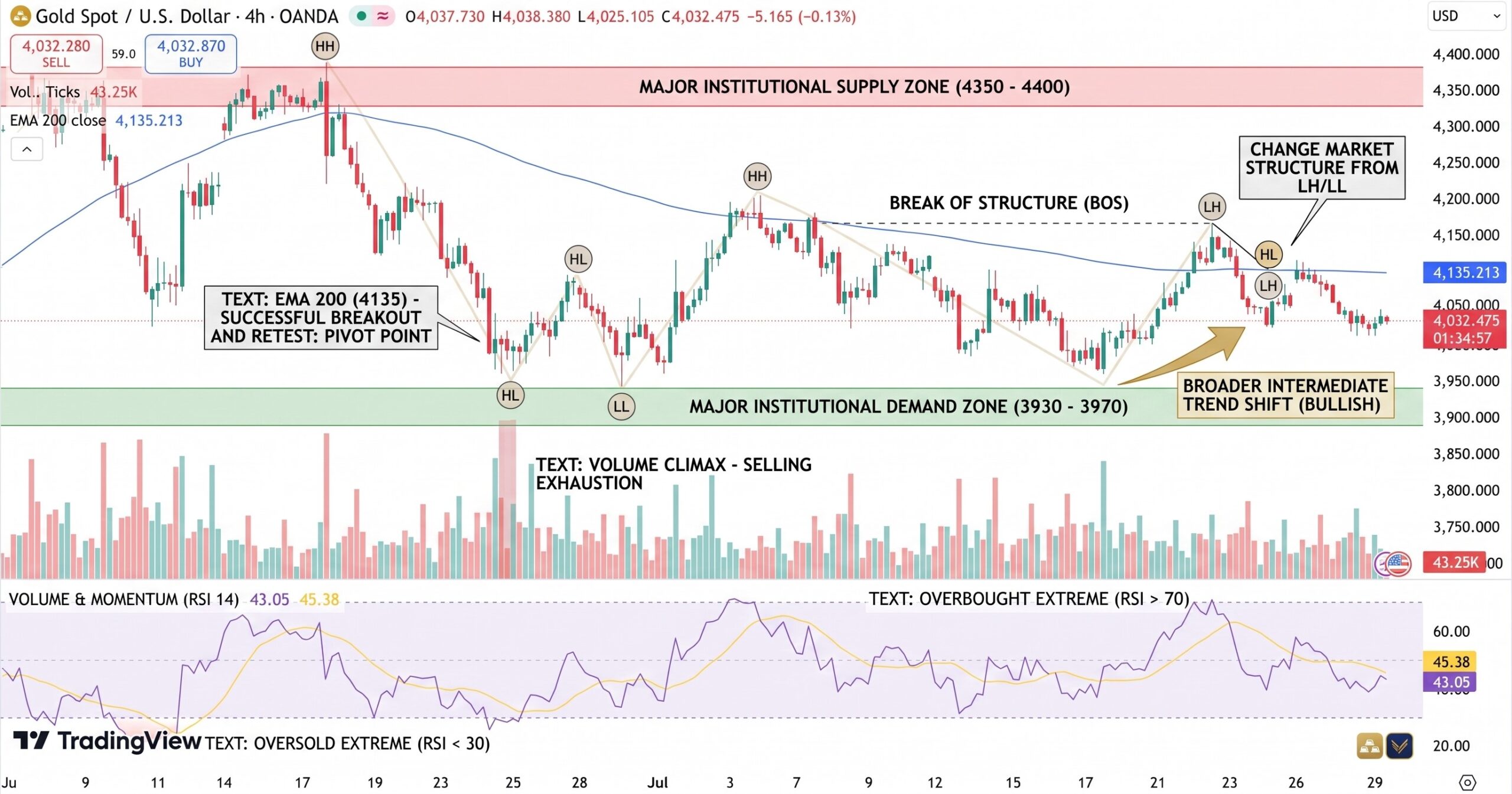
The FOMC meeting (July 28–29) comes amid expectations of a hold on the federal funds rate (currently in the 3.50–3.75% range in recent forecasts), though oil-driven inflation risks have lifted the probability of a future hike in prediction markets.
What’s next
Markets will closely watch the FOMC rate decision and Chair’s press conference later Wednesday for any signals on the policy path. Further developments in the Middle East—additional Iranian launches, US/Saudi responses, or Strait of Hormuz disruptions—could drive volatility in both gold and oil. Technical levels to monitor include support near $4,000–$4,010 and resistance around $4,050–$4,100. Sustained USD strength or higher rate bets would likely keep gold range-bound or under pressure in the near term.
Sources & Methodology
Primary-source standard: Market-moving facts should link to original data releases, regulator notices, company filings or official project announcements whenever available. Secondary reporting is used for additional context, not as a substitute for original evidence.
Page last reviewed: