
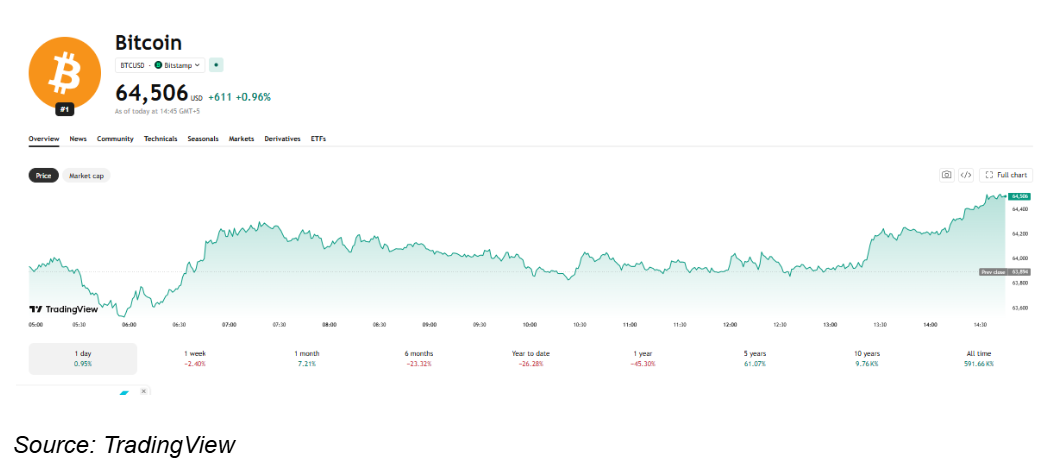
Bitcoin slipped to around $64,043 on Thursday after investors reacted to a hawkish U.S. Federal Reserve, escalating geopolitical tensions between the United States and Iran, and uncertainty ahead of Strategy Inc.’s second-quarter earnings. The broader cryptocurrency market also weakened as rising Treasury yields, higher oil prices and persistent inflation concerns reduced investors’ appetite for risk assets. According to Reuters, the combination of tighter monetary policy expectations and geopolitical risks weighed on digital assets across the market.
Bitcoin Falls Below $64.1K as Strategy’s 843,775 BTC Treasury Remains in Focus
Bitcoin fell 0.6% to approximately $64,043, while Ethereum declined 0.9% to around $1,903 and XRP lost 1.2% during Thursday’s trading session. The decline came after the Federal Reserve kept its benchmark interest rate unchanged at 3.50%–3.75%, but policymakers delivered a more hawkish message than markets had anticipated. Three Federal Reserve officials reportedly favored another rate increase, reinforcing concerns that interest rates could remain elevated if inflation proves difficult to control. According to Reuters, the Fed’s stance pushed Treasury yields higher, making speculative assets such as cryptocurrencies less attractive to investors.
Another major focus for crypto investors is Strategy Inc. (NASDAQ: MSTR), which is scheduled to report second-quarter earnings after the U.S. market closes. Wall Street expects the company to report earnings per share (EPS) of $0.79 on revenue of $122.93 million. Investors are paying particular attention to the company’s Bitcoin treasury after it paused purchases in recent weeks and previously sold part of its holdings to strengthen liquidity. Strategy currently holds approximately 843,775 Bitcoin, making it the world’s largest publicly traded corporate Bitcoin holder.
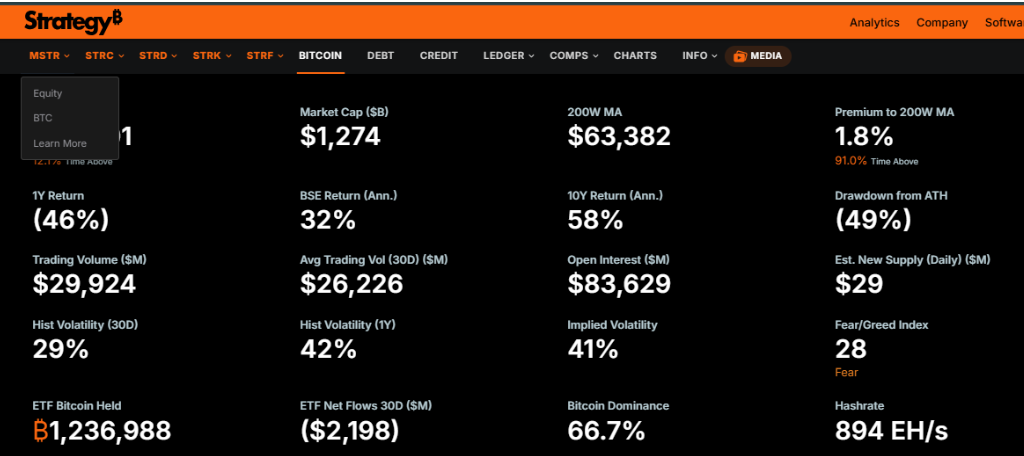
The company’s average Bitcoin acquisition cost is estimated at roughly $75,400–75,600 per BTC, meaning its holdings remain significantly below cost at current market prices. Reuters previously reported that Strategy also reduced its holdings earlier this year to help meet capital and debt obligations after financing much of its Bitcoin accumulation through debt and share issuances.
2% Inflation Target Remains in Focus as Bitcoin Faces Macro Pressure
The latest decline reflects growing concerns over both monetary policy and geopolitical developments. Although the Federal Reserve did not raise interest rates, its guidance suggested policymakers remain focused on returning inflation to the 2% target, even if additional tightening becomes necessary. Higher interest rates generally reduce demand for non-yielding assets like Bitcoin because investors can earn better returns from lower-risk fixed-income investments. Treasury yields climbed following the Fed decision, triggering selling pressure across cryptocurrencies and technology-related assets.
Geopolitical tensions also intensified after fresh U.S. military strikes on Iran prompted retaliatory action from Tehran. The conflict pushed oil prices sharply higher, increasing fears that energy-driven inflation could remain elevated and force central banks to keep monetary policy restrictive for longer. According to Reuters, these developments encouraged investors to move away from risk assets, including cryptocurrencies.
Institutional Interest Remains Strong with Bitcoin Near $64K
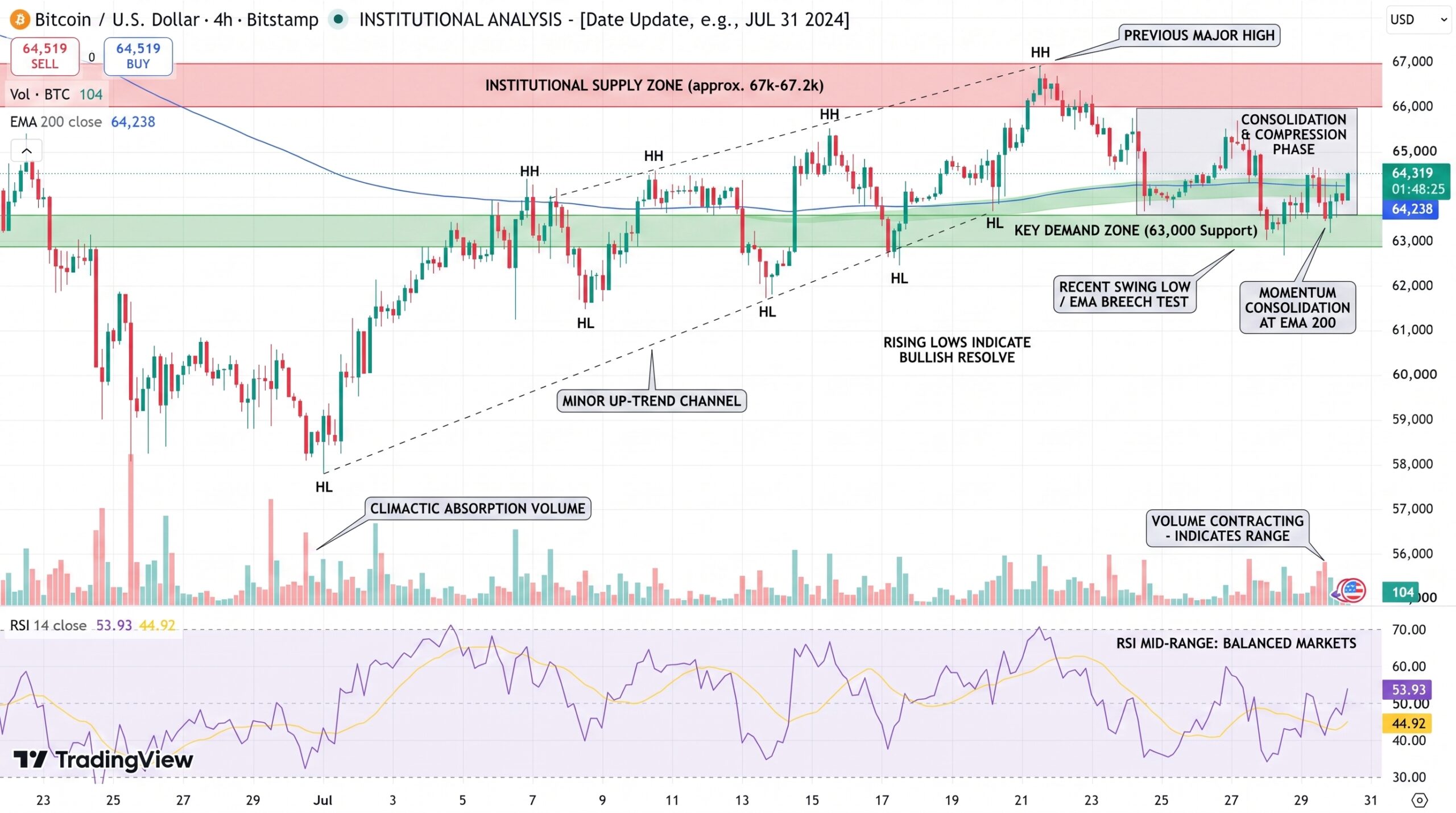
Despite Thursday’s decline, Bitcoin has traded around the $64,000 level for much of July after recovering from lows seen earlier in the summer. Market activity remains elevated, with Bitcoin futures open interest reaching a two-month high, indicating that institutional and derivatives traders continue to actively participate despite recent price volatility. Analysts note that Bitcoin’s short-term direction is increasingly being driven by macroeconomic factors such as Federal Reserve policy, inflation expectations, Treasury yields and geopolitical events rather than crypto-specific news alone.
Strategy continues to play an important role in Bitcoin market sentiment because of the size of its holdings. Investors are expected to closely examine management’s comments regarding future Bitcoin purchases, potential asset sales, financing plans and debt management. Any indication that the company could resume buying or increase sales may influence institutional sentiment toward Bitcoin in the coming weeks.
Investors Eye $64K Bitcoin Level Ahead of Key U.S. Economic Data
Markets will closely watch Strategy’s earnings report and management commentary for updates on its Bitcoin strategy. Investors will also monitor upcoming U.S. inflation data, labor market figures and future Federal Reserve communications for clues on the path of interest rates. In addition, developments in the U.S.-Iran conflict and movements in global oil prices will remain key drivers of market sentiment. Bitcoin’s ability to hold above the $64,000 level could determine whether the cryptocurrency stabilizes or faces another wave of selling pressure.
Sources & Methodology
Primary-source standard: Market-moving facts should link to original data releases, regulator notices, company filings or official project announcements whenever available. Secondary reporting is used for additional context, not as a substitute for original evidence.
Page last reviewed: