
Gold prices rose on Monday, August 3, 2026, after U.S. President Donald Trump delayed a planned military strike on Iran, triggering a sharp decline in oil prices that eased concerns over sticky inflation and higher interest rates. Spot gold gained around 0.5–0.7% near $4,065–$4,067 per ounce, supported by a weaker U.S. dollar. The move came as markets dialed back expectations of near-term escalation in the Middle East conflict that has disrupted energy supplies since late February.
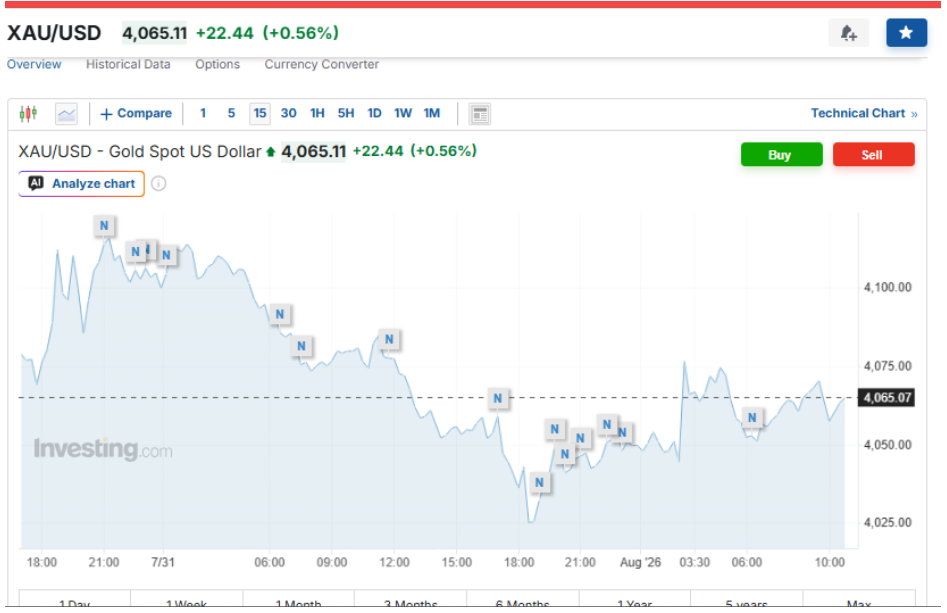
Gold Rises 0.7% to $4,067 as Oil Plunges Over $5 on Trump Iran Delay
Trump announced late Saturday on Truth Social that Iran and other Middle Eastern countries had requested more time to finalize an agreement. The proposed deal would include the “Immediate, Complete and Total” reopening of the Strait of Hormuz and an end to Iran’s nuclear threat. He said he agreed to cancel the planned attack “subject to being able to rapidly make a DEAL,” with Israel joining the commitment.
Oil prices tumbled more than $5 a barrel at the open of Asian trading, with Brent crude falling nearly 5% toward the mid-$80s per barrel and West Texas Intermediate (WTI) also declining sharply toward the low $80s. The U.S. Dollar Index slipped below the 100 level, trading near 99.6–99.7. Spot gold was reported up about 0.7% at around $4,067 per ounce in early trading, with U.S. gold futures also higher.
The conflict, which began with U.S. and Israeli strikes in late February 2026, has heavily restricted traffic through the Strait of Hormuz—a chokepoint that normally handles about 20 million barrels per day of oil and products, or roughly 20–25% of global seaborne oil trade.
Weaker Oil & Dollar Below 100 Ease Inflation Fears Above Fed’s 2% Target
Lower oil prices reduce the risk of energy-driven inflation that has kept the Federal Reserve’s preferred gauges elevated above its 2% target for years. A softer inflation outlook lessens pressure for aggressive rate hikes, which typically weigh on non-yielding assets like gold. The weaker dollar made dollar-denominated bullion more attractive to overseas buyers.
Although gold is often seen as a safe-haven and inflation hedge, the dominant recent dynamic has been the opposite: war-driven energy spikes raised rate-hike expectations and hurt gold. The de-escalation signal reversed that pressure. Investors also noted the dollar’s slip below 100 as additional support.
Fed’s 9–3 Hold at 3.50–3.75% Amid Inflation Above 2% and Hormuz Disruption
The Federal Open Market Committee held its benchmark federal funds rate steady at 3.50–3.75% on July 29 in a 9–3 vote. Three regional Fed presidents—Beth Hammack (Cleveland), Neel Kashkari (Minneapolis), and Lorie Logan (Dallas)—dissented in favor of an immediate quarter-point increase. On Friday they reiterated that inflation remains too high and that policy needs to be tighter to restore credibility and return prices to the 2% goal.
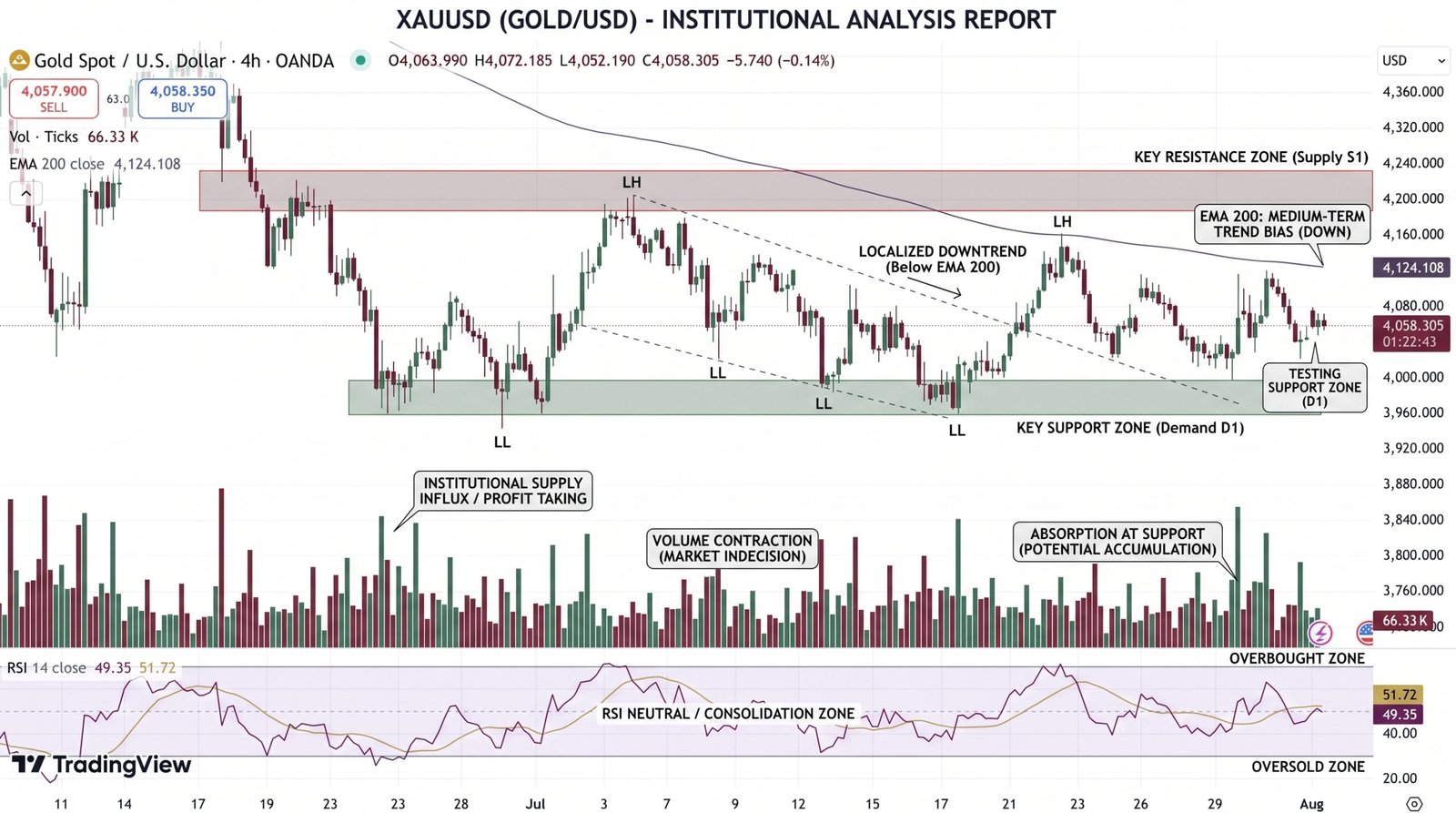
Gold has faced sustained pressure since the conflict began, falling significantly from earlier 2026 highs as oil prices surged and rate expectations firmed. The Strait of Hormuz disruption has been a primary driver of energy market volatility, with pre-war flows of roughly 20 mb/d of crude and products making it one of the world’s most critical chokepoints. Alternative pipeline routes exist but have limited capacity relative to normal seaborne volumes.
U.S. Jobs Data and Next Fed Meeting Key After Monday’s Gold Gains
Markets will closely watch progress (or setbacks) on any Hormuz reopening and nuclear-related agreement, as well as Iranian responses. Immediate focus turns to upcoming U.S. labor market data, including the monthly jobs report, which will influence Federal Reserve rate expectations ahead of the next policy meeting. Further comments from Fed officials and fresh inflation readings will also shape the outlook for gold and broader markets. Any renewed escalation risk or stronger-than-expected economic data could reverse Monday’s gains.
Sources & Methodology
Primary-source standard: Market-moving facts should link to original data releases, regulator notices, company filings or official project announcements whenever available. Secondary reporting is used for additional context, not as a substitute for original evidence.
Page last reviewed: