
European equities hit fresh record highs as WPP jumps 25% and strong earnings offset tech weakness and Middle East tensions.
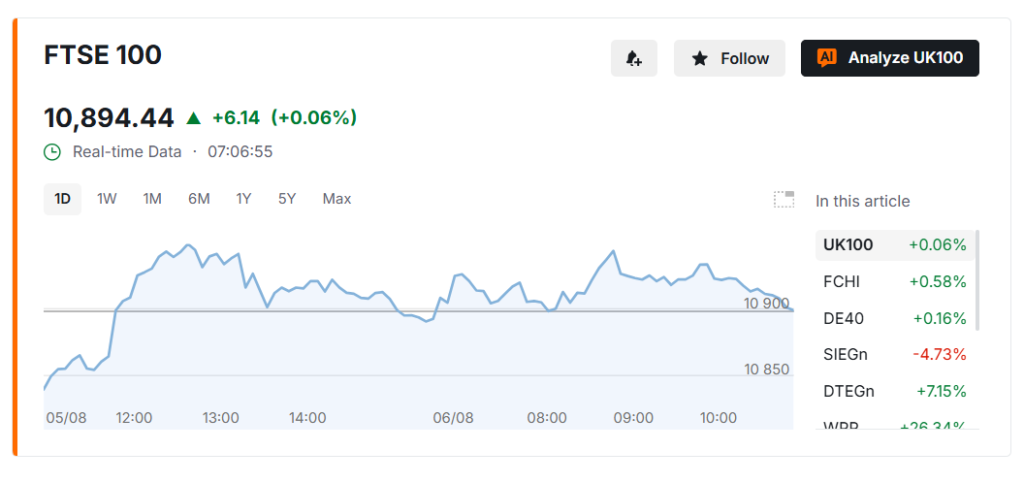
European equities climbed to fresh record highs Thursday as robust earnings from media, defense, and telecommunications companies outweighed a pullback in technology stocks and ongoing uncertainty over Middle East tensions. The Stoxx Europe 600 Index rose 0.5% to a new all-time high, extending a rally that has lifted European benchmarks nearly 11% year-to-date. Germany’s DAX added 0.2%, France’s CAC 40 gained 0.7%, and London’s FTSE 100 rose 0.2%.
Earnings Beats Fuel the Record Run
The advance into record territory has been supported by resilient corporate balance sheets, steady disinflation, and strong second-quarter reporting across the region. Bank earnings have anchored much of the equity inflow, benefiting from sustained net interest margins, while AI-driven demand for industrial grid equipment and power infrastructure has added a secondary tailwind.
Advertising giant WPP Plc delivered the day’s standout move, with shares surging 25% after first-half results beat depressed market forecasts. Sequential revenue improvements and cost discipline under the company’s new turnaround strategy drove the rally. Defense contractor Renk AG rose 5.5% after second-quarter orders topped analyst estimates, and Deutsche Telekom AG gained 5% on solid quarterly results.
- WPP shares jumped 25% on first-half earnings beat
- Renk AG rose 5.5% on stronger-than-expected order growth
- Deutsche Telekom gained 5% following quarterly results
Tech Stocks Lag as AI Spending Raises Concerns
Not every sector shared in the gains. Technology stocks lagged after weakness in Asian tech supply chains spilled into European trading. Hardware and semiconductor suppliers came under selling pressure following post-market earnings from Advanced Micro Devices and newly listed SpaceX. Both companies beat quarterly profit forecasts, but heavy capital expenditure projections tied to artificial intelligence infrastructure stoked investor concerns over already-elevated valuation multiples.
Elsewhere, industrial conglomerate Siemens AG fell 6% following its quarterly update, while budget carrier Wizz Air Holdings dropped 5.3% after swinging to a first-quarter operating loss. The divergence underscores how selective investors have become, rewarding earnings quality and cost control while punishing capital-intensive growth bets without immediate payoff.
Geopolitical and Labor Data Shape Outlook
Broader risk sentiment found support from reports of a proposed diplomatic arrangement between Iran and Oman aimed at ending the military standoff with the U.S. and restoring maritime security. Under terms reported by Reuters, the proposal would grant Tehran authority over inbound shipping through the Strait of Hormuz, with Oman overseeing outbound traffic. Crude oil prices stabilized after two sessions of steep declines, easing near-term energy inflation concerns even as broader yield relief remained limited.
Attention now turns to U.S. labor market data, starting with Thursday’s ADP private payrolls report and concluding with Friday’s official nonfarm payrolls release. Markets have scaled back rate-cut expectations, with futures now pricing a 48% probability of a 25-basis-point Federal Reserve rate move in September, down from 58% earlier in the week, as investors assess whether central banks on both sides of the Atlantic will hold steady into autumn.
Sources & Methodology
Primary-source standard: Market-moving facts should link to original data releases, regulator notices, company filings or official project announcements whenever available. Secondary reporting is used for additional context, not as a substitute for original evidence.
Page last reviewed: