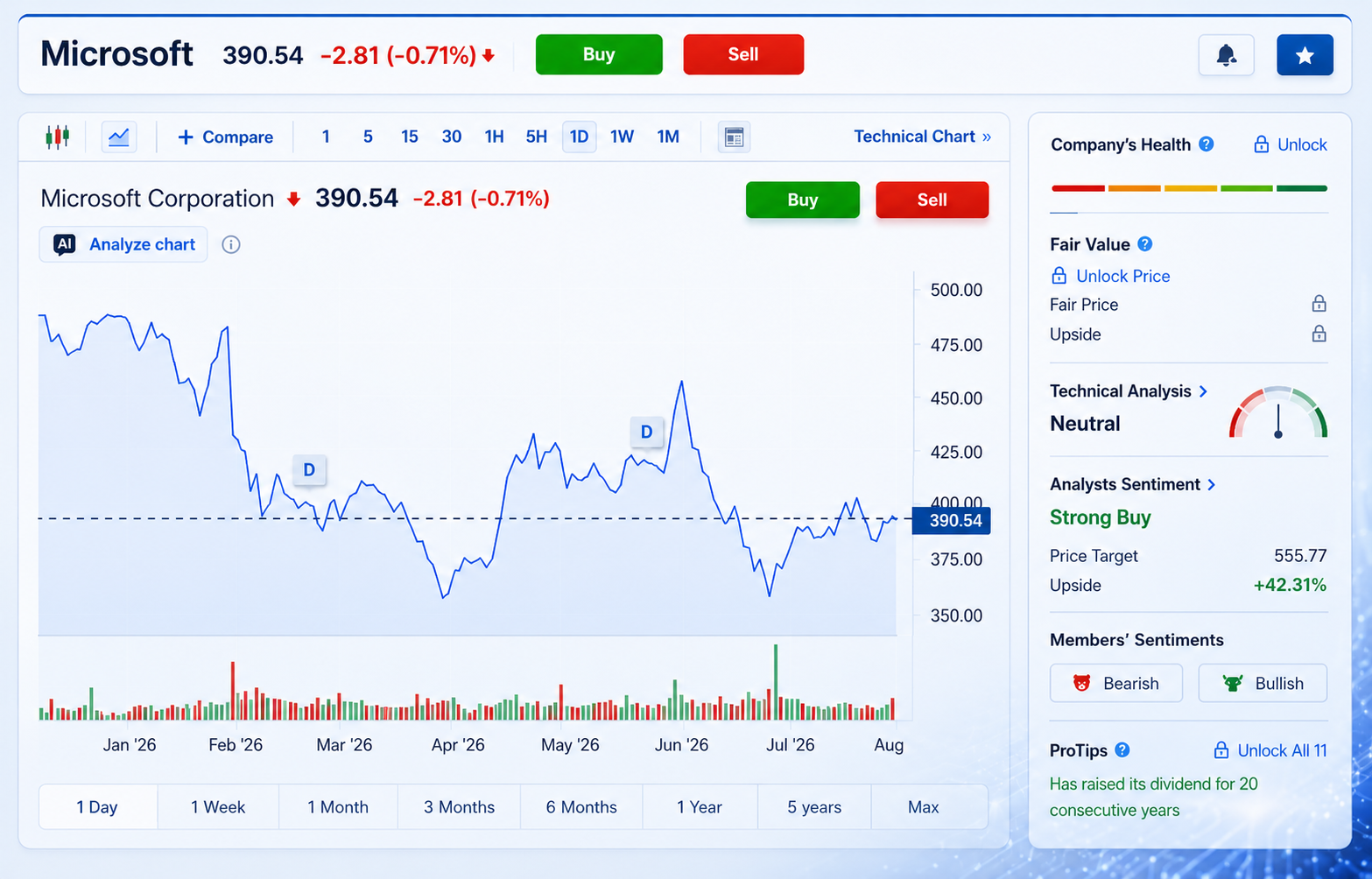
Microsoft shares jumped about 8% in pre-market trading on Thursday after the technology giant reported stronger-than-expected quarterly earnings, delivered upbeat revenue guidance for the current quarter, and maintained its long-term artificial intelligence (AI) infrastructure spending plans. The results reassured investors that Microsoft’s massive AI investments are translating into accelerating cloud growth and stronger financial performance. According to Reuters, the earnings helped ease investor concerns over the company’s heavy spending on AI infrastructure.
Strong Earnings and Record Azure Growth
Microsoft reported adjusted earnings per share of $4.74, beating Wall Street estimates of $4.24, while quarterly revenue climbed to $90.01 billion, well ahead of analysts’ expectations of $87.61 billion. The company’s Azure cloud business remained the biggest highlight, with revenue increasing 43% year over year, significantly above consensus estimates of around 40%. Overall Microsoft Cloud revenue rose 27% to $59.3 billion, reflecting continued demand for cloud computing and AI services.
The company also announced that Azure generated more than $100 billion in annual revenue for the first time, marking a major milestone in Microsoft’s cloud business. CEO Satya Nadella said Microsoft 365 Copilot has now surpassed 30 million paid seats, demonstrating growing enterprise adoption of its AI-powered productivity tools. Looking ahead, Microsoft expects fiscal first-quarter 2027 revenue between $89.85 billion and $90.95 billion, exceeding analysts’ forecasts and reinforcing confidence in continued business momentum.
CapEx Holds at $41 Billion as AI Demand Grows
Investors focused heavily on Microsoft’s AI investment strategy because concerns had been growing that technology companies were spending too aggressively on data centers and AI infrastructure without generating sufficient returns. Microsoft’s earnings helped ease those fears by showing that stronger Azure growth, increasing AI adoption and improving cloud revenue are beginning to justify those investments.
Another key reason for the positive market reaction was Microsoft’s decision to maintain its long-term capital expenditure plans rather than increasing them further. While the company spent $41 billion on capital expenditures during the quarter, slightly below analyst expectations of about $42.4 billion, management reaffirmed that its investment outlook for calendar 2026 remains broadly unchanged after accounting adjustments. During the earnings call, CEO Satya Nadella revealed that Microsoft added 31 new data centers across five continents during the quarter, bringing the total number added this year to 88, supporting the growing demand for AI and cloud services.
$19.6 Billion Free Cash Flow Signals AI Payoff
Microsoft has become one of the world’s leading beneficiaries of the artificial intelligence boom through Azure, Microsoft 365 Copilot and its partnership with OpenAI. However, investors have become increasingly cautious over the enormous sums being invested in AI infrastructure across the technology sector. Concerns have intensified as companies continue to spend billions of dollars building data centers and purchasing advanced AI chips while investors wait for stronger returns from those investments.
The company’s latest earnings suggest those investments are beginning to pay off. Microsoft generated approximately $19.6 billion in free cash flow during the quarter despite elevated infrastructure spending and ended the period with a commercial cloud backlog of roughly $678 billion, providing strong long-term revenue visibility. Around two-thirds of quarterly capital expenditures were allocated to short-lived AI assets such as graphics processing units (GPUs) and central processing units (CPUs), which are essential for expanding AI computing capacity.
Microsoft’s disciplined approach also stood out against competitors. Alphabet recently increased its AI-related capital expenditure plans, while Microsoft maintained its existing spending outlook, helping reassure investors that management remains focused on balancing growth with financial discipline.
What’s next
Going forward, investors will closely monitor whether Microsoft can sustain Azure’s rapid growth while continuing to monetize its AI products at scale. Future earnings will likely focus on enterprise adoption of Microsoft 365 Copilot, Azure AI services, cloud backlog growth and whether expanding AI infrastructure continues to deliver higher revenue and profitability.
With demand for AI accelerating across businesses worldwide, Microsoft’s ability to convert its infrastructure investments into recurring cloud revenue will remain one of the most important drivers of its stock performance. If Azure maintains its current growth trajectory and AI adoption continues to expand, the company could further strengthen its position as one of the biggest commercial winners of the global AI revolution.
Sources & Methodology
Primary-source standard: Market-moving facts should link to original data releases, regulator notices, company filings or official project announcements whenever available. Secondary reporting is used for additional context, not as a substitute for original evidence.
Page last reviewed: