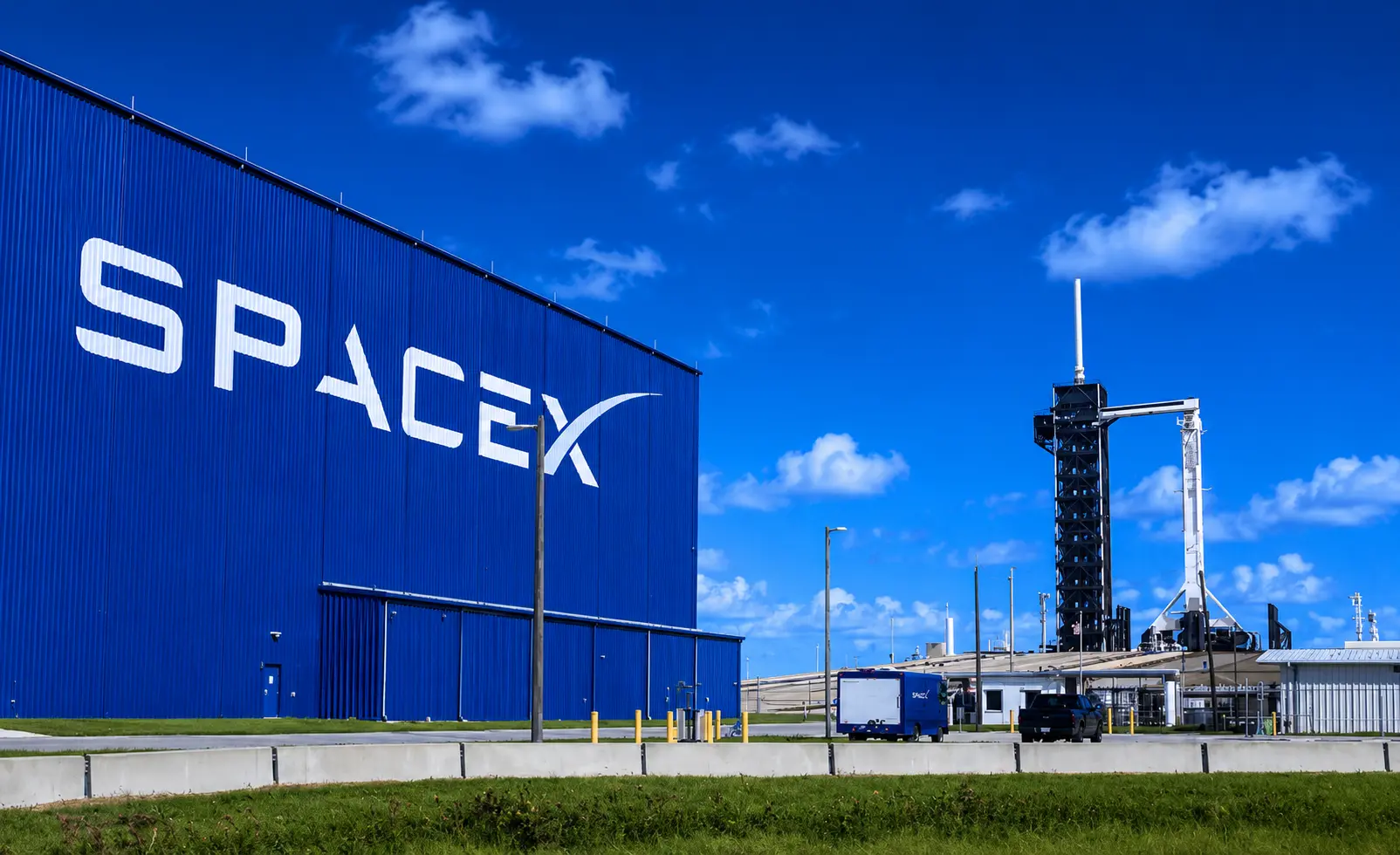
SpaceX stock closed at $138.74 on Monday, up 4.2% for the session and marking its first close above its $135 IPO price since an August selloff tied to the company’s AI spending. The rally coincided with news that Vietnamese aerospace firm VinSpace signed a contract to launch its first satellites aboard SpaceX’s Transporter rideshare program in the second quarter of 2027, extending SpaceX’s commercial reach into a new emerging-market customer as Vietnam formalizes its space ambitions.
Stock Recovers From a Volatile August
SPCX has traded through wide swings since debuting on the Nasdaq. The stock opened at $150 after being priced at $135 in its June 12 IPO, touched an intraday high of $225.64 on June 16, then fell to a low near $104.83 in early August. Monday’s gain followed the stock’s largest single-day jump on Friday, August 8, when shares rose roughly 16% in one session. The recovery held even as SpaceX’s public float more than doubled on August 6, when 911.5 million previously restricted shares became eligible to trade, a supply increase that typically pressures a stock rather than lifting it.
Analysts have linked the stock’s earlier decline more to skepticism over spending than to weak sales. SpaceX’s second-quarter revenue rose 92% year-over-year to $7.8 billion, driven by more than 12 million paying Starlink subscribers, while adjusted EBITDA climbed 191%. The company still posted a $541 million net loss for the quarter after committing $18.4 billion in capital expenditures tied to AI infrastructure. On the company’s August 4 earnings call, CEO Elon Musk said SpaceX is building AI compute capacity at scale faster than any competitor, pointing to the $16.8 billion Terafab semiconductor complex the company and Tesla announced in Grimes County, Texas, on August 6, with total investment across project phases potentially reaching $119 billion. Argus Research has since upgraded SPCX to Buy with a $160 price target, framing the same AI buildout that initially spooked some investors as the stock’s stronger long-term selling point.
VinSpace Books a Rideshare Slot for 2027
VinSpace, the space subsidiary of Vietnamese conglomerate Vingroup, will send its satellites into orbit aboard SpaceX’s Transporter program, which combines payloads from multiple customers on a single rocket and has launched more than 1,600 payloads to date. VinSpace will handle the satellites’ design, manufacturing, and in-orbit operation itself once they reach orbit. Chief Executive Vu Trong Thu called the launch a proving ground for the company’s engineering team, saying it would transform in-house research into a working mission and represents a step toward linking Vietnam to the global space value chain.
Vingroup established VinSpace in November 2025 with committed capital of 300 billion Vietnamese dong, roughly $11.5 million. Pham Nhat Vuong, Vietnam’s wealthiest individual and Vingroup’s founder, holds a 71% stake in the company, according to filings. The deal follows Vietnam’s ruling Communist Party designating space technology a national strategic priority in 2024 and comes after the country’s April decision to grant Starlink a license for its first large-scale connectivity trial. Vietnam previously sent its first satellite, VINASAT-1, into orbit in 2008.
Conclusion
SpaceX’s rebound above its IPO price and its new Vietnamese customer arrive on the same day, but the two developments reflect different parts of the company’s story. The stock’s recovery depends on whether investors continue viewing the company’s AI infrastructure spending as a long-term growth driver rather than a near-term drag on earnings, a question Argus Research’s upgrade suggests is shifting in SpaceX’s favor. The VinSpace contract, meanwhile, adds a modest but symbolically significant customer to SpaceX’s rideshare business, reinforcing the company’s position as the default launch partner for countries building space programs from the ground up.
Sources & Methodology
Primary-source standard: Market-moving facts should link to original data releases, regulator notices, company filings or official project announcements whenever available. Secondary reporting is used for additional context, not as a substitute for original evidence.
Page last reviewed: