
EUR/USD traded near 1.1540 on Wednesday as investors waited for US July inflation data and fresh German price figures. The euro has struggled to move decisively beyond the 1.15 area, with the dollar drawing support from renewed Middle East tensions and higher energy prices. The US Consumer Price Index (CPI) is scheduled for release at 8:30 a.m. ET on August 12, making it the main event for currency markets. Germany’s July HICP estimate is also important for assessing European inflation pressures.
US CPI Puts Fed Policy in Focus
The July US CPI report could determine the next significant move in EUR/USD because inflation remains central to Federal Reserve interest-rate expectations. The previous June CPI report showed annual headline inflation at 3.3%, while the core measure was also elevated, keeping price pressures relevant to monetary policy.
A stronger July reading could lift Treasury yields and support the dollar if traders conclude that the Fed has less room to ease policy. A softer result would have the opposite effect by reducing pressure on interest rates and potentially improving demand for the euro. The Producer Price Index (PPI), due Thursday, will provide another measure of pipeline inflation. Together, the two reports should give investors a clearer picture of whether price pressures are accelerating or moderating.
Key factors for EUR/USD include:
- US July CPI at 8:30 a.m. ET Wednesday.
- US PPI follows on Thursday.
- Fed-funds futures remain a key gauge of policy expectations.
Oil Prices Add Pressure to the Euro
Energy markets are adding another variable to the inflation outlook. Brent crude climbed to about $89.69 a barrel on Wednesday, according to Reuters, after renewed Middle East shipping and security concerns. The dollar also strengthened, with the Dollar Index near 99.89 during Asian trading.
Higher oil prices can raise transportation and production costs, potentially keeping inflation above central-bank targets. That matters for EUR/USD because Europe is particularly sensitive to imported energy costs, while stronger US inflation could simultaneously reinforce expectations for tighter Federal Reserve policy.
Germany is also facing renewed price pressure. Official estimates indicated German HICP inflation increased to 2.8% in July from 2.4% in June, with energy inflation rising significantly.
EUR/USD Faces Resistance Near 1.1567
EUR/USD remains below the 1.1560-1.1570 area highlighted by the 50% Fibonacci retracement near 1.1562 and the 100-day SMA at 1.1567. A sustained break above that zone would improve the pair’s short-term technical structure. The downside levels are equally important.
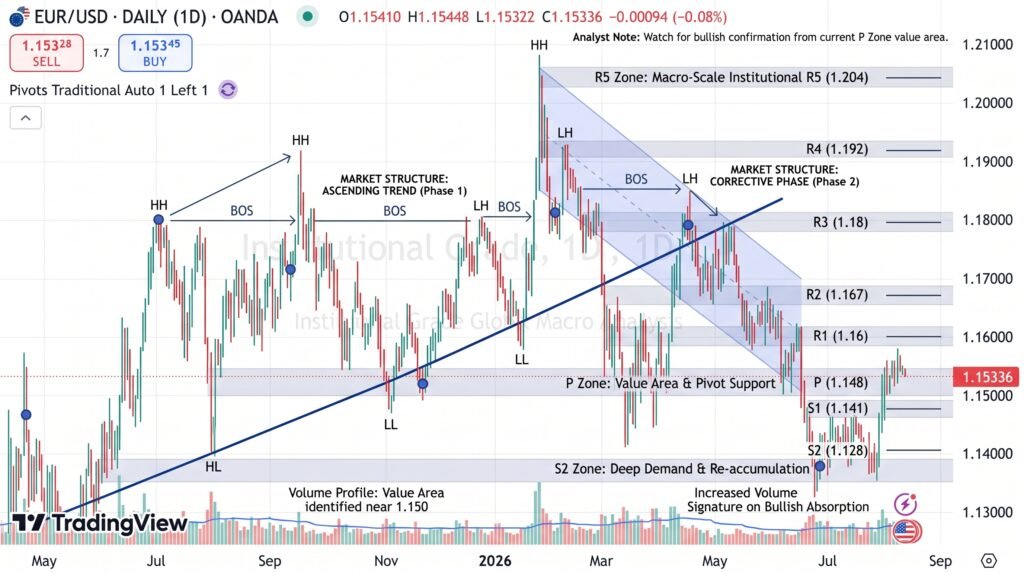
Initial support sits around 1.1506, followed by 1.1437. A move below 1.1506 would weaken the near-term outlook and put the lower support level into focus. The latest official reference rate from the European Central Bank was $1.1540 per euro on August 11, while market pricing on August 12 remained close to that level.
Conclusion
EUR/USD is approaching a decisive data-driven test. US CPI will determine whether dollar strength extends through higher-rate expectations, while German inflation provides a secondary signal for the euro. With EUR/USD below 1.1567, bulls need a clear break above resistance to regain control; otherwise, 1.1506 and 1.1437 remain the key downside levels.
Sources & Methodology
Primary-source standard: Market-moving facts should link to original data releases, regulator notices, company filings or official project announcements whenever available. Secondary reporting is used for additional context, not as a substitute for original evidence.
Page last reviewed: