
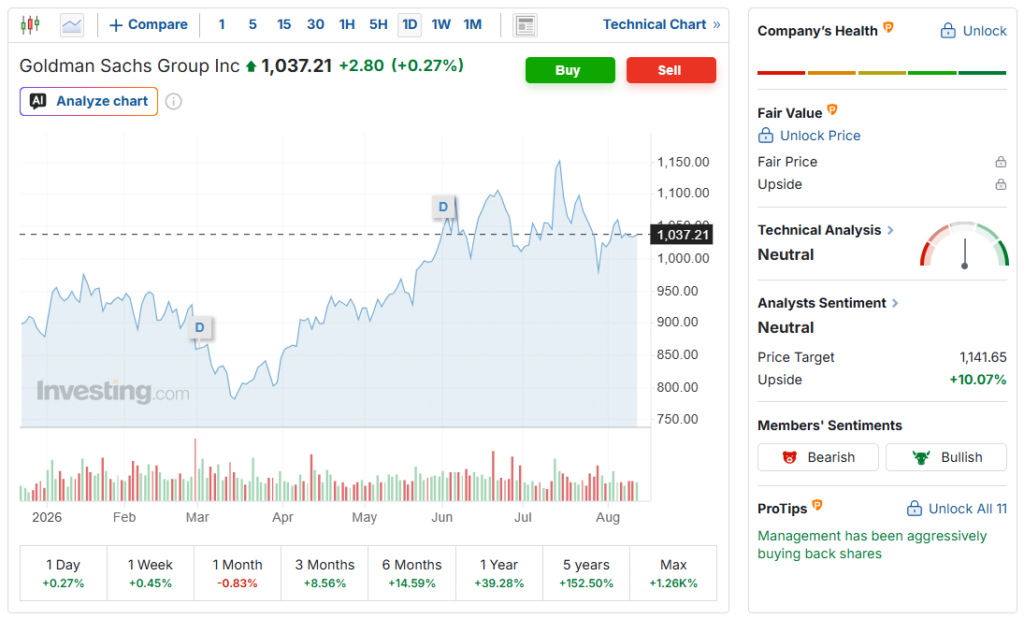
Goldman Sachs raised its 2026 earnings-per-share growth forecast for the STOXX Europe 600 to 15% from 10%, citing a stronger-than-expected second-quarter earnings season and a resilient underlying economic backdrop. The upgrade reflects broad-based earnings beats across the region even as the bank flags rising energy prices tied to the Middle East conflict as a persistent risk to the outlook heading into year-end.
Global Growth Slows as Inflation Diverges by Region
Goldman Sachs expects global real GDP growth to slow to 2.5% year-over-year in 2026, weighed down by rising energy costs linked to regional conflict. The bank projects global core inflation will end the year at 2.8%, reflecting a fading boost from earlier tariff increases and continued normalization in shelter and wage inflation, partly offset by energy price passthrough into broader consumer costs.
Regional trajectories diverge sharply within that global picture. Goldman forecasts U.S. real GDP growth of 2.1% on a fourth-quarter-over-fourth-quarter basis for 2026, driven less by consumer spending, which the bank expects to stay subdued, and more by gains tied to the AI investment boom, including higher equity wealth effects and strong corporate capital expenditure. U.S. core PCE inflation, the Federal Reserve’s preferred gauge, is projected to reach 2.9% by December 2026 before easing closer to 2% in 2027 as tariff and AI-driven demand effects fade. The bank expects unemployment to end 2026 at 4.4% and projects the Fed will hold its policy rate steady at 3.5% to 3.75% for the remainder of the year.
Europe’s Rate Path Diverges From the Fed’s
For the euro area, Goldman projects real GDP growth of 0.8% on a fourth-quarter-over-fourth-quarter basis in 2026, supported by resilient underlying activity data but constrained by elevated energy prices and soft consumer confidence. The bank expects core inflation in the region to peak at 2.7% year-over-year in the first quarter of 2027, driven by energy price passthrough, before declining to 2.0% by the end of 2028.
Unlike the Fed, which Goldman expects to hold steady, the bank projects the European Central Bank will deliver one additional 25-basis-point rate hike in September, bringing the peak policy rate to 2.5%, with risks skewed toward further tightening rather than cuts. That divergence reflects Europe’s more acute exposure to energy-driven inflation pressure relative to the U.S., where AI-related investment is providing an offsetting growth tailwind that Europe largely lacks.
- China: Goldman forecasts 4.6% real GDP growth for 2026, supported by increased fiscal spending and resilient exports despite weak domestic demand, with CPI and PPI inflation expected to rise to 1.0% and 2.0% year-over-year respectively on commodity price passthrough
- The bank’s 15% STOXX 600 EPS growth forecast marks a substantial upward revision from its earlier 10% estimate, driven primarily by the strength of second-quarter corporate results across the region
Conclusion
Goldman Sachs’ revised earnings forecast signals growing confidence in European corporate resilience even as the macro backdrop remains uneven, with the ECB positioned to tighten further while the Fed holds steady, an unusual divergence between two major central banks moving in different directions simultaneously. The bank said it is closely monitoring the Middle East conflict, describing the situation as fluid amid alternating de-escalatory and escalatory headlines, particularly regarding the impact on regional oil flows. That geopolitical variable remains the clearest risk to an otherwise upgraded earnings outlook, since a meaningful escalation in energy prices could undercut both the European growth story and the disinflation path Goldman has built into its broader 2026 forecast.
Sources & Methodology
Primary-source standard: Market-moving facts should link to original data releases, regulator notices, company filings or official project announcements whenever available. Secondary reporting is used for additional context, not as a substitute for original evidence.
Page last reviewed: