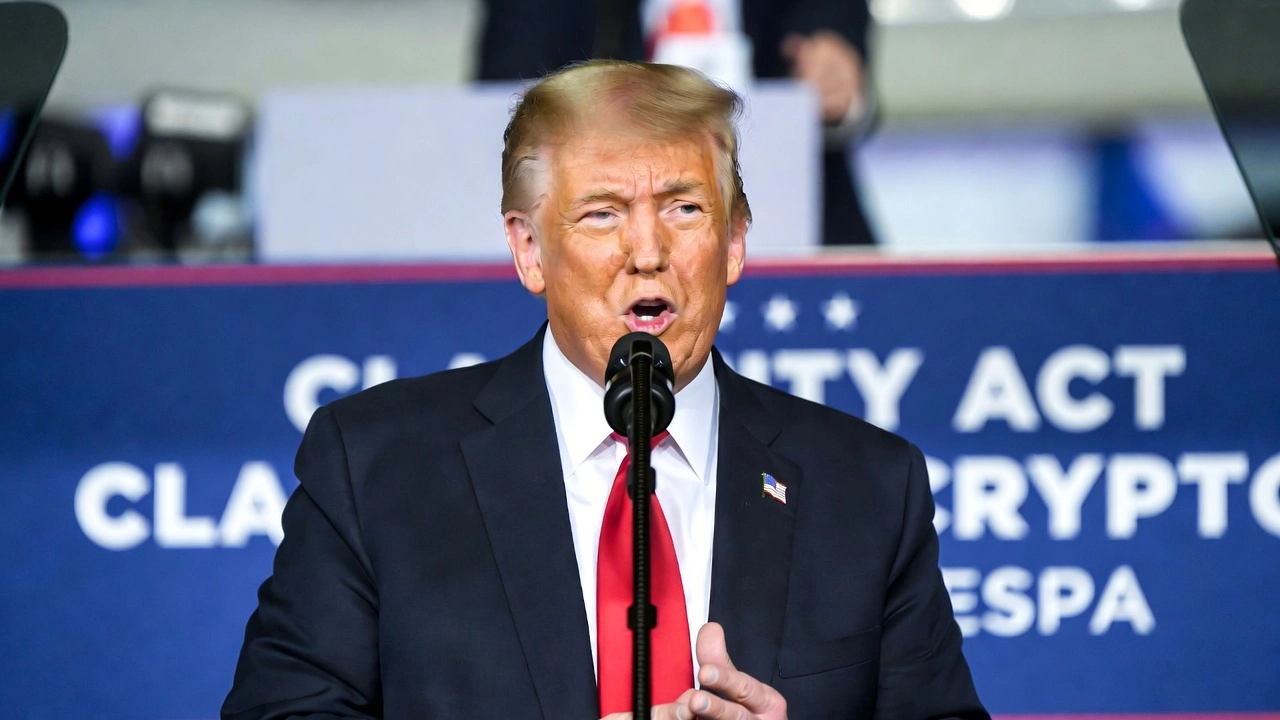
President Trump told crypto and finance executives at the White House on Wednesday that Congress should pass a “fair version” of the Clarity Act, the market-structure bill that would set federal rules for digital assets and divide authority between the SEC and the CFTC. “Now we need Congress to take the next step,” he said. The gathering in the Roosevelt Room came a day before the CFTC’s Innovation Advisory Committee holds its first meeting. A Senate cloture vote is scheduled for Sept. 15. It needs 60 votes and does not enact the bill.
Trump Makes the Legislative Ask
Trump called the bill “very, very powerful structure legislation” that would “keep us ahead of China.” He said clearer rules would let companies operate in the United States instead of moving abroad. He listed his administration’s record since January 2025: a strategic bitcoin reserve, a digital-asset stockpile, a ban on a U.S. central bank digital currency, and the GENIUS Act on payment stablecoins.
He blamed the Biden-era SEC for what he called Operation Chokepoint 2.0 — regulation and enforcement that, in his account, pushed firms overseas. That is a political charge, not a finding in the remarks. Reuters has reported that Trump’s family crypto ventures generated more than $1.4 billion last year. Several guests have commercial ties to those products. The White House has denied a conflict.
Trump also said CFTC Chair Michael Selig is “working to bring Hyperliquid into the United States in a fully compliant and legal fashion.” That is a statement of intent. No application, license or listing order was announced.
Who Was in the Roosevelt Room
Selig, SEC Chair Paul Atkins and White House crypto adviser Patrick Witt sat with the president. Industry names in the room included:
- Coinbase CEO Brian Armstrong, Ripple CEO Brad Garlinghouse, Robinhood CEO Vlad Tenev and Kraken co-CEO Arjun Sethi
- Nasdaq CEO Adena Friedman and Intercontinental Exchange CEO Jeff Sprecher
- Gemini co-founders Tyler and Cameron Winklevoss, Chainlink co-founder Sergey Nazarov, Blockchain.com CEO Peter Smith and a16z crypto founder Chris Dixon
Trump said the people in the room were making sure commercial markets are “pioneered and perfected right here in the USA.” Prediction-market firms were not. A person familiar with the event told Politico the White House chose to keep Wednesday’s session to crypto. Kalshi and Polymarket face state fights over whether event contracts are derivatives or gambling. They may still appear at Thursday’s CFTC committee meeting.
Agencies Move While the Bill Waits
The House passed its version 294-134 in July 2025. Senate Banking approved a draft 15-9 in May. Majority Leader John Thune filed cloture on Aug. 8. Republicans hold 53 seats, so they need about seven votes from Democrats or independents if their own caucus holds. Ethics language, illicit-finance provisions and stablecoin rewards are still open.
The SEC on Tuesday proposed Regulation Crypto Assets: a one-time $5 million startup exemption over four years, a fundraising exemption of up to $75 million in a 12-month period, and a safe harbor that could take a token out of an “investment contract” once promised managerial work has stopped. Atkins has said a statute is still required so a later commission cannot unwind the work.
Conclusion
Wednesday’s meeting was a public ask, not a vote count. Trump can praise a “fair version” of the Clarity Act; he cannot produce the 60 senators. Until Sept. 15, the operative path is the one already in motion: CFTC work on perpetuals and Hyperliquid, and an SEC proposal that is still only a proposal. The test is whether those agency steps survive a change in chairs if Congress does not write the rules into law.
Sources & Methodology
Primary-source standard: Market-moving facts should link to original data releases, regulator notices, company filings or official project announcements whenever available. Secondary reporting is used for additional context, not as a substitute for original evidence.
Page last reviewed: