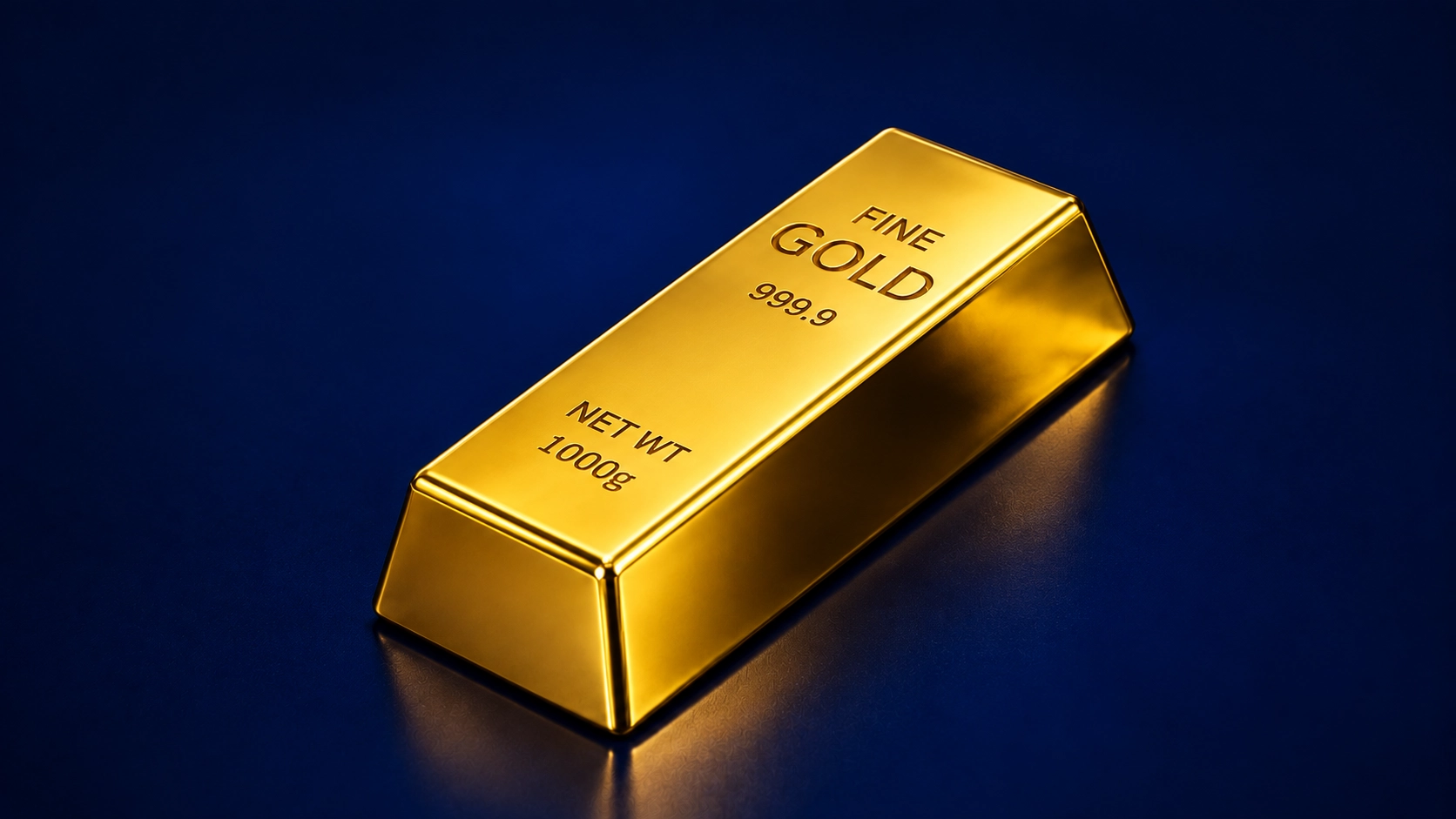
The gold price is recovering as lower oil prices and softer U.S. Treasury yields reduce some of the inflation pressure that had pushed bullion lower after the Federal Reserve’s latest rate increase. XAU/USD rose 0.5% to $4,361.31 an ounce in the latest reported session, while Gold Futures were little changed near $4,399.87. The rebound follows a volatile week in which the Fed raised rates by 25 basis points while keeping the possibility of another increase on the table.
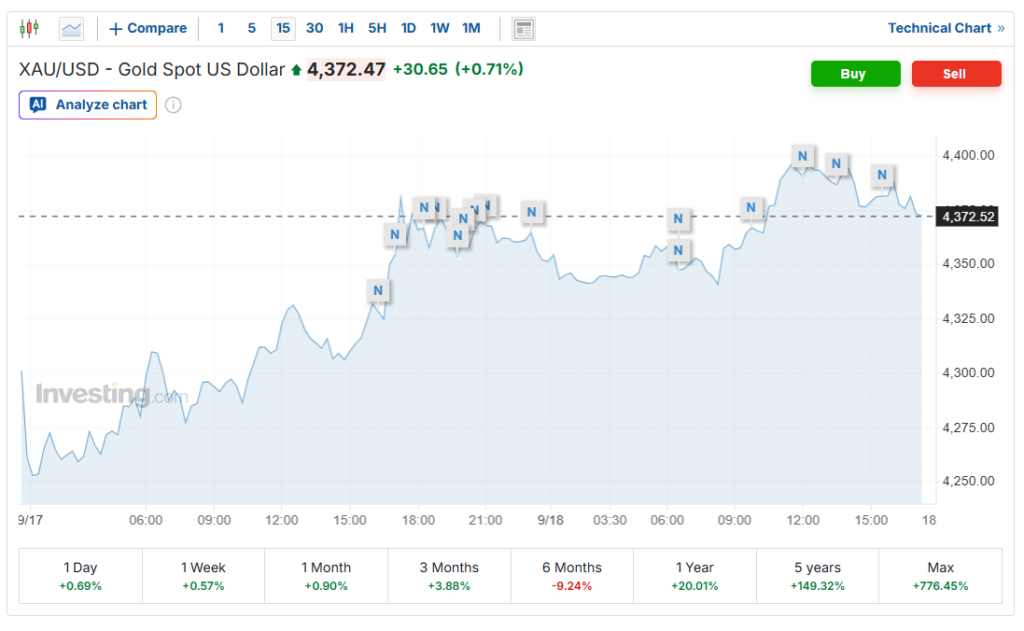
Lower Oil and Yields Aid Gold
Gold has regained momentum as crude prices declined for a third consecutive session. Brent oil recently fell toward $104 a barrel, while WTI traded near $101.20 as concerns over prolonged Saudi supply disruptions eased. Saudi Arabia has indicated that part of its East-West pipeline capacity could be restored, while additional crude shipments through Oman have also reduced immediate supply concerns.
Falling energy prices can reduce near-term inflation expectations, particularly when oil has been a major source of recent price pressure. That matters for gold because lower inflation risks can reduce expectations for aggressive monetary tightening.
The bond market is also helping bullion. The U.S. 10-year Treasury yield eased to around 4.94% on Friday after rising sharply around the Fed decision. Lower yields reduce the opportunity cost of holding a non-interest-bearing asset such as gold.
- Spot gold: $4,361.31
- Gold Futures: $4,399.87
- Brent crude: Around $104
- 10-year Treasury yield: Around 4.94%
Fed Policy Still Limits Upside
The Federal Reserve raised its federal funds target range by 25 basis points on September 16 to 3.75%-4.00%, its first increase since July 2023. The decision was unanimous, while the latest economic projections showed 16 of 18 officials saw at least one additional rate increase by the end of 2026.
The Fed’s projections also put 2026 headline PCE inflation at 3.7%, up from the 3.6% estimate issued in June. That leaves inflation well above the central bank’s 2% target and gives policymakers a reason to keep financial conditions restrictive.
For gold, the result is a conflicting backdrop. Softer oil and bond yields are helping the metal recover, but the prospect of additional U.S. rate increases can keep pressure on prices. The US Dollar Index has also remained around the 100.20 area, limiting some of gold’s upside in dollar terms.
ETF Demand Supports Bullion
Investor demand is providing another source of support. The supplied market report notes continued inflows into gold-backed exchange-traded funds, with ANZ analysts highlighting eight consecutive sessions of rising holdings. Strong ETF participation is important because these products give investors direct exposure to bullion without holding physical metal.
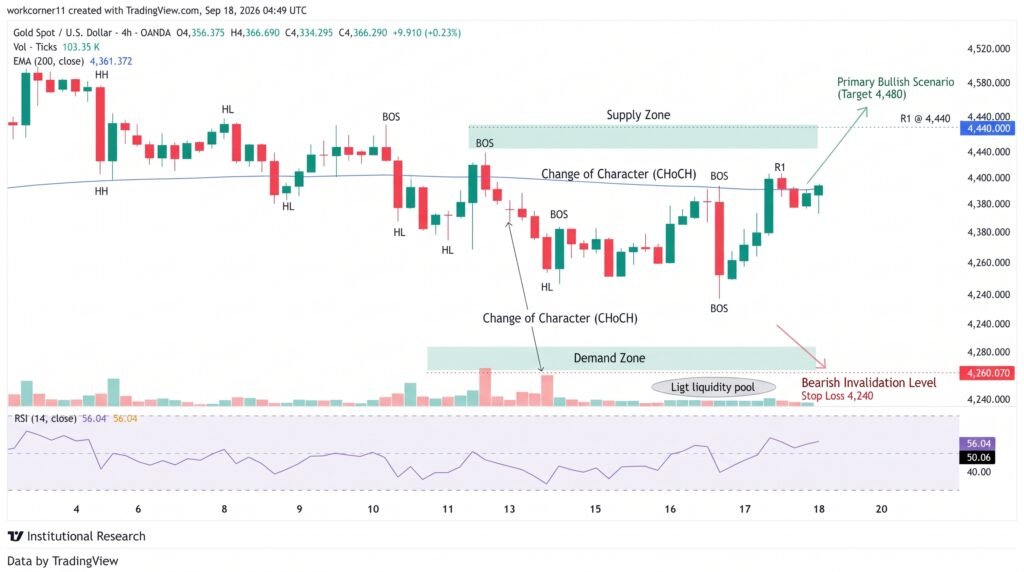
GOLD Price Chart – Source: Tradingview
The rebound also follows a sharp correction. Reuters reported that spot gold climbed more than 2% on Thursday to around $4,360.36 after falling to a six-week low earlier in the week. Lower oil prices, a softer dollar and declining Treasury yields were cited as major reasons for the recovery.
The combination leaves gold sensitive to three variables: whether oil prices continue to retreat, whether Treasury yields stay below recent highs, and whether the Fed signals additional tightening.
Conclusion:
Gold is recovering near $4,361 as falling oil prices and lower Treasury yields ease some of the inflation and yield pressures that weighed on bullion after the Fed’s rate hike. The U.S. central bank has lifted rates to 3.75%-4.00% and projects at least one more increase in 2026, keeping the policy backdrop restrictive. At the same time, lower crude prices, softer yields and continued ETF demand are providing support. The next move in gold will depend heavily on whether these supportive factors persist while the Fed maintains its inflation-focused stance.
Sources & Methodology
Primary-source standard: Market-moving facts should link to original data releases, regulator notices, company filings or official project announcements whenever available. Secondary reporting is used for additional context, not as a substitute for original evidence.
Page last reviewed: