
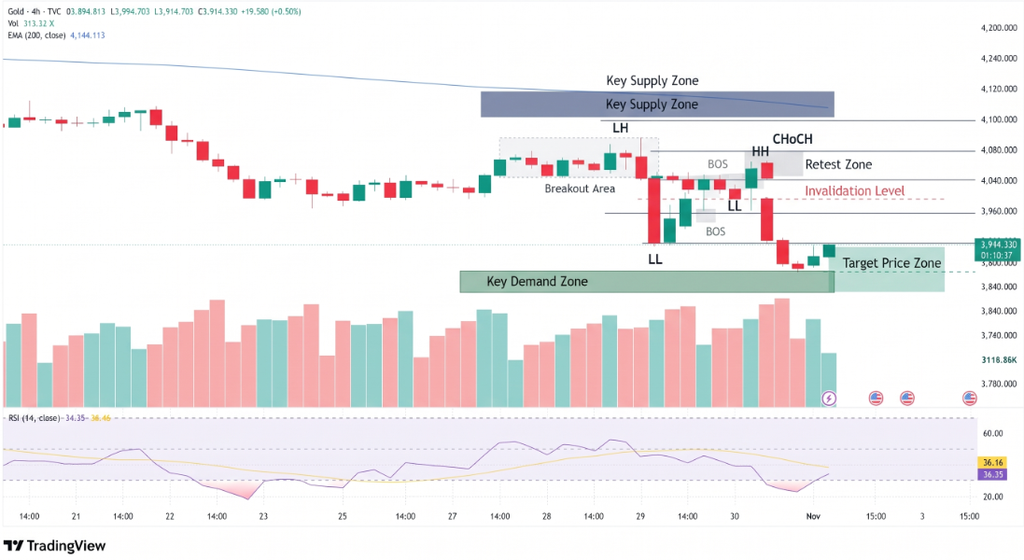
Gold prices recovered on Monday as investors returned to the market following a sharp October selloff, with cheaper oil providing additional support by easing inflation concerns. Spot bullion climbed above $3,900 an ounce after suffering its steepest monthly decline since 2008. However, persistent geopolitical uncertainty, elevated bond yields and weakness in technology stocks continued to limit the recovery. Investors remained cautious about whether bargain hunting could develop into a sustained rally, particularly as expectations of tighter US monetary policy continued to weigh on precious metals.
Gold Recovers After October Selloff
Spot gold advanced 0.8% to $3,907.17 an ounce at 23:21 ET (04:21 GMT), while US gold futures gained 0.5% to $3,916.32. The recovery followed a 3.7% decline in the previous session, which pushed bullion to a one-year low.
Other precious metals delivered mixed performances:
- Silver: Advanced 1.9% to $50.0630 an ounce.
- Platinum: Declined 3.4% to $1,434.65.
- Palladium: Spot prices dropped 2.6% to $980.35, while futures edged up 0.1% to $978.25.
- US Dollar Index: Increased 0.1% to 101.93.
The rebound reflected renewed buying interest among investors seeking to capitalize on lower prices. Nevertheless, gold remained vulnerable to fluctuations in the US dollar and Treasury yields, which influence the attractiveness of holding an asset that does not generate interest.
Lower Oil Eases Inflation Concerns
Declining oil prices provided another source of support for bullion, with crude extending losses for a second consecutive session ahead of Tuesday’s US midterm elections.
US Secretary of State Marco Rubio said President Donald Trump favored a diplomatic solution to the conflict with Iran, raising hopes of reduced regional tensions and fewer disruptions to energy supplies. Lower oil prices can ease inflationary pressures, potentially reducing the need for central banks to maintain restrictive interest rates.
However, geopolitical risks remain significant. Trump has warned that Washington could resume military strikes against Iran following the elections, while Tehran has threatened broader retaliation. Several Persian Gulf countries have also expressed concerns about the possibility of a wider regional conflict.
Meanwhile, technology-sector weakness has created additional pressure on gold. Investors facing losses in equities have reportedly sold bullion to raise cash and cover portfolio shortfalls, undermining its traditional safe-haven appeal.
Treasury Yields Limit Gold’s Recovery
ANZ analysts warned that elevated bond yields could restrict further gains in gold. Resilient US consumption, running at an annualized 3.8%, also suggests that economic activity remains strong enough to sustain inflation concerns and tighter monetary policy expectations.
Despite these challenges, investment demand has remained relatively firm. ANZ noted that gold-backed exchange-traded funds (ETFs) attracted more than 50 tonnes in September, even as US Treasury yields exceeded 5%.
This resilience suggests that gold’s relationship with interest rates may be becoming less predictable, as investors continue to seek protection against financial and geopolitical uncertainty.
Looking ahead, several factors will determine bullion’s direction:
- US Treasury yields: Higher yields could encourage investors to favor interest-bearing assets.
- Dollar strength: Further appreciation could make gold more expensive for international buyers.
- Geopolitical developments: Escalating tensions could revive safe-haven demand.
- Oil prices: Continued declines could ease inflation concerns and support bullion.
Conclusion
Gold’s recovery above $3,900 represents an encouraging development following October’s heavy losses, but it does not yet confirm a lasting bullish reversal. Elevated Treasury yields, a potentially stronger US dollar and uncertainty surrounding Federal Reserve policy remain significant obstacles. ANZ expects these pressures to keep prices vulnerable to consolidation around $4,000 an ounce, with bullion potentially slipping below that level before a more sustainable recovery emerges. Investors will closely monitor geopolitical developments, energy prices and US economic indicators for clearer signals about gold’s next direction.
Sources & Methodology
Primary-source standard: Market-moving facts should link to original data releases, regulator notices, company filings or official project announcements whenever available. Secondary reporting is used for additional context, not as a substitute for original evidence.
Page last reviewed: