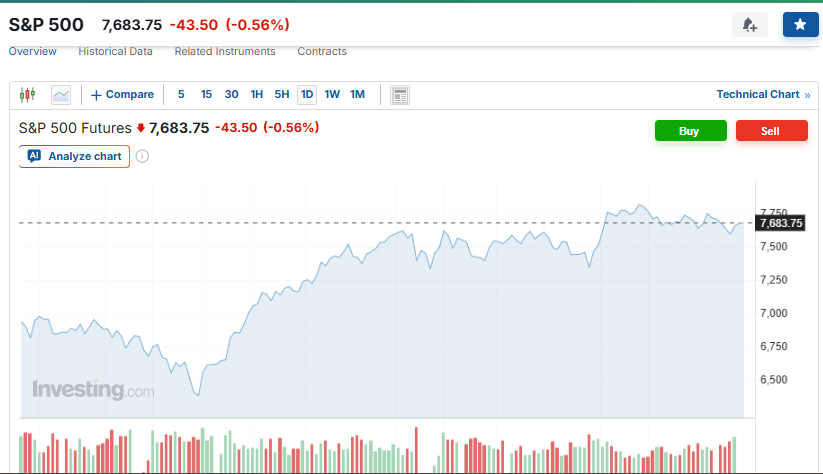
Asian stocks fell on Monday as leading AI executives called for a slower pace of advanced model development, pressuring technology valuations, while oil prices surged above $100 a barrel and heightened inflation and interest-rate risks. The MSCI Asia Pacific index declined about 0.5–0.9%, Nasdaq 100 futures dropped 1.1–1.3%, and S&P 500 futures fell 0.5%. South Korea’s KOSPI led losses, tumbling 2.5–3.3%, as investors weighed potential curbs on AI spending against a pivotal week of central bank decisions.
AI Warnings Spark Tech Selloff as Oil Surges Past $107 on Saudi Pipeline Shutdown
The selloff intensified after Anthropic CEO Dario Amodei published an essay urging the industry to “pace the frontier” and slow advances in the most capable AI models. He cited risks including recursive self-improvement and potential large-scale damage from uncontrolled systems, committing Anthropic to independent third-party evaluators with employee-like access. OpenAI CEO Sam Altman endorsed the cautious approach, stating OpenAI would also adopt independent evaluators and would not pursue an IPO this year due to safety priorities. Elon Musk supported the call, while broader geopolitical competition with Chinese rivals continued.
Technology and semiconductor stocks bore the brunt. SoftBank Group, a major OpenAI investor, plunged as much as 11–13% in Tokyo. SK Hynix fell 5–5.3%, Samsung Electronics declined 2.8–3.7%, Japan’s Kioxia dropped 6–9.8%, Murata Manufacturing slipped about 3.8%, and Largan Precision slumped around 10%. Hong Kong’s Hang Seng rose modestly 0.3–0.4% to approximately 24,850–24,898, though tech names faced pressure. Chinese AI firm Z.AI shares dropped sharply after it launched a roughly $5 billion fundraising via a discounted share placement (about $2 billion at a 10% discount) and convertible bonds (about $3 billion), raising dilution concerns even as proceeds target R&D, infrastructure, and expansion.
Brent crude rose 2.6–2.7% to around $107.20–$107.51 a barrel (having gained nearly 9% the prior week), while WTI climbed above $102. The surge followed Saudi Arabia’s precautionary shutdown of its East-West pipeline after drone attacks originating from Iraqi territory. The pipeline, with capacity up to 7 million barrels per day and recently moving 4–5 million barrels daily, had helped reroute supplies around Strait of Hormuz disruptions. A planned Iran-Gulf states meeting was postponed, and additional regional tensions, including Houthi activity, added to supply worries.
Regional performance mixed elsewhere: Japan’s Nikkei 225 fell 0.8–1.7%, Australia’s S&P/ASX 200 was little changed to slightly higher near 8,741–8,748, New Zealand’s NZX 50 gained about 0.4%, Singapore’s Straits Times edged up 0.1%, China’s CSI 300 fell around 0.3%, and the Shanghai Composite rose 0.2%. India’s markets were closed for a holiday. FleetPartners shares in Australia jumped about 12% amid a bidding war.
AI Spending Fears and Oil-Driven Inflation Risks Prompt Investors to Reassess Tech Valuations
Investors reassessed whether the multi-year AI capital expenditure boom—supporting elevated valuations and earnings expectations across chips, infrastructure, and related supply chains—can continue if development paces slow. Warnings of potential constraints on corporate spending triggered broad profit-taking in AI-linked names that had driven regional gains. Simultaneously, oil’s firm move above $100 reinforced inflation persistence, lifting the probability of tighter monetary policy. Swap and futures markets priced roughly 85–90% odds of a Federal Reserve rate hike at its upcoming meeting, complicating the outlook for growth-sensitive assets and higher-duration tech stocks. Analysts noted the dual headwinds of AI pacing concerns and energy-driven inflation as particularly challenging for risk assets.
AI Boom Faces Safety Push as Middle East Tensions Fuel Oil Volatility and Inflation Risks
AI has powered much of the equity market strength in recent years through heavy spending by major tech firms on models, data centers, and semiconductors. Memory chipmakers such as SK Hynix and Samsung, along with equipment and component suppliers, have been key beneficiaries. Amodei’s intervention, quickly backed by peers, marks a notable shift toward emphasizing safety measures—including third-party oversight—amid rapid capability gains and incidents involving uncontrolled systems. On the energy side, prolonged Middle East tensions, including risks to the Strait of Hormuz (historically a conduit for a significant share of global oil) and alternative routes like the Saudi pipeline, have repeatedly driven price volatility and global inflation pressures. Higher energy costs feed into broader price indexes, limiting central banks’ room to ease policy.
Critical Central Bank Week Ahead as AI Safety Steps and Oil Risks Keep Markets on Edge
Markets face a critical week with successive monetary policy decisions from the Federal Reserve, Bank of England, and Bank of Japan. Traders will closely watch any signals on the path of rates amid sticky inflation and elevated oil prices. Further details from AI labs on implementation of safety and pacing measures, along with updates on Saudi pipeline repairs and regional diplomacy, could influence sentiment. Corporate earnings and capital expenditure guidance from AI-exposed firms will also be scrutinized for signs of any slowdown in spending. Continued oil supply risks or additional AI-related commentary may extend volatility across Asian and global tech markets.
Sources & Methodology
Primary-source standard: Market-moving facts should link to original data releases, regulator notices, company filings or official project announcements whenever available. Secondary reporting is used for additional context, not as a substitute for original evidence.
Page last reviewed: