
Key Points
- Bitcoin is trading near $78,000 after retreating from last week’s three-month high above $82,000.
- U.S. spot Bitcoin ETFs recorded $100.7 million in net outflows on September 9 after attracting strong inflows earlier in the month.
- Treasury yields near multi-year highs and oil above $100 are increasing macro pressure ahead of U.S. inflation data and the Federal Reserve decision.
Bitcoin is holding around $78,000 on September 10 as traders weigh weakening ETF demand against rising inflation and interest-rate risks. BTC recently reached a three-month high above $82,000 but failed to hold those gains, returning to the same region that has repeatedly attracted buyers. The next move is increasingly tied to macroeconomic conditions: U.S. inflation data, Treasury yields and the Federal Reserve’s September 15–16 meeting could determine whether Bitcoin recovers toward $80,000 or extends its correction.
$80K Remains Bitcoin’s First Test
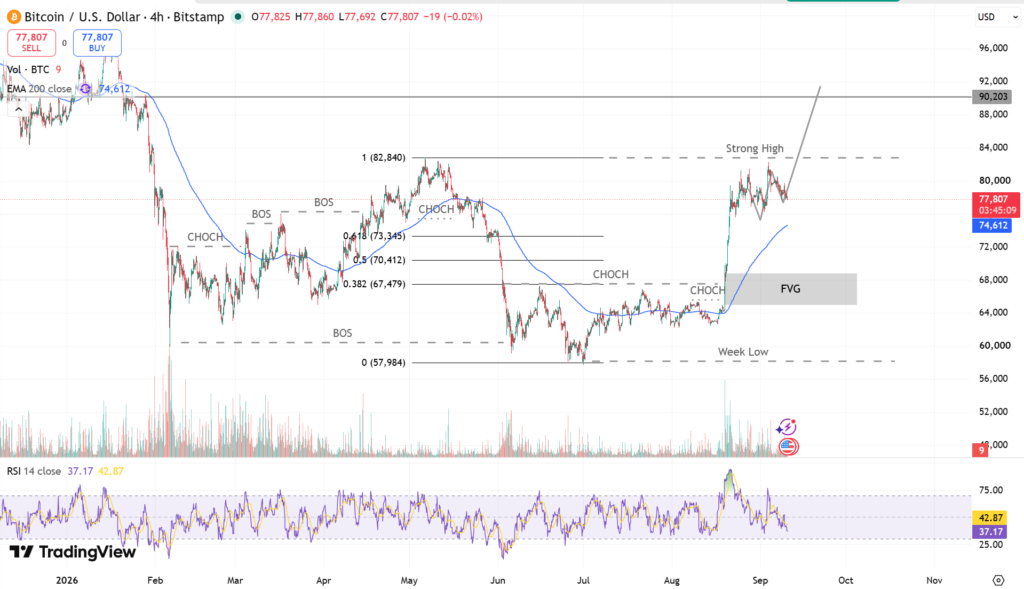
Bitcoin was trading around $77,900–$78,100 on Thursday, compared with a recent high of approximately $82,164. That puts the cryptocurrency roughly 5% below last week’s peak.
The immediate technical challenge is the $79,500–$80,000 region. Recovering this zone would show that buyers are regaining control after the latest pullback. Above it, Bitcoin faces stronger resistance around $82,000–$82,800, where the previous rally stalled.
A decisive move through that area would materially improve the short-term structure and could bring higher resistance levels back into focus.
The downside is equally important. Bitcoin needs to maintain the $77,000–$78,000 area to prevent the correction from accelerating. A sustained break below $77,000 would shift attention toward approximately $75,000–$76,000, with the $73,000–$75,000 region providing a broader support area. These levels represent technical zones rather than guaranteed price targets.
Bitcoin ETF Demand Cools
One factor that helped Bitcoin earlier in September was renewed demand for U.S. spot Bitcoin ETFs. That momentum has weakened. The funds recorded approximately $100.7 million in combined net outflows on September 9, following $46.6 million of outflows on September 8. The reversal came after strong inflows earlier in the month, including approximately $682 million on September 3.
September flows therefore remain positive overall, but the latest two sessions show that institutional demand has become less consistent. For Bitcoin to establish a more convincing move above $80,000, renewed ETF inflows would provide stronger confirmation that demand is returning rather than the move being driven mainly by short-term trading.
Bond Yields Add Pressure to BTC
The macro environment is creating another obstacle. The U.S. Treasury increased the maximum size of its September 10 buyback of 10-to-20-year securities to $6 billion, three times the previous long-dated operation.
The program purchases older, less-liquid Treasury securities to improve market functioning. It should not be confused with Federal Reserve quantitative easing.
More importantly, the announcement failed to bring yields down. The benchmark 10-year Treasury yield reached 4.8528%, its highest level since November 2023, as investors remained concerned about government borrowing, deficits and inflation.
Higher yields can create pressure for Bitcoin because investors can receive larger returns from government debt without taking crypto-market risk.
Energy prices are adding to those concerns. Brent crude has moved above $100 per barrel as Middle East tensions disrupt energy markets, raising the possibility that inflation remains elevated for longer.
Inflation Data Could Decide the Breakout
Bitcoin’s next major catalyst is U.S. inflation. Markets are assessing the Producer Price Index before turning to the Consumer Price Index, with both reports carrying additional importance ahead of the Federal Reserve meeting on September 15–16.
A hotter inflation reading could strengthen expectations for tighter monetary policy and keep Treasury yields elevated, creating another headwind for BTC. Softer inflation could have the opposite effect by reducing rate concerns and improving demand for risk assets.
Conclusion
Bitcoin’s current consolidation is being driven by more than the battle around $78,000. ETF flows have weakened, Treasury yields are near multi-year highs, oil has returned above $100 and traders are waiting for U.S. inflation data before committing to larger positions.
Holding $77,000–$78,000 keeps the immediate recovery scenario alive, but BTC needs to reclaim $80,000 and ultimately clear the $82,000–$82,800 resistance zone to establish stronger bullish momentum.
A break below $77,000 would instead increase the risk of a move toward $75,000–$76,000. For now, the strongest confirmation will come from a combination of price action, renewed Bitcoin ETF inflows and a less restrictive macroeconomic outlook, rather than from a single technical indicator.
Sources & Methodology
Primary-source standard: Market-moving facts should link to original data releases, regulator notices, company filings or official project announcements whenever available. Secondary reporting is used for additional context, not as a substitute for original evidence.
Page last reviewed: