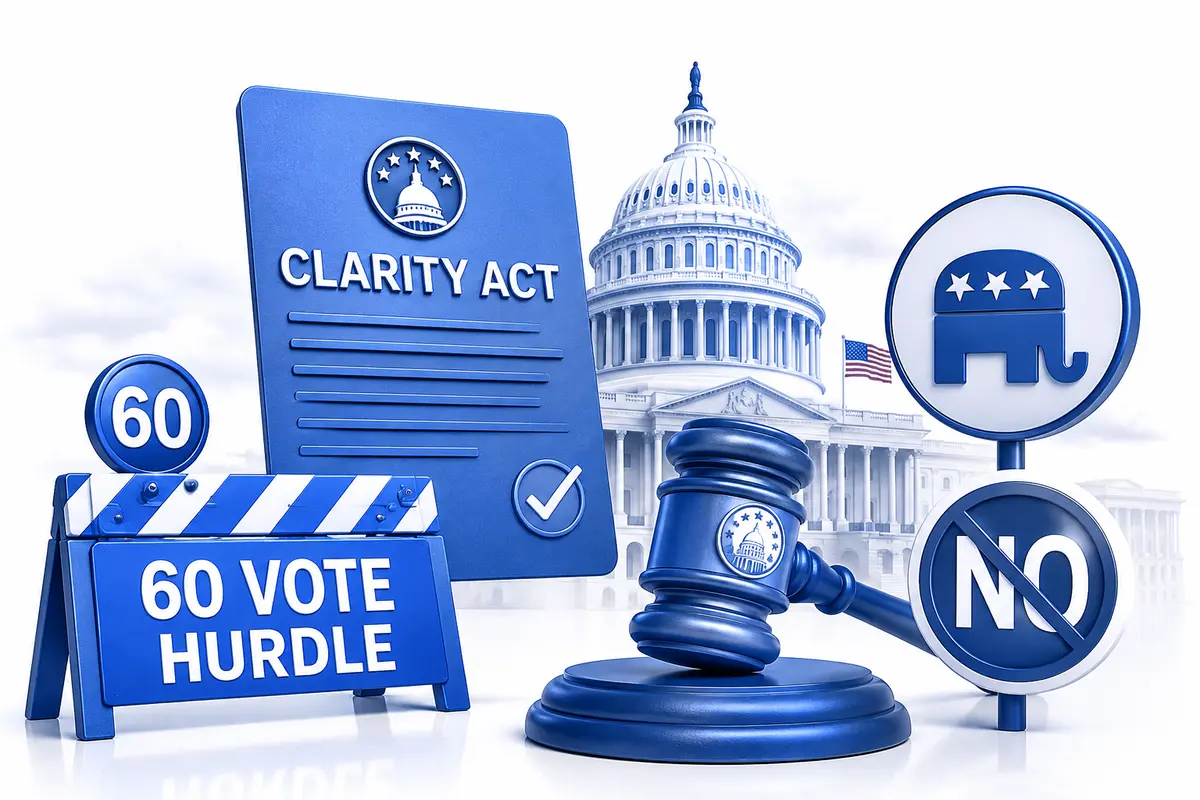
Missouri Senator Josh Hawley breaks with the GOP on the Clarity Act, citing community bank fears, as Coinbase’s Brian Armstrong pushes back hard.
The Clarity Act just hit a wall. Not a big one, maybe. But a wall nonetheless. Senator Josh Hawley of Missouri says he’s voting no. First Republican to do it. And that’s a problem, because the bill barely had room to lose anyone in the first place.
Hawley Breaks From GOP Over Stablecoin Fear
Here’s the thing about Hawley: he’s not budging. Community banks back home are nervous, he says. Ag lenders too. They’re worried stablecoin yield — the kind crypto platforms want to offer — will pull deposits right out from under them. Small banks, big fears. Hawley’s siding with his state, not his party, and he’s been pretty blunt about it.
This isn’t new territory for him either. He voted against the GENIUS Act too, that stablecoin law that passed earlier this year. So this is a pattern, not a one-off. Still, Senator Cynthia Lummis says her office is talking with his, trying to find some middle ground before things go to a floor vote. Whether that works out is anyone’s guess at this point.
Armstrong Fires Back at Bank Lobby Claims
Brian Armstrong wasn’t having it. The Coinbase CEO came out swinging, basically asking: where’s the evidence? He pointed out that banks might have their own reasons — financial ones — for opposing the bill, reasons that have less to do with community banks and more to do with protecting their own turf. Armstrong’s been one of the loudest voices for this version of the bill, which is notable, since he wasn’t always a fan of earlier drafts either.
The crypto world didn’t stay quiet:
- John Deaton, running for Senate and a known XRP guy, said lawmakers are too cozy with bank lobbyists.
- Industry voices started pushing people to call Hawley’s office.
- And now there’s chatter that Rand Paul might be next to say no, which would make things even messier.
Senate Clock Ticks Toward August Recess
As of Wednesday, no cloture motion yet. Thune’s expected to file one Thursday, maybe, and that kicks off the procedural vote everyone’s watching for. Sixty votes needed. Republicans only hold 53 seats. Do the math — every defection matters here.
Meanwhile, the White House is quietly working through ethics provisions with both parties. Could be a good sign. Could mean the real vote doesn’t happen till mid-September instead of before recess. Nobody’s totally sure yet. For investors trying to make sense of all this, sticking with exchanges that have solid regulatory footing probably isn’t a bad idea right now.
Sources & Methodology
Primary-source standard: Market-moving facts should link to original data releases, regulator notices, company filings or official project announcements whenever available. Secondary reporting is used for additional context, not as a substitute for original evidence.
Page last reviewed: