
Ethereum developers have postponed the Glamsterdam upgrade on the Hoodi testnet, scrapping its planned October 26, 2026, activation while they investigate potential compatibility problems involving smart contracts. The decision, reached during All Core Developers Execution call #248, centers on EIP-8037, which changes the cost of creating new state on the network. The delay also removes a planned increase in Hoodi’s gas limit to 200 million. No replacement date has been announced, and Ethereum mainnet users and ETH holders do not need to take action.
Why Ethereum Delayed the Hoodi Upgrade
The postponement gives developers more time to examine how EIP-8037’s revised gas accounting interacts with contracts already deployed on Ethereum mainnet. Gas is the fee mechanism that measures the computational resources required to execute transactions and smart contracts. Changes to gas costs can affect applications that rely on specific execution limits or assumptions about how transactions fail.
The Ethereum Foundation had previously scheduled Glamsterdam for Hoodi epoch 132,352, corresponding to October 26 at 17:42:48 UTC. Developers have now removed that activation configuration rather than allowing the testnet upgrade to proceed on schedule.
The change affects three planned elements: the Amsterdam execution-layer upgrade, the Gloas consensus-layer upgrade and the scheduled increase in Hoodi’s gas limit to 200 million. The postponement does not reverse Hoodi’s transaction history or alter Ethereum mainnet.
Security concerns focus on whether the new gas rules could change the behavior of failure-handling logic in certain contracts. Developers need to establish whether applications that worked under the existing rules could behave differently after the repricing takes effect.
What EIP-8037 Means for Smart Contracts
EIP-8037 is designed to make the cost of creating blockchain state better reflect the resources required to store and maintain it. The proposal is part of Glamsterdam’s broader effort to improve Ethereum’s capacity while keeping long-term state growth manageable.
However, changes to execution costs can expose weaknesses in contracts that depend on fixed gas budgets. The Ethereum Foundation previously warned that some contracts could break or experience degraded performance under Glamsterdam’s gas repricing, although most contracts were expected to remain unaffected.
The immediate priorities are to investigate affected contract behavior, verify compatible client software and publish revised activation instructions.
- Hoodi activation: October 26 schedule withdrawn.
- New date: Not announced.
- Gas limit increase: The planned 200-million setting removed.
- Mainnet users: No action required from this testnet change.
Node and validator operators should check updated guidance for their execution- and consensus-layer clients before relying on earlier activation instructions.
Glamsterdam Roadmap and ETH Outlook
Glamsterdam combines execution- and consensus-layer changes intended to improve Ethereum’s Layer 1 scaling. Key proposals include enshrined proposer-builder separation and block-level access lists, alongside gas-pricing changes. The upgrade has already activated on Sepolia, which remains unaffected by the Hoodi postponement.
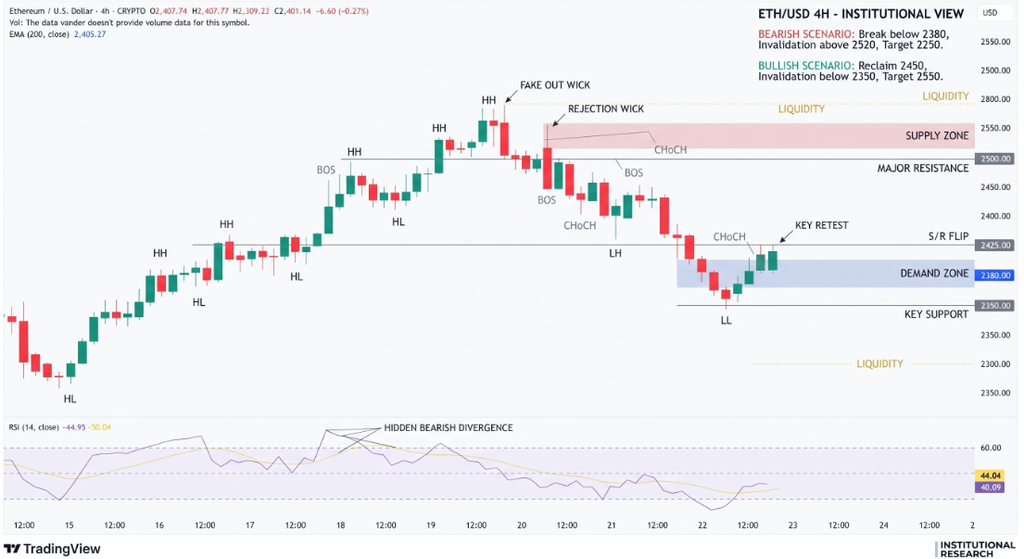
The mainnet activation date remains undecided. Although December has been discussed as a possible target, the delay makes further testing and developer coordination important before a firm schedule can be established.
Conclusion
Ethereum’s Hoodi postponement prioritizes contract compatibility over meeting a testnet deadline. Resolving EIP-8037’s risks will help developers determine a revised testing schedule and assess readiness for mainnet. The decision does not itself change ETH’s protocol on mainnet, but successful testing remains essential to Glamsterdam’s planned scaling improvements.
Sources & Methodology
Primary-source standard: Market-moving facts should link to original data releases, regulator notices, company filings or official project announcements whenever available. Secondary reporting is used for additional context, not as a substitute for original evidence.
Page last reviewed: