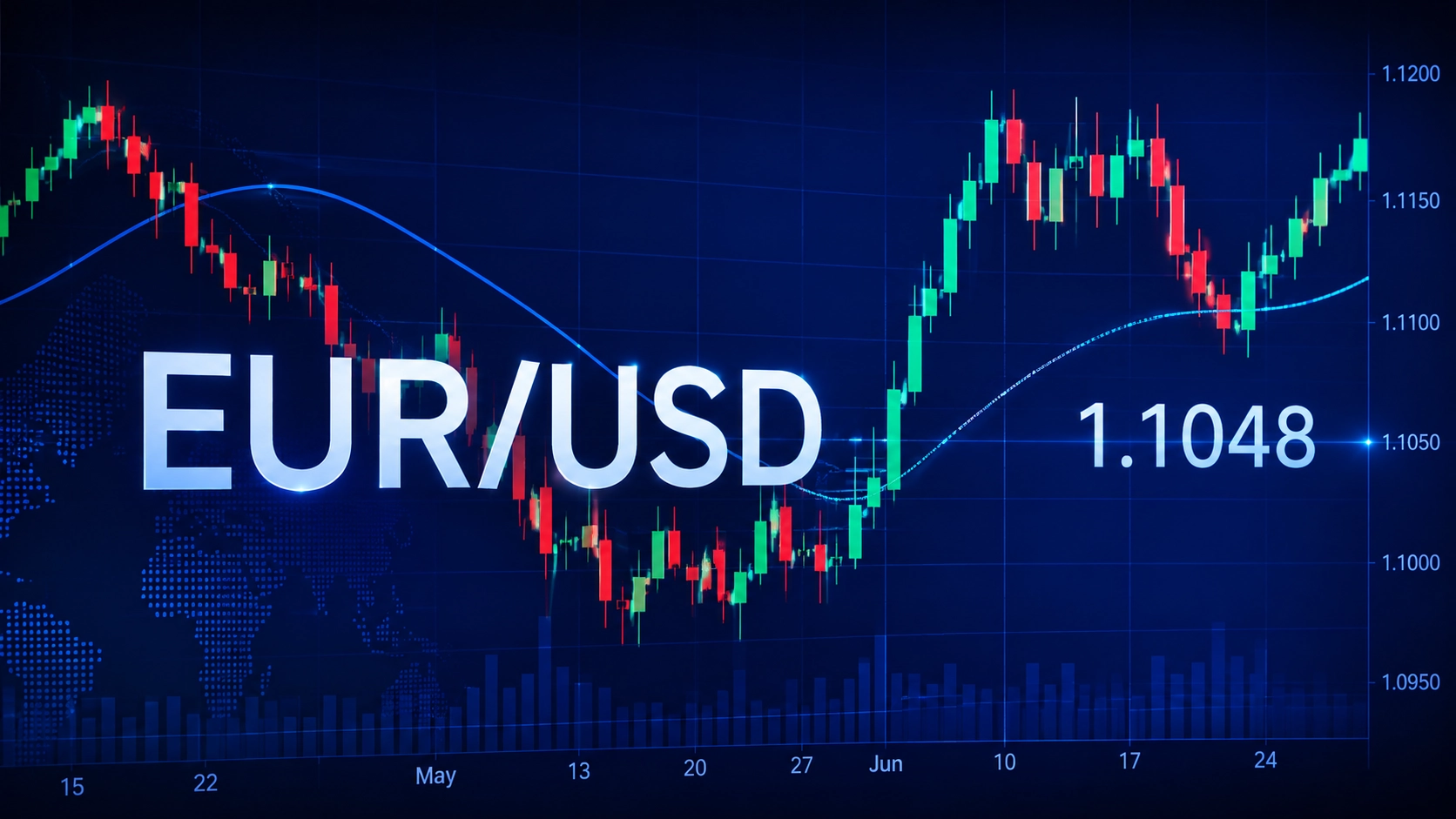
The EUR/USD exchange rate weakened to around 1.1120 during early European trading on October 28, 2026, remaining below the 1.1150 threshold as investors prepared for major central bank decisions. The Federal Reserve was scheduled to announce its latest policy decision on Wednesday, followed by the European Central Bank on Thursday. A stronger US dollar and weak technical indicators continued to weigh on the euro, although oversold conditions could allow a temporary recovery.
Fed and ECB Decisions Drive Currency Markets
Markets largely expected the Federal Reserve to maintain its benchmark interest rate at 3.75% to 4.00%. According to the CME FedWatch tool, futures pricing implied a 92.8% probability of no change at the October meeting.
The decision itself may not be the only driver of currency movements. Investors are also watching for signals about December policy. A more hawkish message, suggesting rates could rise later, may support the dollar by making US assets more attractive relative to European alternatives.
The ECB is also expected to leave its key rates unchanged after its September increase of 25 basis points, according to the supplied market report. However, elevated energy costs, volatility in French government bonds and concerns about France’s public finances could limit demand for the euro.
Recent market data reinforced the dollar’s advantage. The US Dollar Index reportedly rose 0.4% to 102.37, while EUR/USD declined by 50 pips to 1.1120. One pip represents a standard small price movement in a currency pair.
EUR/USD Technical Outlook Remains Bearish
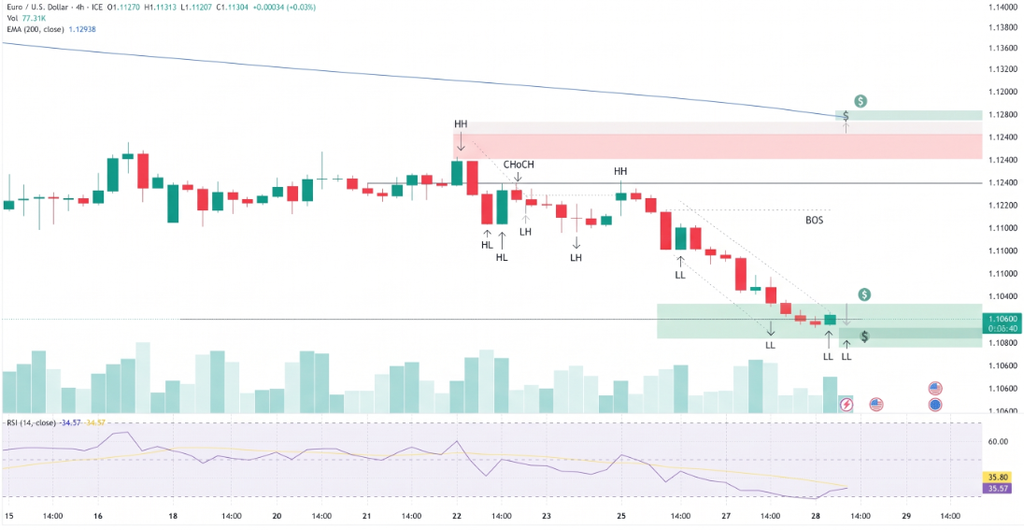
The technical picture continues to favor sellers. EUR/USD trades below its 20-day Bollinger Band middle line near 1.1205 and its 100-day moving average around 1.1440. The pair has also moved beneath the lower Bollinger Band, indicating persistent selling pressure.
The Relative Strength Index (RSI) stands near 30, a level commonly associated with oversold conditions. This can precede a short-term rebound, but it does not establish that a broader downtrend has ended.
Key levels traders are watching include:
- 1.1100: Initial psychological support.
- 1.0951: The May 12, 2025, low and a potential downside target.
- 1.1205: Initial resistance at the 20-day Bollinger middle line.
- 1.1280: Upper Bollinger Band resistance.
A sustained break below 1.1100 could expose 1.0951. Conversely, a move above 1.1205 and then 1.1280 would suggest that selling pressure is easing.
Dollar Strength Keeps Traders Cautious
The broader policy outlook remains central to the pair’s direction. Fed Chair Kevin Warsh’s comments on financial stability, investment and artificial intelligence have attracted attention because they may influence expectations for future growth and interest rates.
A cautious approach to financial risks could support tighter policy, while stronger productivity and investment may complicate the outlook. For currency traders, the decisive factor is whether incoming policy signals change the relative outlook for US and eurozone interest rates.
Conclusion
EUR/USD remains vulnerable while trading below key moving averages and resistance levels. A break under 1.1100 would strengthen the bearish case, while a recovery above 1.1205 could provide early evidence of stabilization. The Fed’s policy message and the ECB’s subsequent decision are likely to determine whether the euro extends its decline or stages a short-term recovery.
Sources & Methodology
Primary-source standard: Market-moving facts should link to original data releases, regulator notices, company filings or official project announcements whenever available. Secondary reporting is used for additional context, not as a substitute for original evidence.
Page last reviewed: