Quick Answer
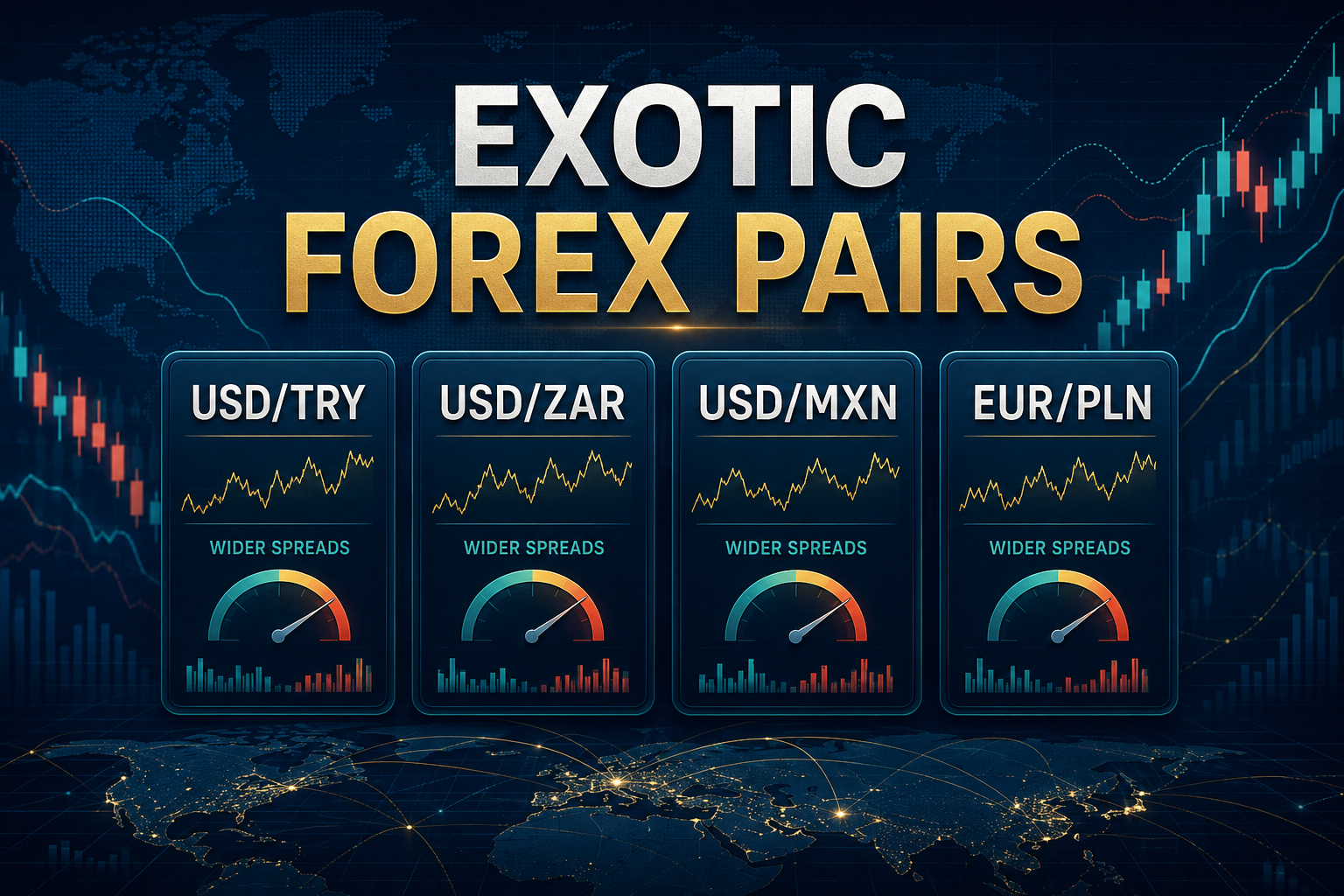
Exotic forex pairs are currency pairs that include one major currency, such as the U.S. dollar or euro, and one currency from a smaller or emerging economy, such as the Turkish lira, South African rand or Mexican peso. Examples include USD/TRY, USD/ZAR, USD/MXN and EUR/PLN. Compared with major pairs, exotic pairs usually have lower liquidity, wider spreads, more abrupt price moves and stronger sensitivity to local politics, central banks and commodity trends. They can offer larger trading opportunities, but they usually require smaller size, better timing and stronger risk control.
What Are Exotic Forex Pairs?
Currency pairs are often grouped into three broad categories: majors, minors and exotics. In conventional retail-FX terminology, major pairs combine the U.S. dollar with another major currency, such as EUR/USD or USD/JPY. Minors, also called crosses, pair major currencies without the dollar, such as EUR/GBP or AUD/NZD. Exotics generally combine a major currency with a less-traded currency from a smaller or emerging economy, although classifications can vary among brokers and data providers.
The word “exotic” sounds glamorous, but in practice it usually means less liquid, more expensive to trade and more idiosyncratic. An exotic pair is not automatically better or more profitable than a major pair. It is simply driven by a different market structure and a different set of risks.
Are “Exotic” Pairs Always Illiquid?
“Exotic” is a market convention, not a regulated classification or a fixed liquidity threshold. Liquidity varies substantially by currency and changes over time. According to the Bank for International Settlements, emerging-market currencies collectively represented 29% of global FX turnover in April 2025, while the renminbi alone accounted for 8.8%. Some currencies commonly labelled exotic are therefore much more actively traded than others, even though they may still carry wider spreads or greater local-market risk than major pairs.
Examples of Exotic Forex Pairs
| Pair | Countries / currencies | Why traders watch it |
|---|---|---|
| USD/TRY | U.S. dollar / Turkish lira | Inflation, central bank credibility, politics and sharp volatility |
| USD/ZAR | U.S. dollar / South African rand | Commodity exposure, risk sentiment, local rates and liquidity swings |
| USD/MXN | U.S. dollar / Mexican peso | Banxico rate policy, U.S. ties, carry appeal and election risk |
| EUR/PLN | Euro / Polish zloty | European growth link, local policy and regional risk |
| GBP/TRY | British pound / Turkish lira | Mixes a major European currency with a high-volatility emerging-market currency |
| USD/HUF | U.S. dollar / Hungarian forint | Rates, inflation and regional European risk |
Why Are They Called “Exotic”?
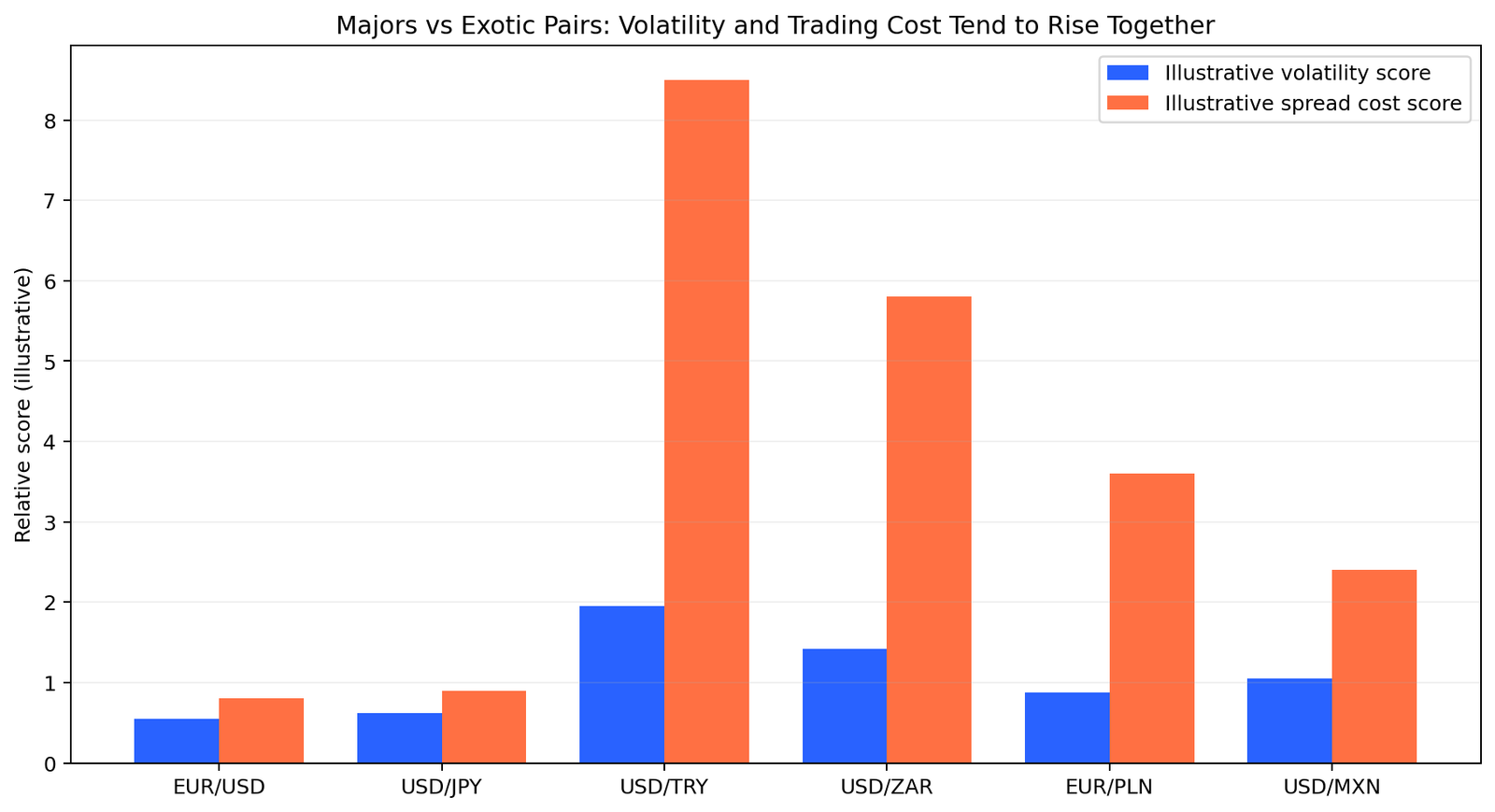
In forex jargon, “exotic” mainly refers to relative market participation, reflected in the lower turnover of many emerging-market currencies in BIS foreign-exchange data. Fewer institutions and investors trade these currencies on a daily basis than trade the major currencies. That means order books can be thinner, spreads can be wider and price can jump more sharply when large orders or important news hit the market.
That is why an exotic pair may feel very different from EUR/USD even if both charts technically look tradable. The difference is not only the price direction. It is the cost, the liquidity and the speed at which conditions can change.
Majors vs Minors vs Exotic Pairs
| Category | Typical liquidity | Typical spread | Main traits |
|---|---|---|---|
| Majors | Highest | Lowest | Deep liquidity, strong institutional participation, smoother execution |
| Minors / crosses | Moderate to high | Moderate | Can trend well but often wider than majors |
| Exotics | Lower | Higher | Bigger moves, larger gaps, stronger local-country risk and higher costs |
How Exotic Pairs Behave on the Chart
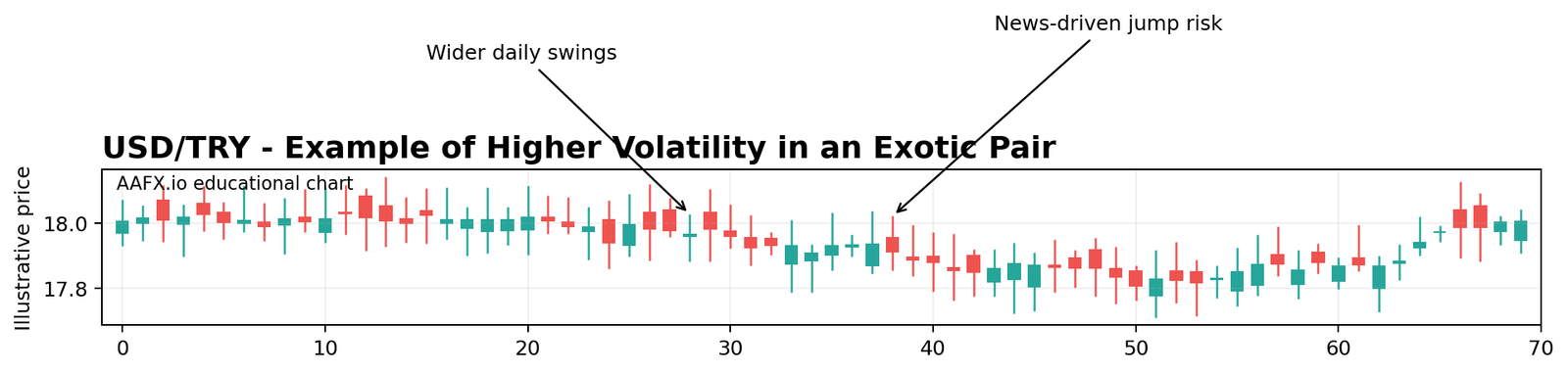
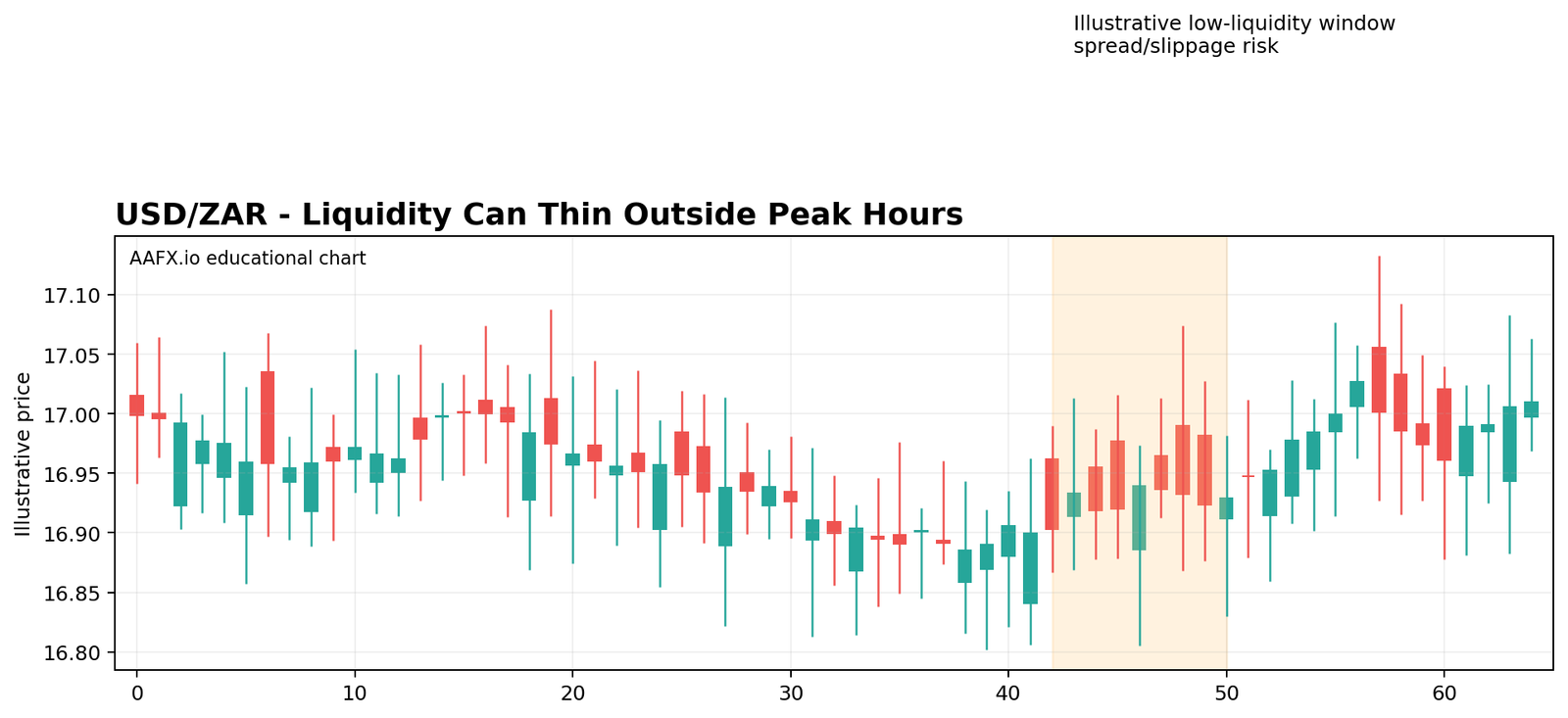
Exotic pairs often behave in a way that feels more abrupt than major pairs. Trends can be powerful, but retracements can also be faster, candles can be longer and slippage risk can rise during quieter market hours or around major headlines.
Advantages of Trading Exotic Forex Pairs
Potentially larger price swings, which can create more visible short-term opportunities.
Diversification away from the most crowded major-pair themes.
Unique macro stories, including emerging-market rates, commodities and domestic political developments.
Occasional carry-trade appeal when local interest rates are significantly higher than those of developed markets.
Disadvantages and Risks
Wider spreads and higher transaction costs.
Lower liquidity, especially outside the most active regional trading hours.
Greater sensitivity to political risk, central-bank surprises and regulatory changes.
More abrupt volatility and a higher chance of slippage or gaps around major events.
Harder research burden for traders who are unfamiliar with the local economy.
What Moves Exotic Forex Pairs?
1. Domestic Monetary Policy
Interest-rate decisions and central-bank credibility matter in every currency market, but they can matter even more in exotics. A surprise rate cut, capital-control fear or a signal that inflation is not under control can move an exotic currency sharply.
2. Inflation and Growth
High inflation or unstable growth can create persistent pressure on some emerging-market currencies. Traders therefore watch CPI, GDP, employment, trade balances and fiscal developments closely.
3. Politics and Geopolitical Risk
Elections, cabinet changes, sanctions, geopolitical tensions or policy uncertainty can all move exotic pairs quickly. This local political exposure is one of the biggest differences from a calm major-pair environment.
4. Commodity Prices
Some exotic currencies are heavily linked to commodity exports. For example, the South African rand can react to precious-metals trends and broader commodity sentiment, while other economies may be highly sensitive to oil, agriculture or industrial-metals markets.
5. Global Risk Sentiment
When global investors are comfortable taking risk, some higher-yielding emerging-market currencies can attract flows. When global risk appetite collapses, those flows can reverse quickly. This is why exotics can react not only to their own local story but also to U.S. dollar strength and general market stress.
Liquidity and Trading Sessions Matter More in Exotics
A trader who ignores session timing in exotic pairs can end up paying for it through wider spreads or poorer fills. These pairs are usually most active when both sides of the pair – or at least the relevant regional market – are awake and participating.
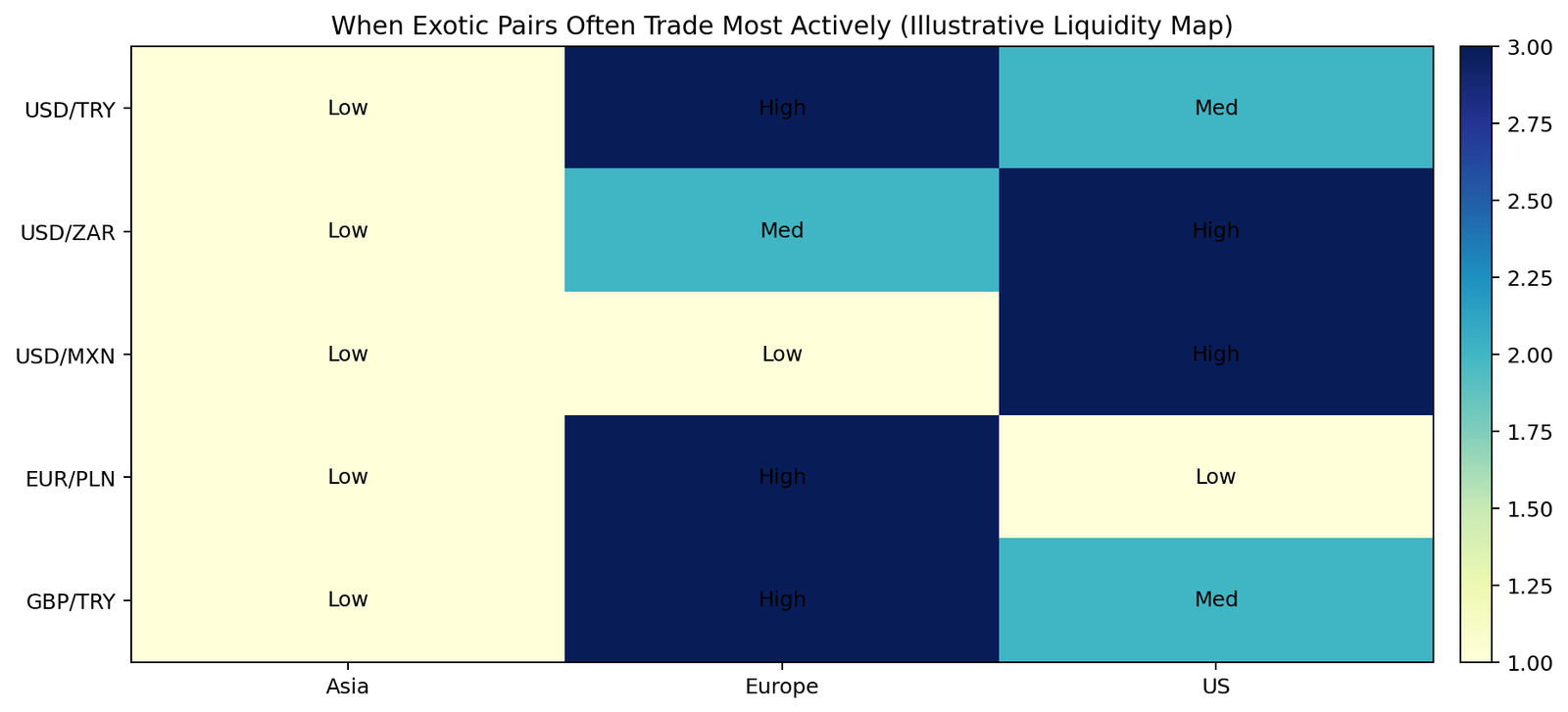
For example, EUR/PLN may often feel livelier during the European session, while USD/MXN often sees stronger participation during North American trading hours. A pair can still move outside those windows, but execution quality may be worse.
How to Trade Exotic Forex Pairs More Safely
Start with one or two pairs rather than trying to follow every exotic market at once.
Learn the main local drivers. Know which central bank, inflation series, elections, commodities or fiscal themes matter most.
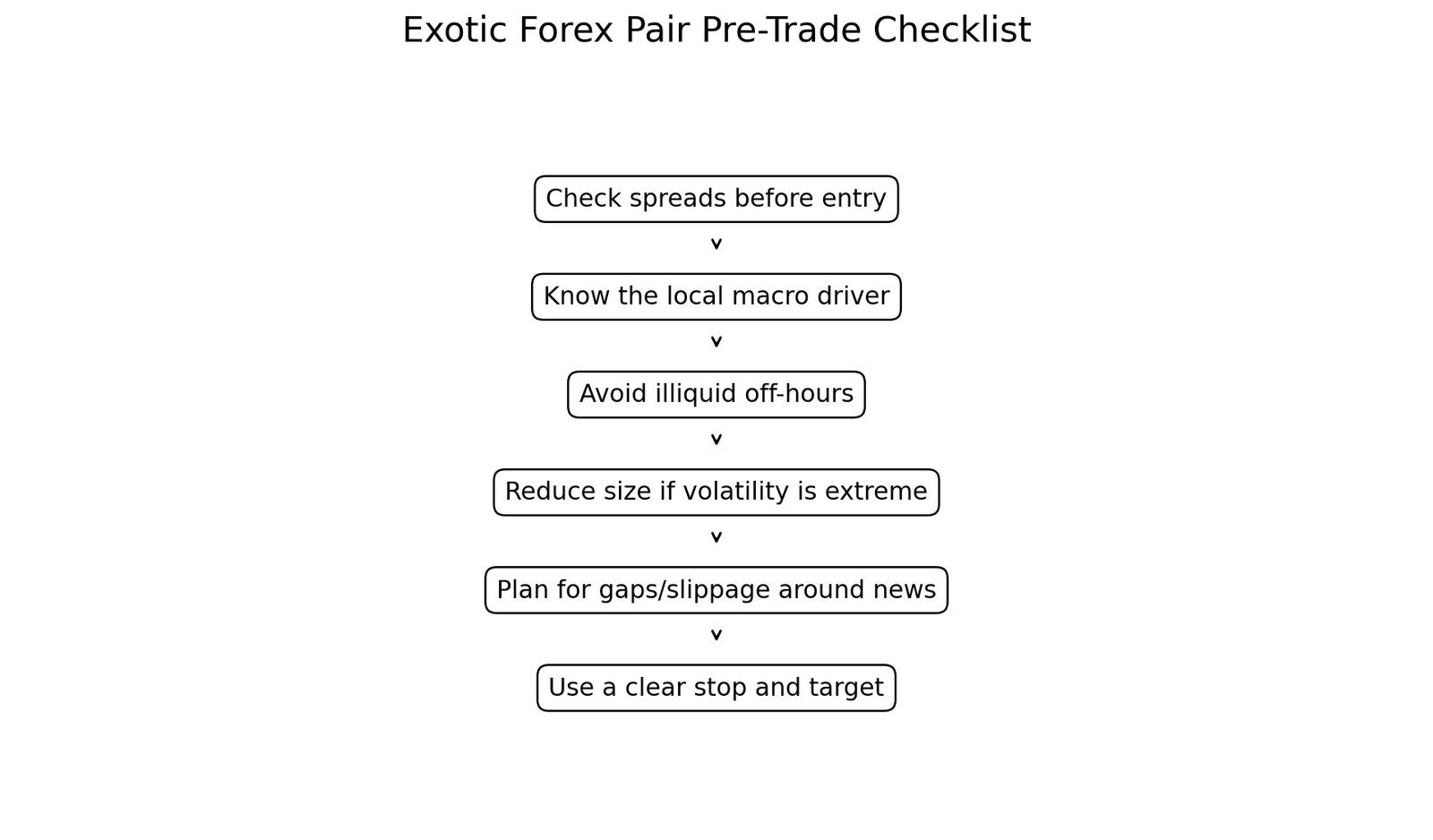
Check the spread before you enter. A setup that looks attractive on the chart may be much less attractive after costs.
Reduce position size and leverage if volatility is high. Exotic pairs can move farther and faster than a trader expects.
Prefer active trading hours when possible. Liquidity often improves during relevant session overlap.
Use clear stop-loss and target logic based on market structure, not random pip numbers.
Avoid holding large exposure blindly through major local policy announcements or political events.
Keep a trading journal so you can see whether the pair’s volatility and cost profile actually suit your strategy.
Are Exotic Pairs Good for Beginners?
Usually, not as a first choice. Beginners often learn more efficiently on major pairs because spreads are lower, liquidity is deeper and the market structure is easier to handle. That does not mean beginners must avoid exotics forever. It means they should approach them after they already understand the basics of execution, risk management and macro drivers.
A sensible learning path is to first understand majors like EUR/USD or USD/JPY, then move to minors, and only then explore selected exotics such as USD/MXN or EUR/PLN with smaller size and more deliberate preparation.
Common Approaches to Trading Exotic Pairs
Trend Trading
Some exotic pairs can trend strongly when the macro story is clear, such as persistent inflation pressure, central-bank divergence or commodity-driven weakness/strength.
Range Trading
Not every exotic pair trends all the time. Some spend long periods reacting to clear local support and resistance zones, especially when macro conditions are stable.
Fundamental / event-driven trading
Rate decisions, inflation releases and political events can create sharp moves, but this style requires caution because slippage and spread expansion can be severe.
Carry-oriented trading
Some traders are attracted to higher-yield currencies for carry reasons, but carry is not a free lunch; the currency can still fall sharply if risk sentiment deteriorates.
Why Costs Matter More in Exotic Pairs
A setup can be technically correct and still unattractive once spread and execution quality are considered. This is a crucial beginner lesson. If an exotic pair has a much wider spread than EUR/USD, the trade needs more room to breathe just to overcome the entry cost. That influences stop placement, reward expectations and the minimum quality of setup worth taking.
Frequently Asked Questions
What are exotic forex pairs?
Exotic forex pairs are currency pairs that combine one major currency, such as USD or EUR, with a less-traded currency from a smaller or emerging economy.
What is an example of an exotic pair?
Common examples include USD/TRY, USD/ZAR, USD/MXN and EUR/PLN.
Why are exotic pairs more volatile?
They usually have lower liquidity, wider spreads and stronger sensitivity to local political and economic events.
Are exotic pairs riskier than major pairs?
They often carry more execution and volatility risk than major pairs, especially for inexperienced traders.
Can beginners trade exotic forex pairs?
Beginners can study them, but many traders prefer to learn the basics on major pairs first because they are generally cheaper and easier to execute.
What time is best to trade exotic pairs?
Usually when the session relevant to the local currency is active and liquidity is better. Session timing varies by pair.
Do exotic pairs have wider spreads?
Yes, in many cases spreads are wider than on major pairs, which increases trading costs.
What moves exotic currency pairs the most?
Local rates, inflation, politics, commodity prices and global risk sentiment are among the most important drivers.
Are exotic pairs good for day trading?
They can be, but the trader has to be more selective because spreads, volatility and liquidity conditions can make short-term execution more difficult.
What is the difference between major, minor and exotic pairs?
Majors are the most traded pairs, minors are crosses between major currencies, and exotics pair one major currency with a less-traded or emerging-market currency.
Bottom Line
Exotic forex pairs can be fascinating because they often move with a more distinct local macro story than the major pairs. That can create strong opportunities, but it also means the trader must do more homework and respect the extra cost and volatility.
The main mistake is treating an exotic pair as if it trades exactly like EUR/USD. It usually does not. Spreads are often wider, liquidity is often thinner, and local policy or politics can matter much more than the average beginner expects.
Use this guide alongside the Forex Trading for Beginners guide, the Forex Technical Analysis pillar and the AAFX.IO guide to leverage and trading risk.
Risk warning: Forex and leveraged derivatives involve substantial risk. Exotic pairs can be more volatile and more expensive to trade than major pairs. This article is educational and not personalised financial advice.
Sources & Methodology
Primary-source standard: This guide uses the BIS 2025 Triennial Central Bank Survey and BIS analysis of emerging-market currency turnover for market-structure evidence. Official central-bank releases, regulator notices and original datasets are preferred for current policy or market facts. Secondary reporting is used only for additional context.
Page last reviewed: