The Canadian Dollar strengthened against its US counterpart on Wednesday, pushing USD/CAD towards 1.3970 after two sessions of gains. A retreat in US Treasury yields weakened demand for the Greenback, while rising crude oil prices offered additional support to the commodity-linked Loonie. Investors also monitored the US midterm election results and diplomatic efforts to ease tensions between Washington and Tehran, leaving the currency pair exposed to shifting political and geopolitical headlines.
Falling Treasury yields pressure US dollar
The USD/CAD pair traded near 1.3970 during Wednesday’s Asian session, reversing its recent advance as US bond yields moved lower across maturities.
The US two-year Treasury yield declined five basis points to 4.566%, while the benchmark 10-year yield dropped six basis points to 4.90%. Lower yields can reduce the return advantage of dollar-denominated assets, making the US currency less attractive to international investors.
The move came as markets assessed the political implications of the November 3 US midterm elections. Early results initially showed Democrats ahead in a number of House races. However, those preliminary figures changed as counting progressed. Decision Desk HQ’s later results showed Democrats taking control of both chambers, with 232 House seats and 54 Senate seats listed on its results page.
The election outcome could influence expectations for fiscal policy, government spending and the Trump administration’s legislative agenda. Those developments may affect Treasury yields and the dollar’s direction as investors assess the implications for the US economy.
Rising oil prices support Canadian dollar
Crude oil’s advance provided another source of support for the Canadian Dollar. Canada is a major energy exporter, meaning stronger oil prices can improve export revenues and the country’s trade position, potentially increasing demand for its currency.
Oil traders were also tracking diplomatic developments between the United States and Iran. Qatar’s Foreign Ministry said both countries were reviewing new proposals from mediators intended to narrow their differences. However, Iran’s national security chief described Washington’s response as unsatisfactory, highlighting the uncertainty surrounding negotiations.
US President Donald Trump said Washington had no immediate plan to strike Iran and suggested its objectives were being achieved. He nevertheless indicated that the United States remained prepared to act if necessary. Israeli Prime Minister Benjamin Netanyahu’s comments about possible military action later in the week added another layer of uncertainty.
For oil markets, progress toward an agreement could ease concerns about supply disruptions, while renewed military escalation could push prices higher. Either outcome could influence the Canadian Dollar through changes in energy-market sentiment.
US midterms and Canadian data in focus
The Canadian economic calendar offered relatively few immediate catalysts, leaving USD/CAD sensitive to developments outside the country. Scotiabank analysts highlighted Wednesday’s Canadian trade data and the broader market reaction to the US election as key near-term considerations.
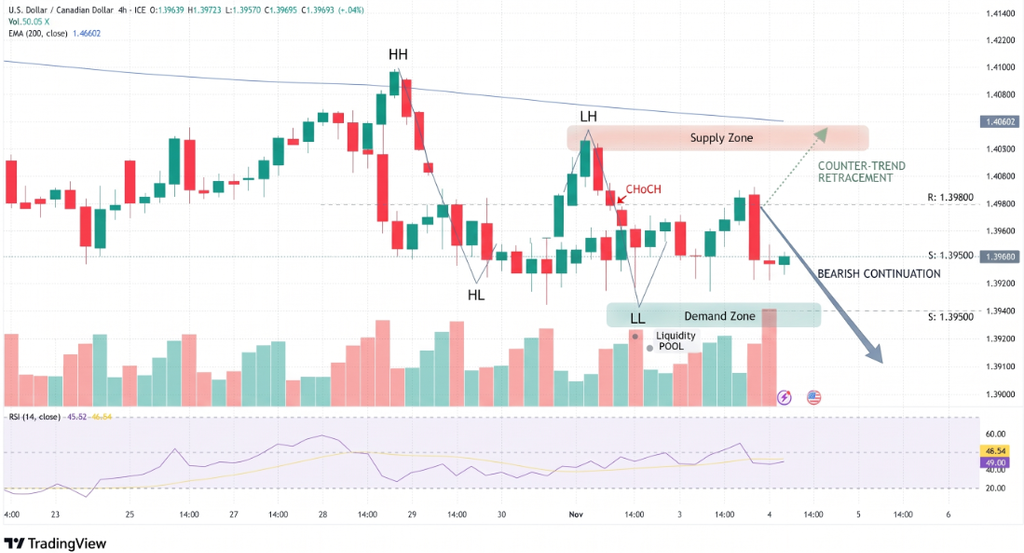
Investors will watch several factors for the pair’s next direction:
- US Treasury yields: Further declines could increase pressure on the dollar.
- Crude oil: Sustained gains may provide additional support to CAD.
- US political developments: Policy uncertainty could drive volatility across currency markets.
- Canadian trade figures: Export and import data may offer a fresh assessment of domestic economic conditions.
Conclusion
USD/CAD’s retreat towards 1.3970 reflects the combined influence of weaker US yields and firmer oil prices. Further Canadian Dollar gains may depend on whether those trends persist, while developments in US politics and Iran negotiations could quickly alter market sentiment.
Sources & Methodology
Primary-source standard: Market-moving facts should link to original data releases, regulator notices, company filings or official project announcements whenever available. Secondary reporting is used for additional context, not as a substitute for original evidence.
Page last reviewed: