Volkswagen shares jumped 5.9% to an 11-week high Thursday after the supervisory board of Europe’s largest automaker approved the most sweeping restructuring in its 89-year history, averting a threatened clash between management, unions and shareholder Lower Saxony. The deal adds 50,000 job cuts to the 50,000 already agreed, bringing total planned reductions to 100,000, while leaving the future of four German plants unresolved. Volkswagen’s operating margin fell to 3.8% in the first half of 2026 from a decade-high 7.9% in 2022, squeezed by U.S. tariffs, falling China sales and aggressive Asian rivals in a stagnant European market.
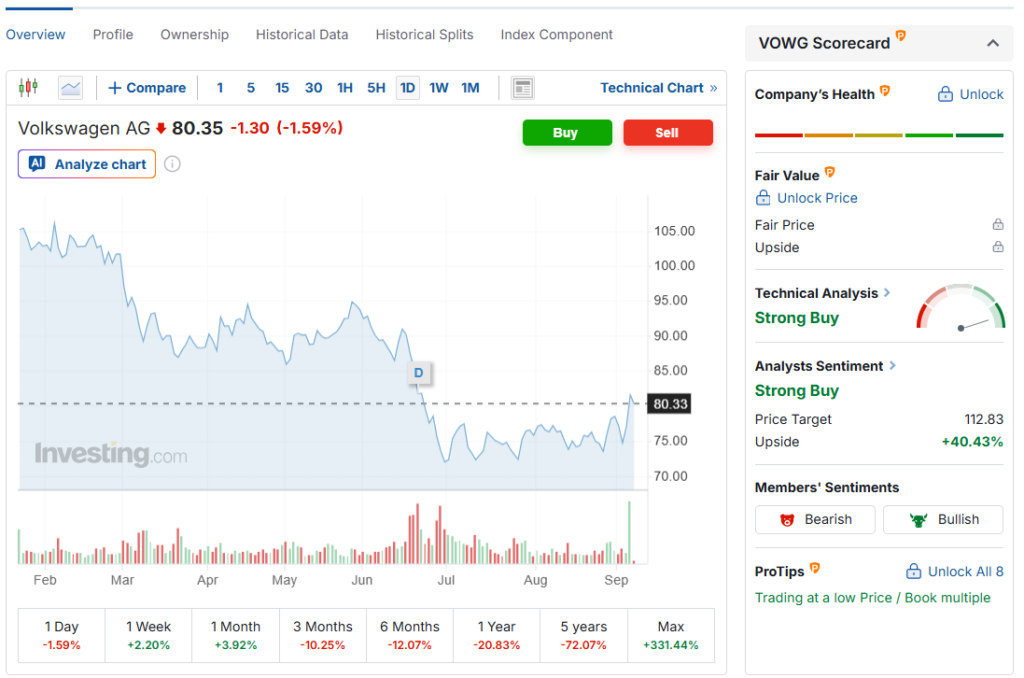
Source: investing.com
Board Approves 100,000 Job Cuts
The agreement, part of what Volkswagen calls its Future Plan 2030, targets an operating margin of 9% by 2030 and calls for cutting the group’s model lineup by roughly half by 2035. Volkswagen plans to spend €135 billion on investment and research between 2027 and 2031, directing the savings into a competitive reset rather than shareholder payouts. The reductions equal roughly 15% of Volkswagen’s 662,942-person workforce as of the end of 2025. CEO Oliver Blume has previously said half the savings must come from Germany, implying roughly 25,000 domestic job losses, though the deal disclosed no timeline or location details for the cuts.
Investors Cheer a Board United
Shareholders and analysts framed the vote as evidence Volkswagen can still act decisively, not as proof its problems are solved. “Does this mean Volkswagen is out of the woods? Definitely not. Now comes the hard part: execution,” said Ingo Speich of shareholder Deka Investment. Moritz Kronenberger of Union Investment said the pressure now sits entirely with management: “There are no more excuses.” Citi analysts welcomed the deal while cautioning that it does not change the EU competitive environment, continued China market-share losses, or raw-material cost pressures. Volkswagen shares remain roughly 30% lower since January despite Thursday’s gain, the second-biggest advance on the pan-European STOXX 600 index.
Four German Plants Left Unresolved
The deal leaves open the fate of Volkswagen plants in Emden, Hanover, Zwickau and Neckarsulm as production phases out over the next decade, with people familiar with the matter saying options could include repurposing the sites under new ownership. Olaf Lies, state premier of Lower Saxony — which holds 20% of Volkswagen’s voting rights and blocking power on the supervisory board — said plant closures were not a foregone conclusion. “If we have to cut capacity, the automatic conclusion cannot be that we cut it in Germany,” Lies told reporters, while acknowledging Europe’s auto sector faces enormous pressure. Unions had secured a job guarantee for most German operations through 2030 in a prior 2024 turnaround package, a commitment that will shape how fast management can act on the new cuts.
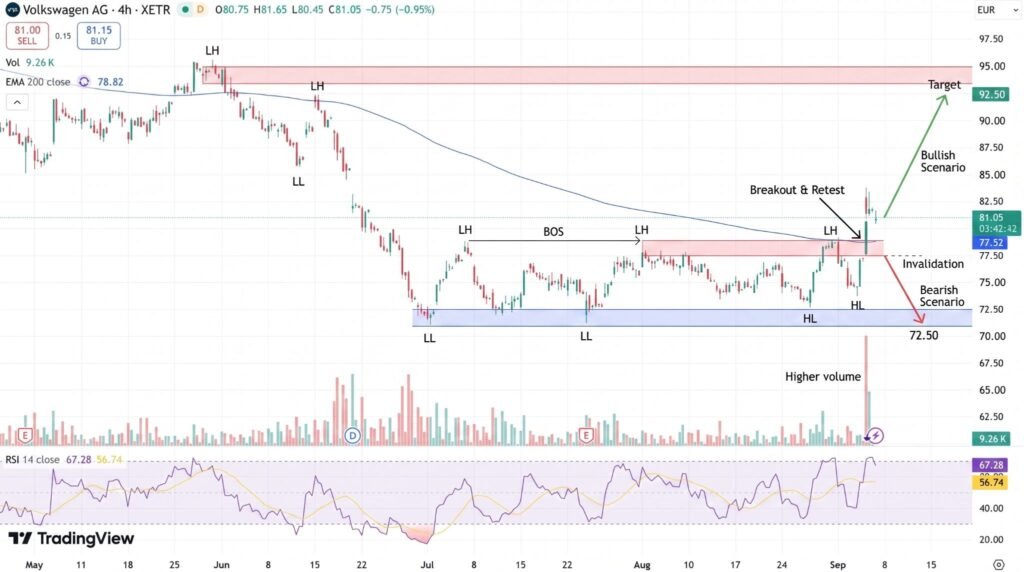
Volkswagen Price Chart – Source: Tradingview
Conclusion
Thursday’s vote resolves an immediate governance standoff without resolving the business problem that caused it: an operating margin less than half its 2022 peak, a Chinese market that no longer subsidizes the rest of the group, and tariff and competitive pressures the deal itself does nothing to change. Volkswagen has secured internal agreement on 100,000 job cuts and committed €135 billion toward a leaner model lineup aimed at rebuilding margins to 9% by 2030. Whether that translates into results now depends on execution against unions and a state government both determined to protect German jobs — the test Speich and Kronenberger both pointed to as the one that actually matters.
Sources & Methodology
Primary-source standard: Market-moving facts should link to original data releases, regulator notices, company filings or official project announcements whenever available. Secondary reporting is used for additional context, not as a substitute for original evidence.
Page last reviewed: