Oil prices ended nearly $1 lower as concerns about slowing global demand overshadowed gains in refinery output. Chinese government figures showed factory output in July fell to an eight-month low, while retail sales expanded at their weakest pace since December. The slowdown in the world’s second-largest crude consumer rattled markets, despite stronger oil processing figures.
China’s refineries processed 8.9% more crude year-on-year in July, though volumes fell from June, when throughput reached its highest level since September 2023. At the same time, rising fuel exports suggested that domestic demand for oil products is softening.
This weakening consumption outlook added to pressure from broader macroeconomic concerns, including expectations that the Federal Reserve will keep interest rates higher for longer, potentially dampening growth.
OPEC+ Output Adds to Surplus
Forecasts of a growing oil surplus further weighed on prices. Bank of America analysts widened their estimates, now projecting an average surplus of 890,000 barrels per day from July 2025 through June 2026. The revision reflects rising supply from OPEC+, a coalition that includes the Organization of the Petroleum Exporting Countries, Russia, and other allies.
Their forecast follows the International Energy Agency’s warning this week that the market appears “bloated” following recent production increases. With more supply expected and demand growth uncertain, traders are bracing for prolonged market imbalances.
Supporting this outlook, U.S. oil rig counts rose by one to 412 this week, according to Baker Hughes data—an incremental increase that still signals potential future supply growth.
Factors Driving Market Outlook
Several overlapping factors are shaping the oil market trajectory over the next year:
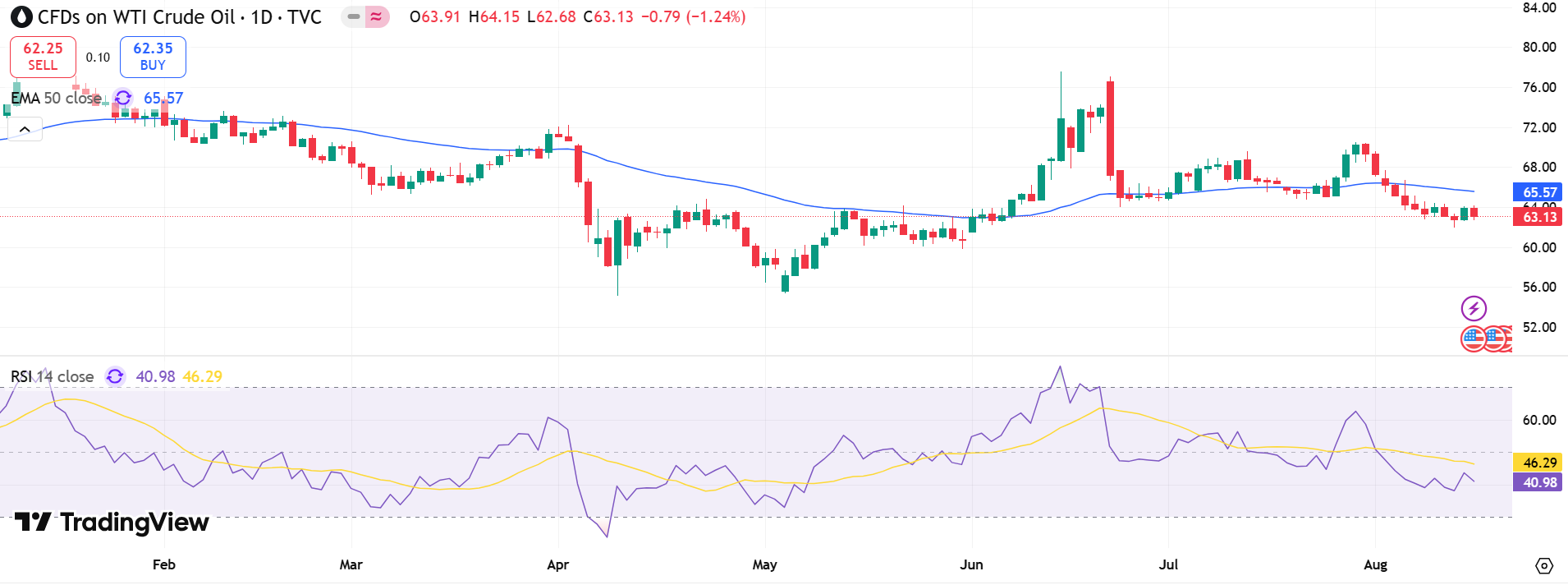
- China’s slowdown: Factory activity and retail sales weakening despite refinery throughput gains.
- OPEC+ production: Rising supply from the producer group continues to swell inventories.
- U.S. policy pressure: Expectations of “higher-for-longer” interest rates add downside risk to global demand.
- Surplus forecast: Bank of America projects nearly 900,000 barrels per day in excess supply into mid-2026.
Taken together, these conditions point to a challenging environment for oil, with short-term price relief limited by structural surpluses and sluggish demand in key markets. Analysts caution that unless consumption rebounds significantly or producers rein in supply, prices may remain under pressure in the quarters ahead.
Sources & Methodology
Primary-source standard: Market-moving facts should link to original data releases, regulator notices, company filings or official project announcements whenever available. Secondary reporting is used for additional context, not as a substitute for original evidence.
Page last reviewed: