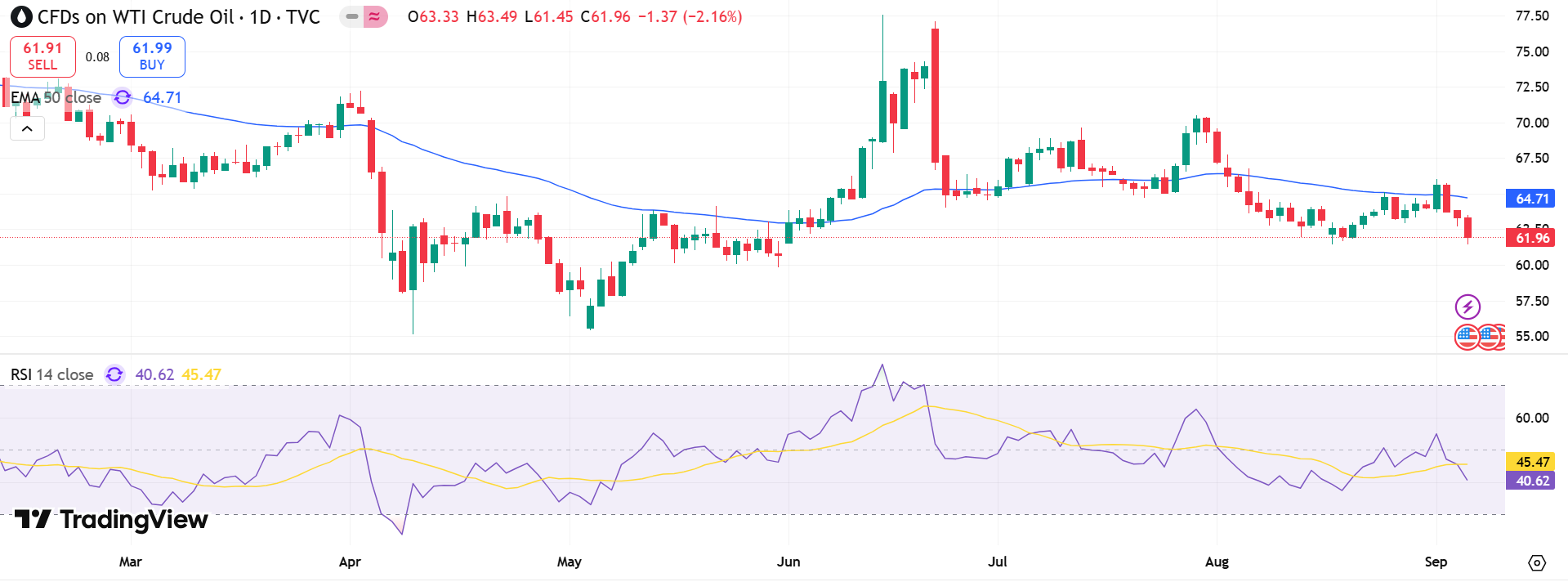
Oil prices retreated on Friday as traders weighed the possibility that the OPEC+ alliance may boost supply at its upcoming weekend meeting. Brent crude futures for November delivery slipped 2.0% to $65.64 a barrel, while West Texas Intermediate (WTI) futures dropped 2.2% to $62.09 by late morning in New York.
The declines left crude on course for weekly losses of 1% to 1.6%, underscoring investor unease about demand resilience in the face of potential supply increases.
OPEC+ has already expanded output by about 2.2 million barrels per day in 2025, reversing a portion of its steep production cuts from the last two years. Analysts warn that additional increases could depress prices further, even as the group seeks to recapture market share.
Russia’s role also loomed large. Despite U.S. efforts to deter buyers, Moscow struck a deal to supply at least 2.5 million metric tons of crude annually to China via Kazakhstan, signaling output will remain robust.
U.S. Inventory Build Fuels Concern
Fresh inventory data added to the bearish tone. The Energy Information Administration reported U.S. crude stockpiles grew by 2.415 million barrels in the week ending August 29. Markets had expected a draw of 2 million barrels.
- Distillate inventories rose, hinting at slowing industrial demand.
- Gasoline inventories, by contrast, saw a larger-than-expected draw.
- Overall trends pointed to softening fuel consumption as the summer travel season ended.
The unexpected build stoked concerns about U.S. demand at a time when broader economic indicators are flashing signs of weakness.
Economic Outlook and Rate Cut Bets
The jobs market added to the market’s caution. A closely watched report showed the U.S. economy created only 22,000 jobs in August, falling short of expectations. Combined with earlier data on unemployment claims and job openings, the figures point to a cooling labor market.
This slowdown could prompt the Federal Reserve to cut interest rates at its September 16–17 meeting, a move traders have nearly fully priced in. For oil markets, however, any monetary easing may not be enough to offset pressure from rising supply and swelling inventories.
The combination of OPEC+ uncertainty, Russia’s export commitments, and weak U.S. demand underscores the fragile balance facing global energy markets heading into the final quarter of the year.
Sources & Methodology
Primary-source standard: Market-moving facts should link to original data releases, regulator notices, company filings or official project announcements whenever available. Secondary reporting is used for additional context, not as a substitute for original evidence.
Page last reviewed: