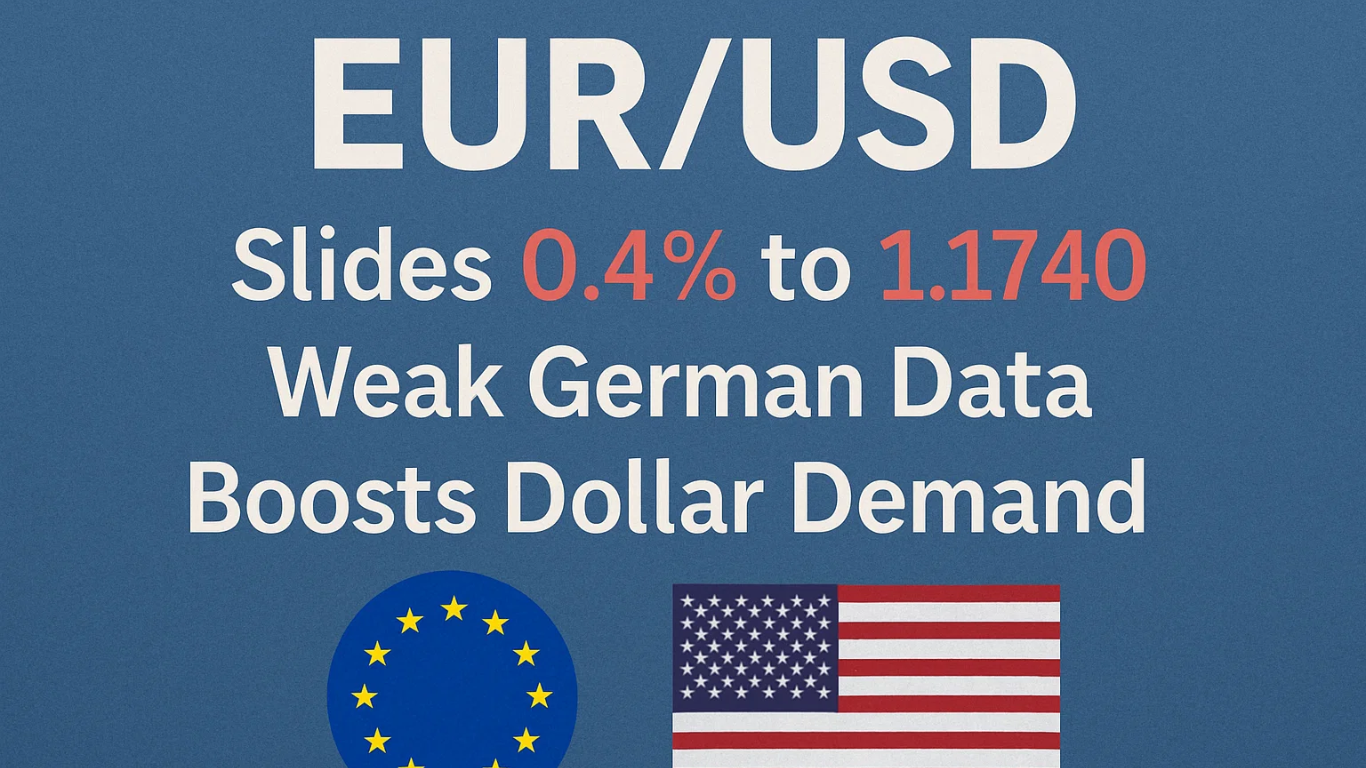
The euro lost ground against the U.S. dollar on Wednesday, slipping below the 1.1750 level as weaker German business sentiment data and firm dollar demand pressured the pair. By midday in Europe, EUR/USD traded around 1.1740, down 0.4% on the session, trimming most of its weekly gains.
The U.S. dollar strengthened broadly across currency markets after Federal Reserve Chair Jerome Powell repeated his cautious stance on interest rate cuts, reminding investors that moving too quickly could risk reigniting inflation. His remarks, delivered at the Greater Providence Chamber of Commerce, emphasized that while the labor market has softened, the central bank is unwilling to commit to a steeper easing path without clearer signals from incoming data.
German Data Adds to Pressure
Economic indicators from Europe added to the euro’s difficulties. The IFO Business Climate Index for Germany fell to 87.7 in September, down from 89 in August and well below market expectations of 89.3. The breakdown revealed a deterioration in both the current conditions index (85.7 vs. 86.4 prior) and expectations index (89.6 vs. 91.6 prior), signaling persistent weakness in Europe’s largest economy.
The dismal results weighed heavily on market sentiment, with investors interpreting the data as another sign that the eurozone recovery remains fragile. The combination of softer German outlook and renewed dollar strength reinforced downside risks for EUR/USD.
Key support and resistance levels:
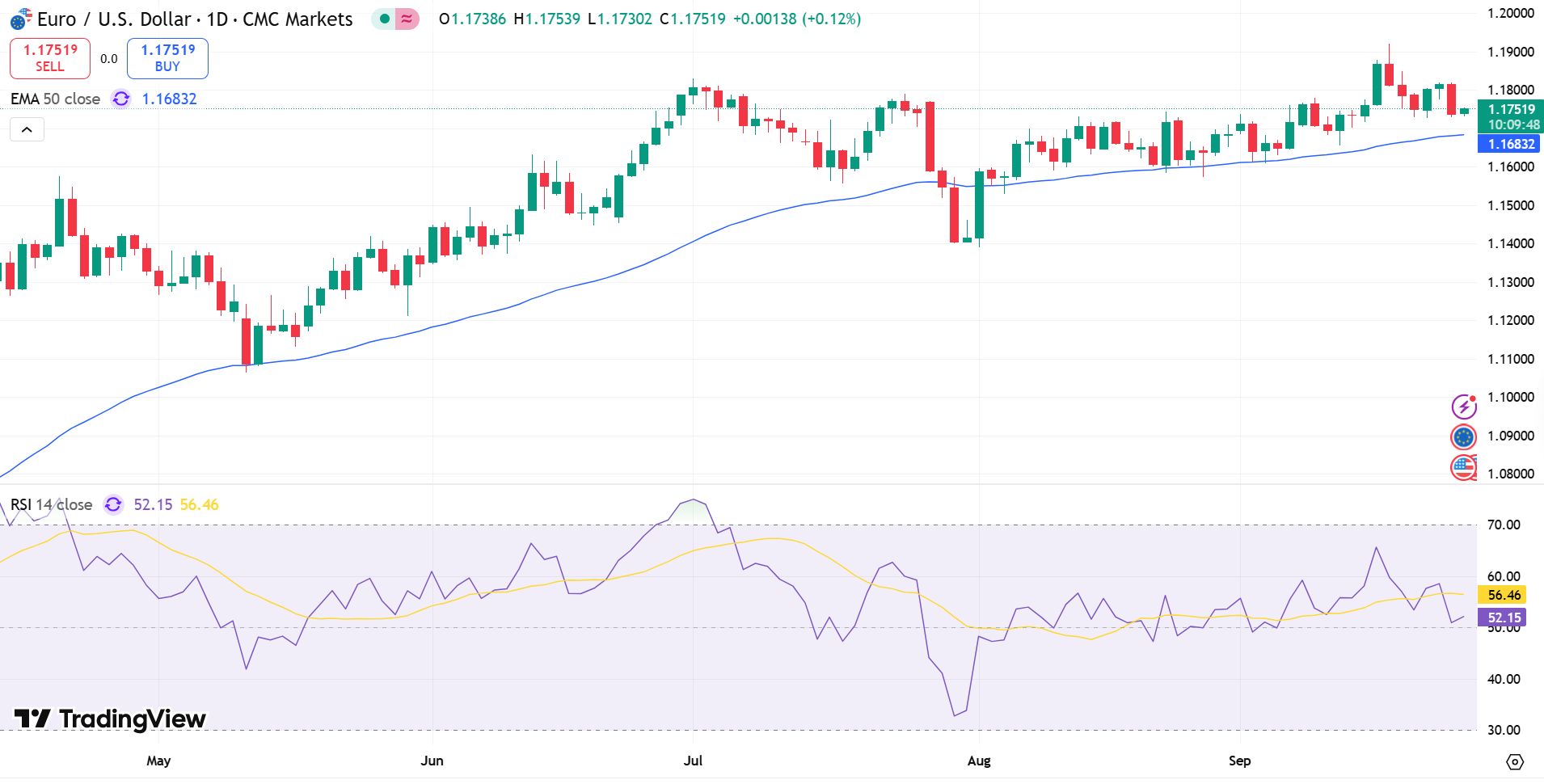
- Support: 1.1730, 1.1690, 1.1650
- Resistance: 1.1775, 1.1820, 1.1855
Technical indicators also point to continued pressure. On the four-hour chart, EUR/USD slipped below its 20-period SMA and now challenges the 100-period SMA at 1.1740, while the Relative Strength Index (RSI) dropped to 38, showing momentum skewed toward sellers.
U.S. Data in Focus
Traders now turn their attention to the U.S. economic calendar for further direction. Mortgage Bankers Association data released earlier showed mortgage applications rose just 0.6%, a steep drop from the prior week’s 29.7% surge. Later in the day, markets will parse new home sales figures as well as remarks from San Francisco Fed President Mary Daly for additional policy clues.
With the Fed holding to a data-dependent approach and European indicators continuing to disappoint, analysts expect the euro to remain under pressure in the near term, with any break below 1.1730 potentially accelerating the decline.
Sources & Methodology
Primary-source standard: Market-moving facts should link to original data releases, regulator notices, company filings or official project announcements whenever available. Secondary reporting is used for additional context, not as a substitute for original evidence.
Page last reviewed: