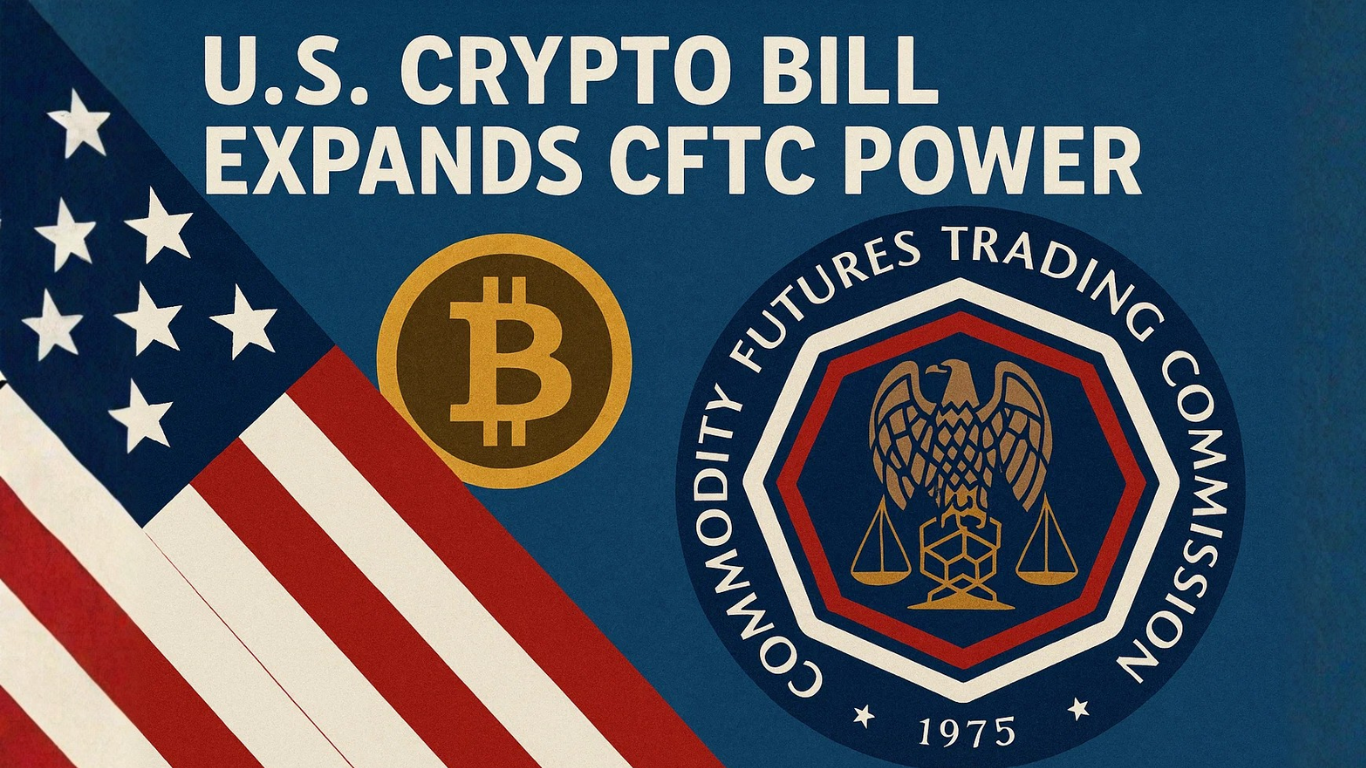
The U.S. Senate Agriculture Committee has unveiled a bipartisan draft of the Crypto Asset Market Clarity Act, a landmark proposal aimed at defining the future of cryptocurrency regulation in the United States. The legislation would grant expanded oversight authority to the Commodity Futures Trading Commission (CFTC) while clarifying the Securities and Exchange Commission’s (SEC) role in regulating digital securities.
Chaired by Senator John Boozman (R-AR) and Ranking Member Cory Booker (D-NJ), the committee framed the bill as a way to establish clear boundaries between commodities and securities in the fast-evolving crypto market. Boozman called it a “bipartisan breakthrough that gives certainty to innovators and investors,” while Booker emphasized its potential to “strengthen consumer protection.”
The draft currently remains open for discussion, with further details expected on critical issues such as DeFi (decentralized finance) exemptions and privacy coin treatment.
Key Provisions of the Crypto Clarity Act
The proposed legislation amends the Commodity Exchange Act to formally classify “digital commodities” as blockchain-based, fungible assets that enable peer-to-peer transactions without intermediaries. This excludes stablecoins, NFTs, and meme tokens, effectively ending jurisdictional disputes between the SEC and CFTC.
Under the draft bill:
- The CFTC gains regulatory authority over spot markets for digital commodities like Bitcoin.
- Market participants — including brokers, dealers, exchanges, and custodians — must register with the CFTC.
- New compliance requirements include cybersecurity controls, segregation of client assets, and anti-manipulation safeguards.
- Open-source developers and self-custody wallet providers are exempt from money transmitter laws, preserving users’ rights to hold and transact crypto directly.
The CFTC must issue its final rulebook within 18 months of the bill’s enactment. The proposal also calls for joint CFTC–SEC guidance on “mixed” transactions and closer international coordination to align global crypto standards.
Bill Strengthens Bitcoin’s Regulatory Standing
Analysts view the bill as a milestone for Bitcoin. Author Adam Livingston, known for The Great Harvest, described it as “the most pro-Bitcoin federal legislation to date,” noting that it explicitly defines BTC as a digital commodity under U.S. law.
The legislation could pave the way for CFTC-regulated spot Bitcoin exchanges, enhancing institutional confidence and potentially drawing trillions in capital inflows from:
- Bitcoin-backed lending and money-market products
- Corporate treasury adoption
- Insurance-linked financial instruments
Livingston added, “This is the first time U.S. law formally recognizes Bitcoin’s sovereignty principles.”
The bill has also received early support from the crypto industry and President Donald Trump, who see it as the long-awaited “regulatory clarity” necessary for expanding the U.S. digital asset market and attracting institutional investment.
Sources & Methodology
Primary-source standard: Market-moving facts should link to original data releases, regulator notices, company filings or official project announcements whenever available. Secondary reporting is used for additional context, not as a substitute for original evidence.
Page last reviewed: