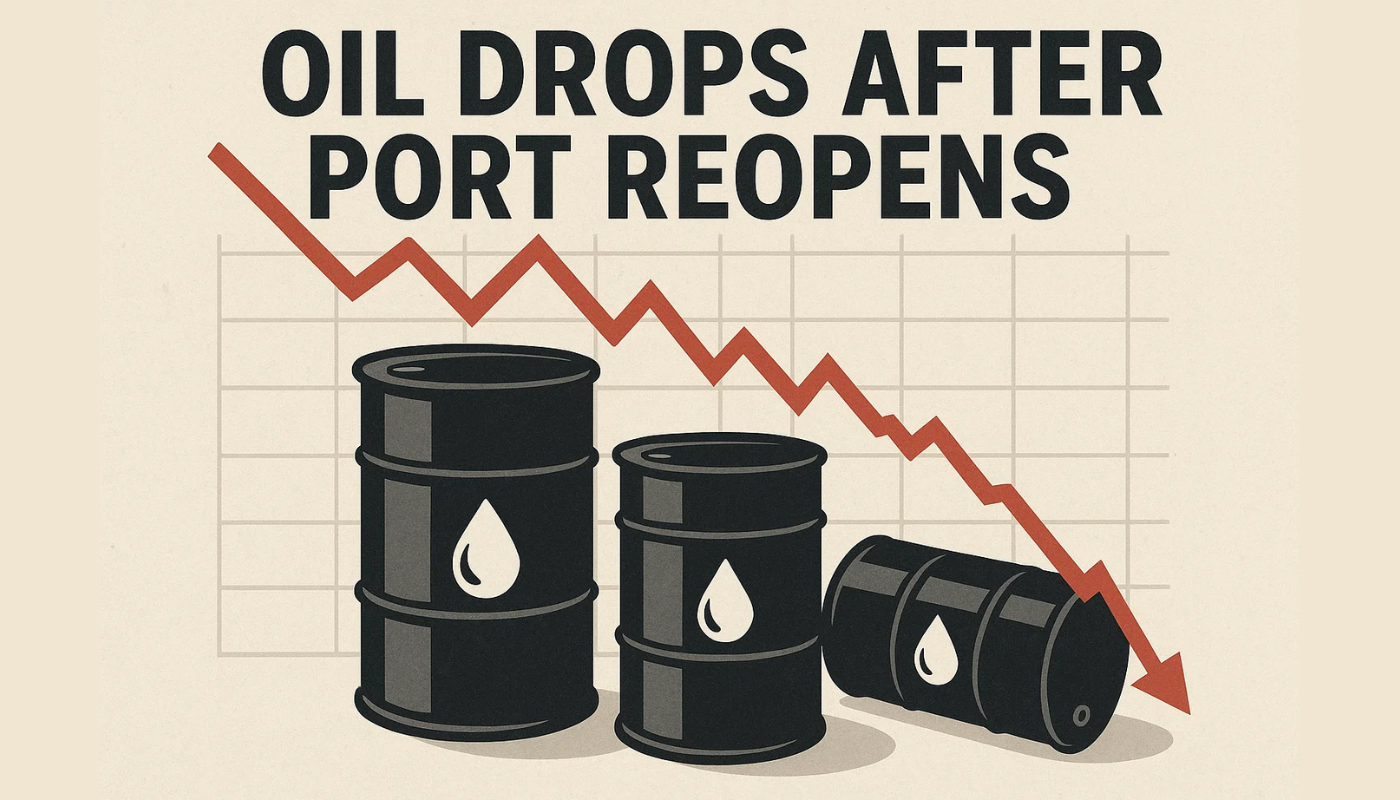
Oil prices retreated on Monday, pulling back from last week’s gains after Russia restarted crude loadings at the Novorossiysk export hub. The reopening followed a two-day suspension triggered by a Ukrainian strike that temporarily halted flows through one of the Black Sea’s most strategic energy corridors.
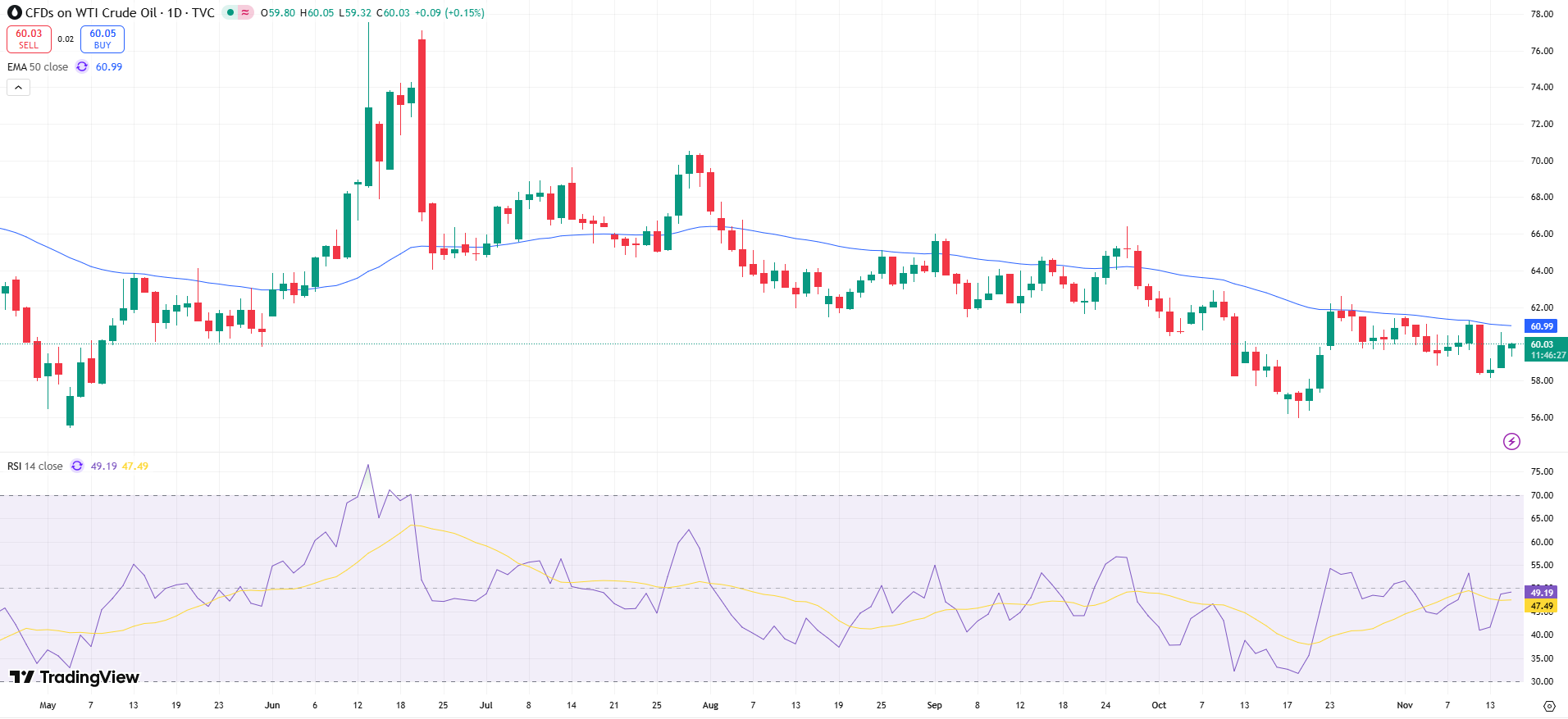
Brent crude slipped 0.82% to $63.86 a barrel, while WTI fell 0.93% to $59.53. Both benchmarks had gained more than 2% on Friday as traders reacted to disruptions affecting roughly 2% of global oil supply, including flows from a nearby Caspian Pipeline Consortium facility.
- Brent crude: $63.86, down 0.82%
- WTI crude: $59.53, down 0.93%
- Supply impact: Approx. 2% of global flows disrupted
Industry data from LSEG confirmed that loadings resumed Sunday, but concerns over long-term risks to Russian infrastructure remain elevated as Ukraine intensifies cross-border strikes.
Ukraine Strikes Raise Long-Term Supply Risks
Ukraine’s military reported attacks on Russia’s Ryazan refinery, followed by a strike on the Novokuibyshevsk refinery in the Samara region. These facilities are key components of Russia’s downstream production network.
Analysts say traders are now weighing short-term relief from the port reopening against longer-term vulnerabilities created by military escalation.
Toshitaka Tazawa of Fujitomi Securities noted that many investors used Friday’s rally to lock in profits, while expectations of continued OPEC+ oversupply kept sentiment cautious. He added that WTI is likely to hold near the $60 level, fluctuating within a $5 band.
Western sanctions are adding further uncertainty. The U.S. recently banned transactions involving Russia’s Lukoil and Rosneft after November 21. President Trump signaled that penalties may widen to any nation conducting business with Moscow—and possibly Iran.
Oversupply Outlook Weighs on Market
OPEC+ affirmed a December output increase of 137,000 barrels per day, matching the rises in October and November, before pausing further hikes in early 2025. ING forecasts a large surplus through 2026, though it warned that supply risks are rising as Ukraine escalates drone operations and Iran seizes tankers along the Strait of Hormuz, which carries nearly 20 million barrels per day.
Positioning data showed speculative net long interest in ICE Brent rising by 12,636 lots to 164,867, driven mainly by short-covering amid rising geopolitical uncertainty.
U.S. drilling activity also ticked higher, with Baker Hughes reporting three additional rigs, bringing the total to 417.
Sources & Methodology
Primary-source standard: Market-moving facts should link to original data releases, regulator notices, company filings or official project announcements whenever available. Secondary reporting is used for additional context, not as a substitute for original evidence.
Page last reviewed: