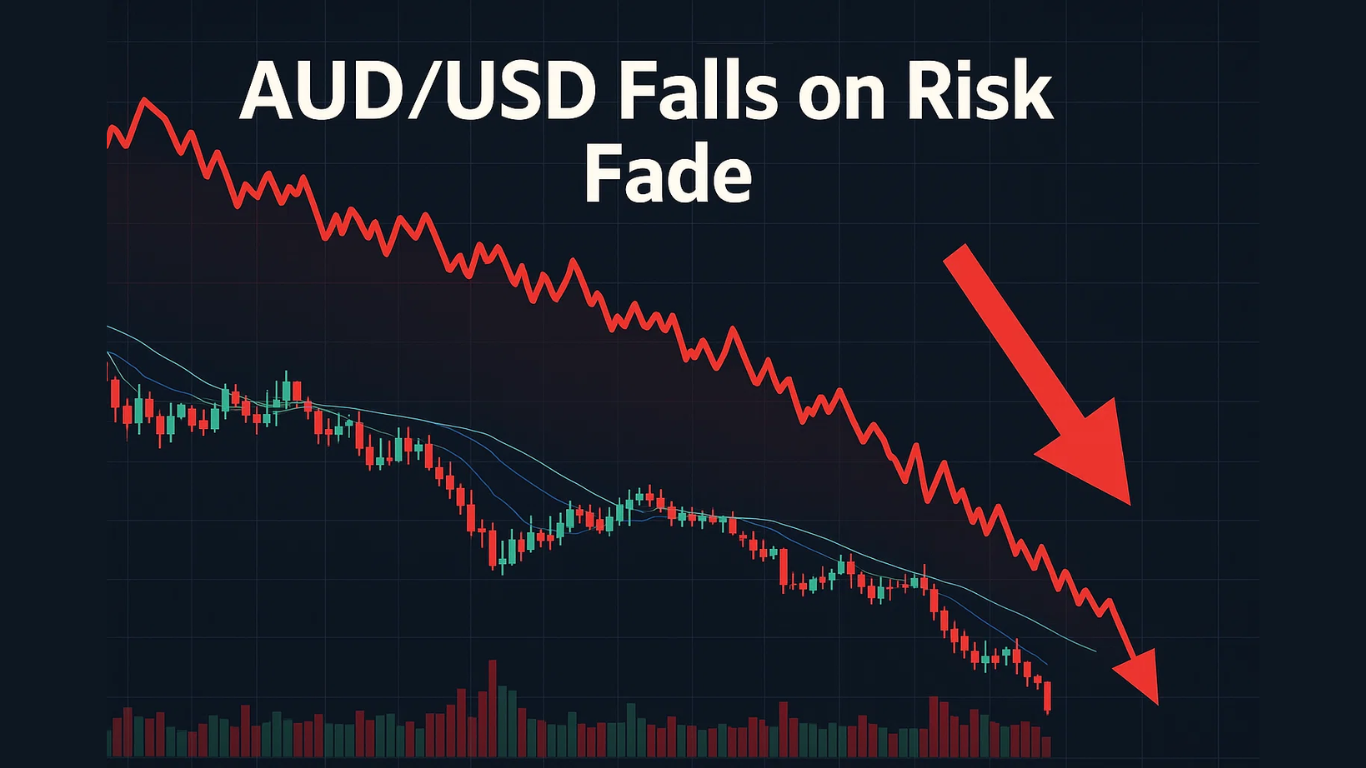
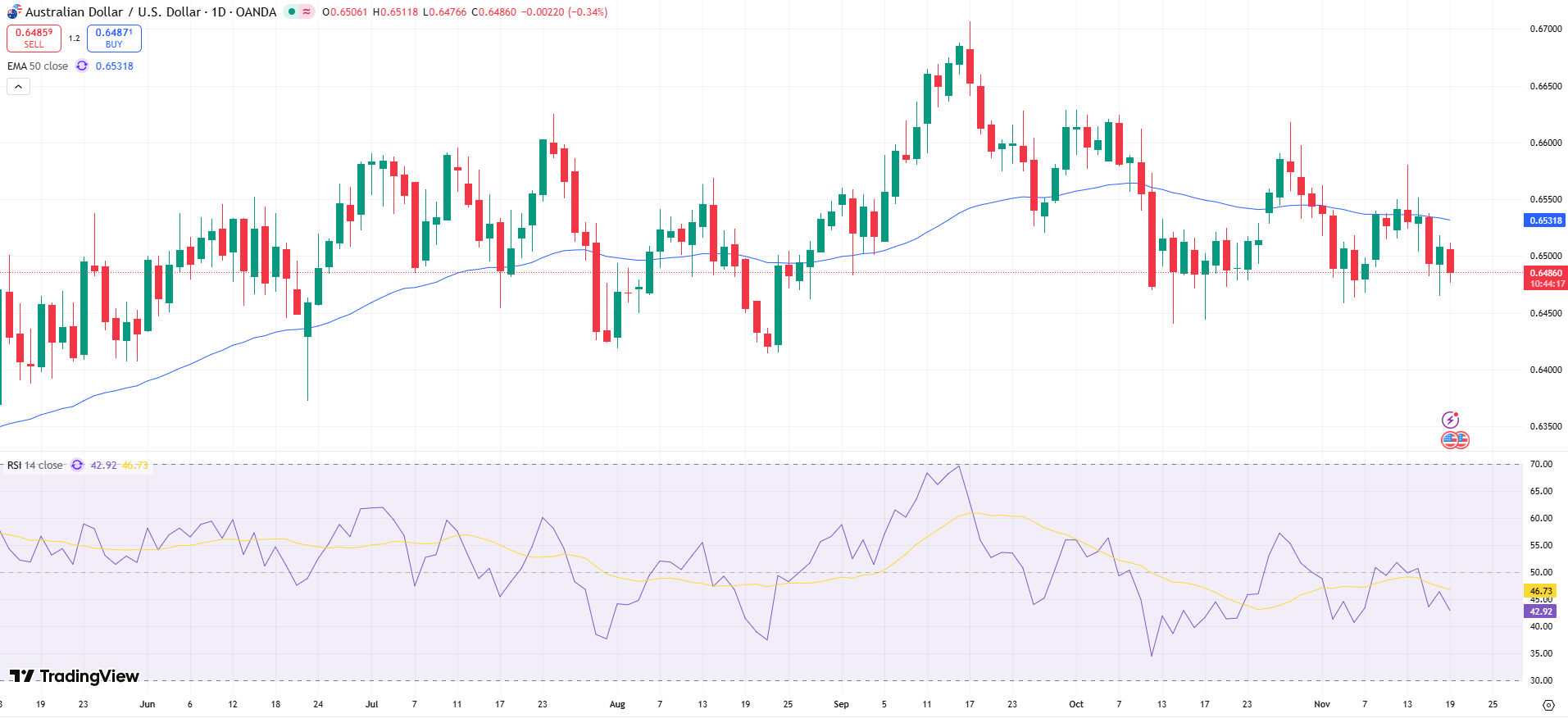
The Australian Dollar extended its decline on Wednesday, slipping 0.40% to 0.6480, as global risk sentiment deteriorated and investors retreated from cyclical assets. Heavy selling in equity markets—sparked by concerns over stretched valuations in the artificial intelligence sector—has intensified pressure on high-beta currencies, with the AUD among the hardest hit.
Technically, the AUD/USD pair continues to consolidate within a broad rectangular range, reflecting a period of indecision in the market. With the pair trading below the nine-day Exponential Moving Average (EMA), near-term momentum remains tilted toward the downside. Support sits at 0.6470, followed by August’s five-month low at 0.6414. On the upside, resistance at 0.6500, reinforced by the nine-day EMA at 0.6514, serves as the critical barrier to regaining upward traction.
A break above this cluster could lift the pair toward the upper boundary of the trading range near 0.6630, although current macro conditions suggest limited scope for a sustained rebound.
Domestic Data Gives RBA Room to Pause
Australia’s latest economic readings point to a stable backdrop that supports the Reserve Bank of Australia’s preference for policy continuity. The Wage Price Index rose 0.8% quarter-on-quarter, with annual wage growth steady at 3.4%, in line with expectations. Combined with falling unemployment—down to 4.3% in October—and a stronger-than-expected 42.2K rise in employment, the data reinforces the case for a cautious monetary stance.
Market positioning reflects that tone. ASX 30-Day Interbank Futures show only an 8% chance of an RBA rate cut in December, signaling that traders expect the central bank to keep rates unchanged for an extended period. RBA minutes this week emphasized a more balanced assessment of risks, suggesting policymakers are comfortable waiting for clearer signs of economic moderation.
Key domestic signals shaping expectations include:
- Wage growth holding at 3.4%
- Unemployment easing to 4.3%
- Employment growth sharply outperforming forecasts
Fed Outlook Supports the U.S. Dollar
The U.S. Dollar remains firm, supported by fading expectations of a near-term Federal Reserve rate cut. The U.S. Dollar Index trades near 99.60, benefiting from cautious Fed commentary and mixed labor-market data. The CME FedWatch tool now assigns a 49% probability of a 25-bp cut in December, down from 67% a week ago.
Fed Vice Chair Philip Jefferson warned that labor-market risks now outweigh inflation concerns, advocating a “slow” approach to future adjustments. Initial Jobless Claims ticked up to 232,000, while ADP data showed employers shedding about 2,500 jobs per week over the past month. At the same time, political uncertainty has added noise to market sentiment after President Trump indicated he would consider removing Fed Chair Jerome Powell.
Taken together, stronger U.S. rate expectations and global risk aversion continue to anchor demand for the Greenback, leaving AUD/USD vulnerable to further declines.
Sources & Methodology
Primary-source standard: Market-moving facts should link to original data releases, regulator notices, company filings or official project announcements whenever available. Secondary reporting is used for additional context, not as a substitute for original evidence.
Page last reviewed: