Oil prices ticked higher on Thursday, recovering some ground after a steep 2.1% slide in the previous session. Markets reacted to concerns that a U.S.-led push to end the Russia-Ukraine war could pave the way for additional Russian supply entering an already well-stocked global market.
By 03:38 GMT, Brent crude gained 16 cents (0.25%) to $63.67 per barrel, while West Texas Intermediate rose 17 cents (0.29%) to $59.61. Both contracts clawed back a fraction of Wednesday’s losses, which were triggered by a report indicating Washington had encouraged Kyiv to consider a draft peace framework that includes surrendering territory and weapons.
Traders fear that any deal ending the conflict could lift sanctions on Russian crude, unleashing more barrels at a time when major producers have expanded quotas and tankers continue to store excess supply offshore.
Sanctions Outlook Shifts
Analysts at ING noted that Ukraine is unlikely to accept the proposed U.S. framework, viewing it as potentially advantageous to Russia. Still, the mere signal that Washington is pursuing a diplomatic settlement has eased expectations of additional sanctions and raised questions about the future enforcement of existing curbs.
Market sentiment is being shaped by several key pressure points:
- Possible return of sanctioned Russian crude
- Rising production quotas among major exporters
- Growing volumes of oil stored at sea
- Shifting U.S. diplomatic strategy
A major focal point is the November 21 deadline requiring companies to wind down business ties with Rosneft and Lukoil, Russia’s largest exporters. These sanctions remain tied directly to U.S. efforts to exert pressure on Moscow.
Stockpile Draw Offers Support
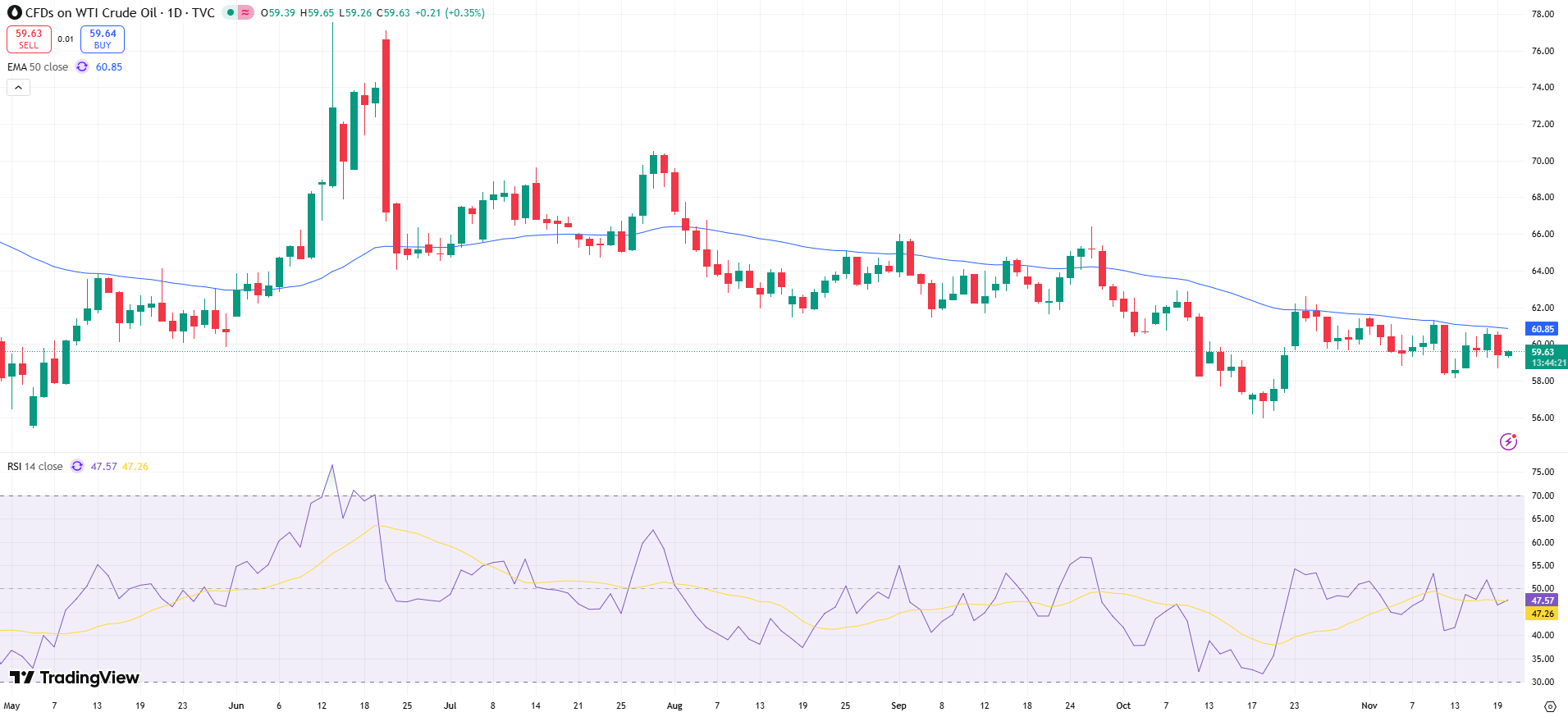
Despite supply fears, prices found support from a larger-than-expected U.S. inventory draw. The Energy Information Administration reported that crude stockpiles fell 3.4 million barrels to 424.2 million in the week ending November 14, far surpassing analyst expectations of a 603,000-barrel decline.
The draw reflected stronger refining activity, driven by solid margins, and healthy export demand for U.S. crude. However, the build in gasoline and distillate inventories—the first increase in more than a month—raised concerns about cooling domestic consumption.
For now, the market remains delicately balanced between geopolitical risk, shifting sanctions expectations, and mixed demand signals.
Sources & Methodology
Primary-source standard: Market-moving facts should link to original data releases, regulator notices, company filings or official project announcements whenever available. Secondary reporting is used for additional context, not as a substitute for original evidence.
Page last reviewed: