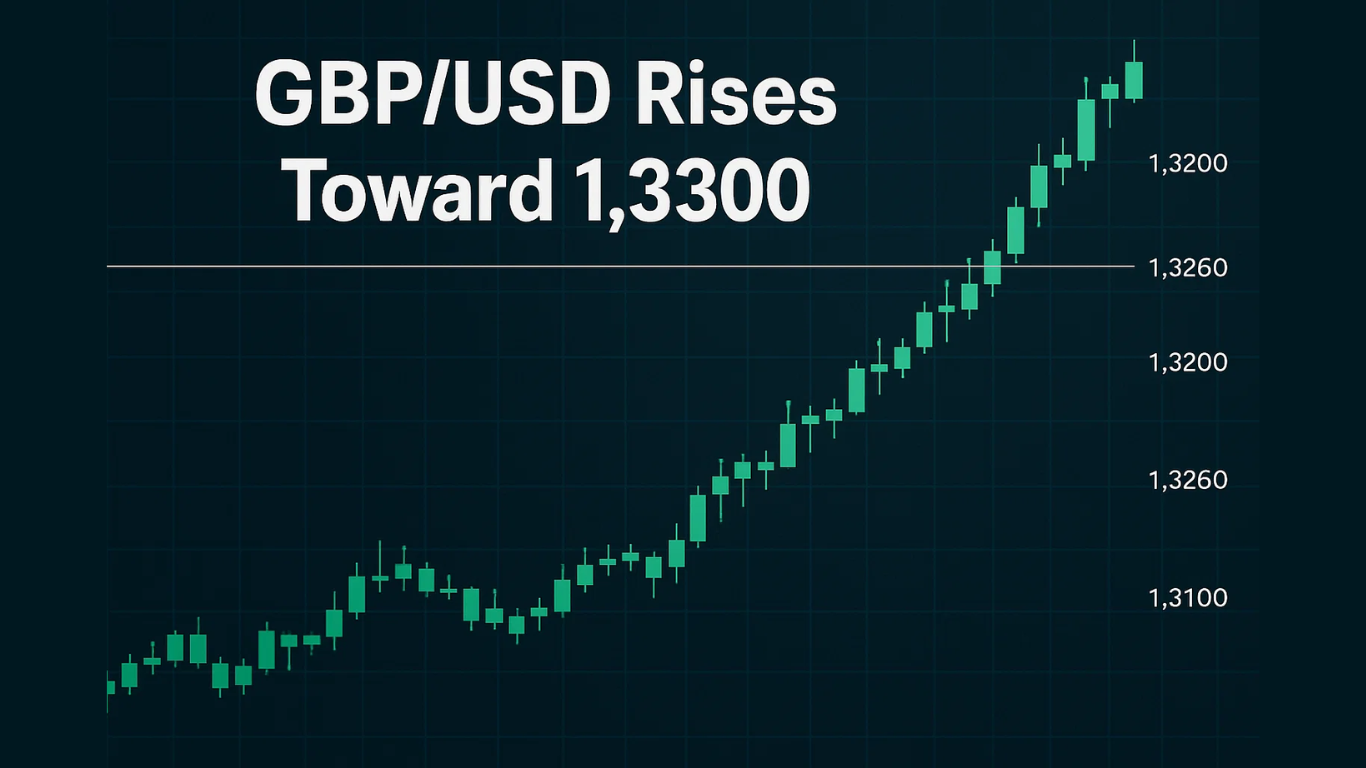
The British pound extended its climb against the U.S. dollar for a seventh straight session on Friday, rising toward 1.3240 during Asian trading hours. The move reflects renewed pressure on the U.S. dollar as markets increasingly expect the Federal Reserve to cut interest rates at its December meeting. Traders are now assigning an 85% probability to a cut, according to the CME FedWatch Tool.
The pair’s advance above the 1.3200 level has bolstered technical confidence among sterling bulls. Support remains firm near 1.3145 and 1.3100, levels that have attracted dip-buyers through November. A sustained drop below those thresholds would challenge the pair’s upward bias and expose the 1.3040–1.3035 region, with a potential retreat toward the 1.3000 psychological handle.
However, momentum continues to favor the pound as long as the dollar struggles to extend its modest rebound from a one-week low.
Fed Expectations Anchor Dollar Weakness
A mixed batch of U.S. macro data this week failed to change investors’ conviction that monetary easing is near. Producer Price Index data aligned with expectations and pointed to slowing inflation, while retail sales underperformed. These developments offset stronger readings in durable goods orders and jobless claims, the latter falling to a seven-month low.
Several Fed officials have reinforced the possibility of a December cut, adding to the downward pressure on the dollar. Markets are also weighing Bloomberg reports that Kevin Hassett, a key adviser to President Trump, is the frontrunner to replace Jerome Powell as Fed Chair—an appointment many believe would tilt policy decisively dovish.
Key pressure points for USD traders:
- Rising odds of a December rate cut
- Speculation over a more dovish incoming Fed Chair
- Easing inflation signals across multiple data releases
This backdrop makes a stronger dollar recovery difficult, supporting further upside in GBP/USD.
UK Growth Outlook Lifts Sterling
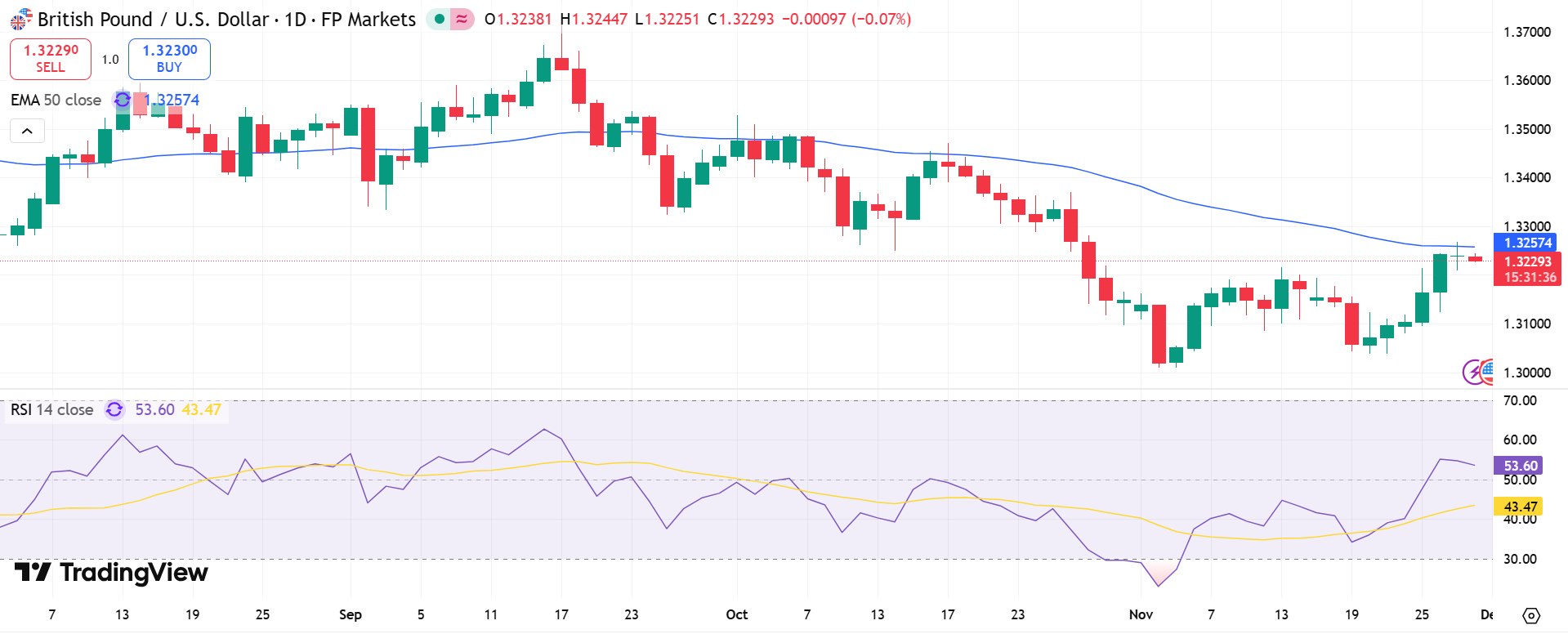
Across the Atlantic, the British pound is drawing support from improving domestic conditions. The UK’s autumn budget, delivered by Chancellor Rachel Reeves, produced a muted market response but underscored a brighter economic trajectory. The Office for Budget Responsibility now expects 1.5% growth in 2025, up from its earlier 1% forecast.
The upgraded projections, combined with easing political uncertainty, are helping stabilize sentiment toward sterling. That said, expectations for a potential Bank of England rate cut next month could temper bullish conviction.
On the topside, resistance remains clustered at 1.3265–1.3270, with a decisive break clearing the path toward the 1.3300 level—the area marked by the 200-day Simple Moving Average. A move above that threshold would open room toward 1.3365–1.3370 and potentially 1.3400.
Sources & Methodology
Primary-source standard: Market-moving facts should link to original data releases, regulator notices, company filings or official project announcements whenever available. Secondary reporting is used for additional context, not as a substitute for original evidence.
Page last reviewed: