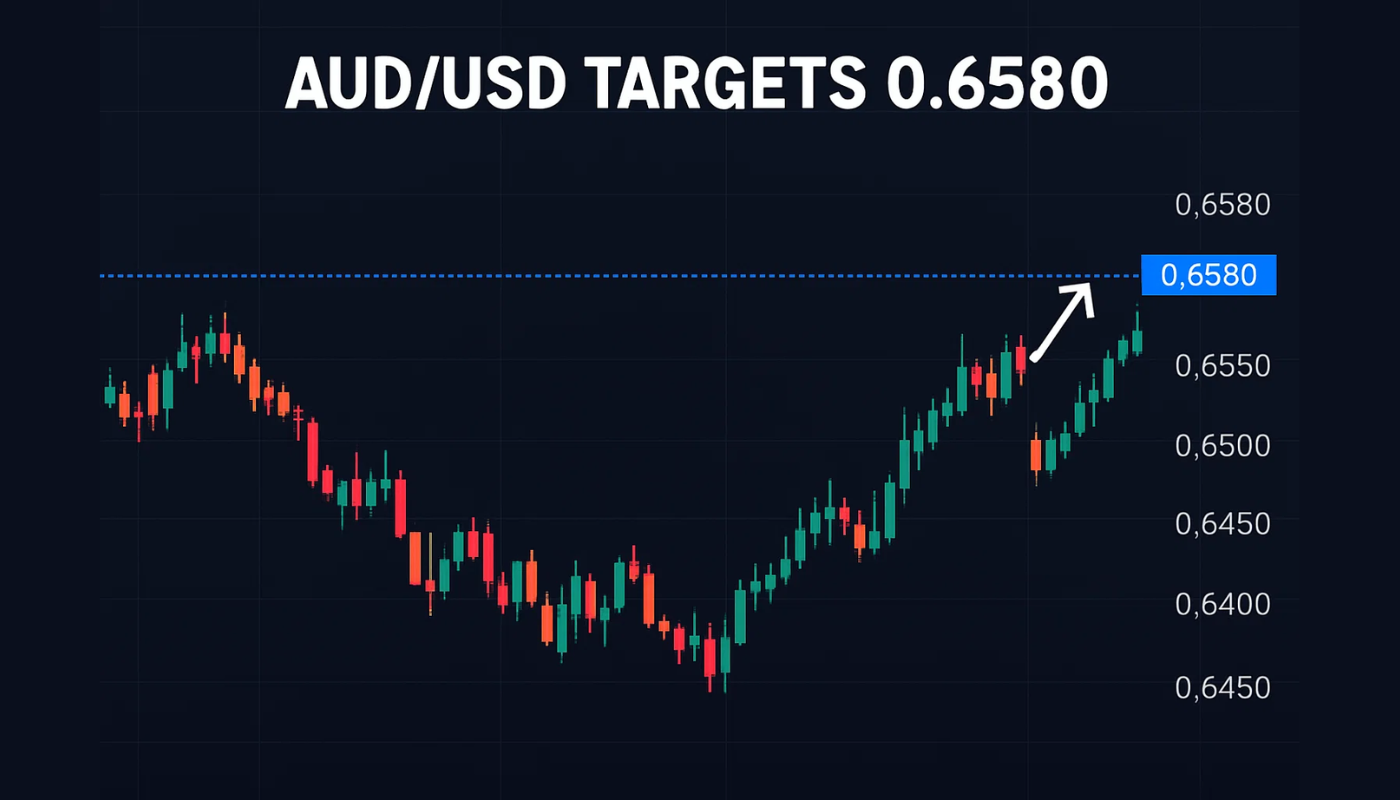
The Australian Dollar maintained a firm tone on Tuesday, consolidating just below 0.6550 after easing from a two-week high. A weaker U.S. Dollar, steadier risk appetite, and the Reserve Bank of Australia’s hawkish stance continue to support the pair. With markets positioning cautiously ahead of Wednesday’s Q3 GDP release, the AUD/USD remains biased to the upside.
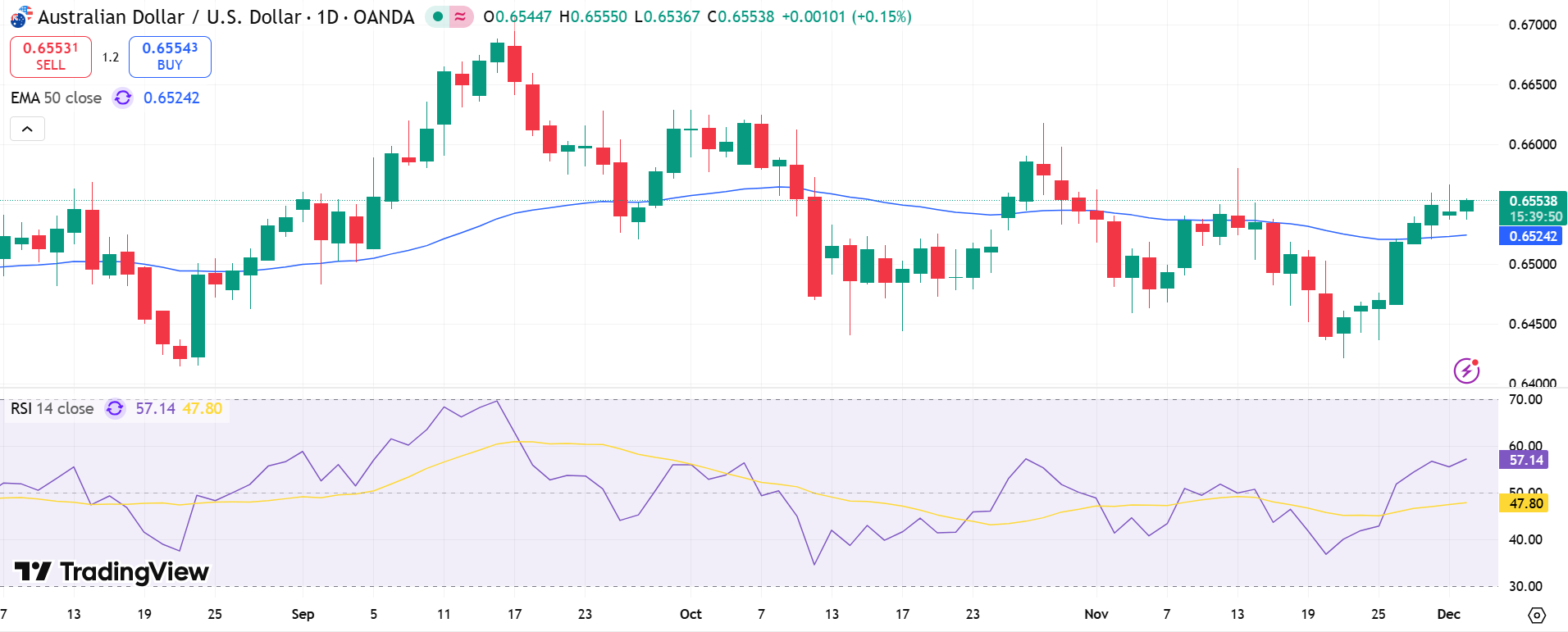
The currency has now logged seven consecutive daily advances, putting the November peak near 0.6580 back in focus. A break above that level would expose 0.6629, the October high, before the broader 2025 ceiling at 0.6707.
Downside risks remain contained for now, but a slide below the 200-day moving average at 0.6463 would open the door to a deeper pullback toward 0.6421 and 0.6414, levels tied to the November and August lows.
Momentum indicators also favor incremental gains. The RSI has risen above 57, signaling strengthening buyer interest, while the ADX pushing beyond 14 reflects the early stages of a more established trend.
Key Technical Levels:
- Resistance: 0.6580, 0.6629, 0.6707
- Support: 0.6463, 0.6421, 0.6414
Domestic Data Signals Slow but Steady Progress
Australia’s macroeconomic backdrop continues to offer measured support. Recent PMI readings helped stabilize sentiment, with Manufacturing returning to expansion at 51.6 and Services improving to 52.7. Retail Sales grew 4.3% YoY in September, and the trade surplus widened to A$3.94 billion, reinforcing external-sector resilience.
GDP remains modest but intact: the economy expanded 0.6% QoQ and 1.1% YoY, enough to reassure policymakers that underlying momentum has not collapsed. The labor market is also holding firm. October’s Unemployment Rate dipped to 4.3%, while employment jumped 42.2K, hinting that recent soft patches may be stabilizing.
Where challenges persist is inflation. October CPI rose 3.8% YoY, the fastest pace in 17 months, while the trimmed mean climbed to 3.3% YoY, keeping pressure on the RBA to remain vigilant. The release was notable as the first full monthly CPI dataset since the ABS shifted away from quarterly reporting.
China and RBA Policy Offer Balanced Crosswinds
China remains a critical variable for the Aussie, even if the recovery there is uneven. Q3 GDP expanded 4.0% YoY, and Retail Sales gained 2.9%, but Manufacturing and Services PMIs softened, and trade momentum weakened. The PBoC kept key lending rates unchanged, signaling caution rather than large-scale stimulus.
Meanwhile, the RBA held rates steady at 3.60% in November but left the door open to additional tightening. Policymakers continue to highlight sticky inflation and a tight labor market as reasons for patience. Markets reflect this sentiment, pricing in almost no short-term adjustments and only minimal tightening through 2026.
For now, a softer USD, firmer domestic data, and restrained RBA guidance keep the AUD/USD supported, though gains from here are likely to remain gradual and closely contested.
Sources & Methodology
Primary-source standard: Market-moving facts should link to original data releases, regulator notices, company filings or official project announcements whenever available. Secondary reporting is used for additional context, not as a substitute for original evidence.
Page last reviewed: