
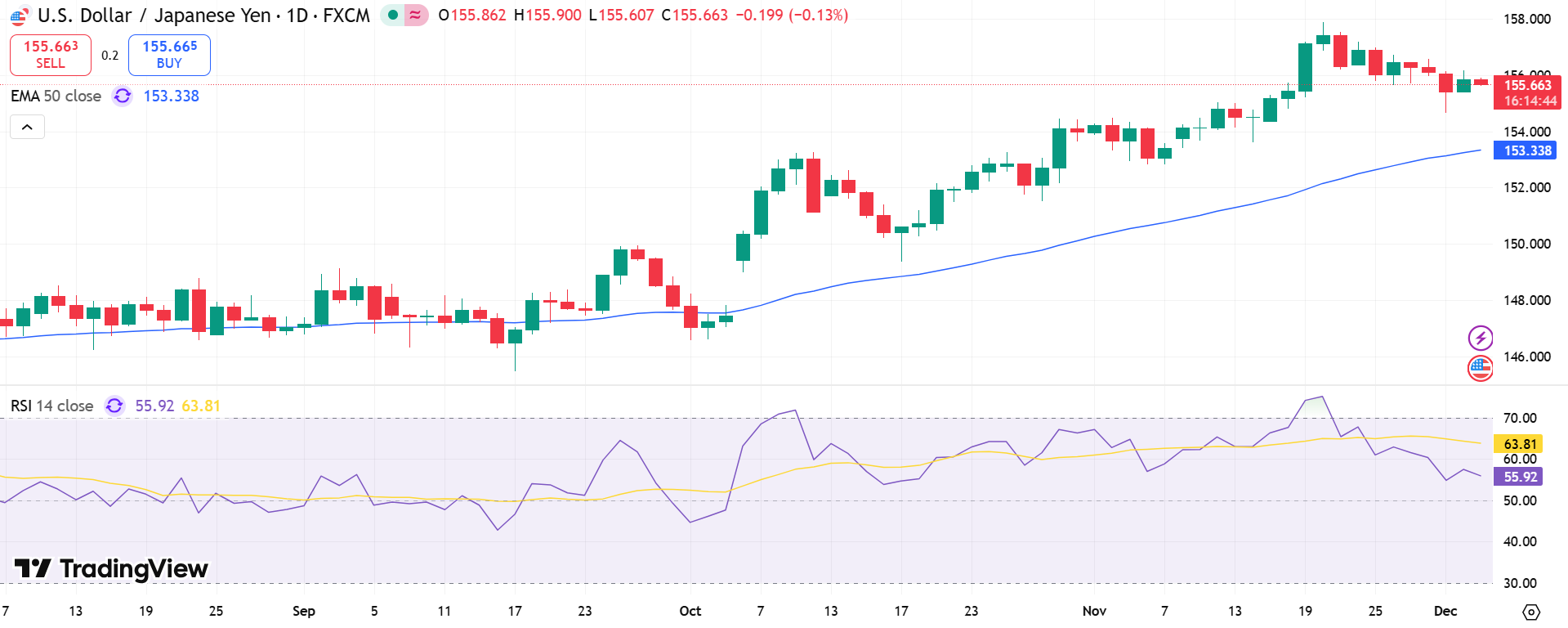
The USD/JPY pair slipped toward 155.50 in early Asian trading on Wednesday, retreating from its overnight rebound near 156.00 as the U.S. Dollar lost momentum. Market sentiment is adjusting rapidly to rising expectations of a Federal Reserve rate cut, while the Japanese Yen remains supported by wagers that the Bank of Japan could raise rates as early as this month. Traders now shift their attention to upcoming U.S. ADP employment data and the ISM Services PMI, both key indicators that may reshape rate expectations.
Tuesday’s European session briefly lifted the Dollar after risk appetite improved across global markets. That modest recovery carried USD/JPY from Monday’s lows near 154.65 back above 156.00. However, the strength proved temporary as investors reassessed the widening policy divergence between the Federal Reserve and the Bank of Japan.
BoJ Signals Add Upward Pressure on the Yen
The Japanese Yen was the weakest performer across major currencies on Tuesday, pressured by improving market sentiment that encouraged renewed flows into risk assets. But underlying support for the Yen remains intact following unexpectedly direct comments from BoJ Governor Kazuo Ueda.
Ueda unsettled markets on Monday by acknowledging the central bank was weighing the “pros and cons” of raising rates in December. The rare hawkish shift triggered broad declines in global equities and bonds, while sending the Yen sharply higher as investors rapidly repositioned.
A successful Japanese Government Bond auction on Tuesday helped calm nerves after Monday’s volatility. Even with sentiment stabilizing, risk appetite remains fragile, and many investors believe the BoJ is preparing for a more definitive policy recalibration in the coming months.
Key factors supporting Yen strength include:
- BoJ consideration of a December rate hike
- Strong demand at the latest JGB auction
- Global markets adjusting to tighter Japanese policy
Fed Data Adds to Downside Pressure on the Dollar
Fresh U.S. data also contributed to the Dollar’s retreat. Monday’s ISM Manufacturing PMI showed contraction for a ninth straight month, with declines in both new orders and employment. Inflation components ticked higher, adding complexity to the Fed’s policy outlook.
The data have reinforced expectations that the Federal Reserve will cut rates at next week’s meeting, with markets pricing in multiple reductions through the year. In contrast, the BoJ appears poised to tighten further, setting up a policy divergence that could limit future Dollar rallies against the Yen.
With both central banks pulling in opposite directions, USD/JPY faces increasing sensitivity to incoming economic data and rate signals—particularly those arriving over the next 72 hours.
Sources & Methodology
Primary-source standard: Market-moving facts should link to original data releases, regulator notices, company filings or official project announcements whenever available. Secondary reporting is used for additional context, not as a substitute for original evidence.
Page last reviewed: