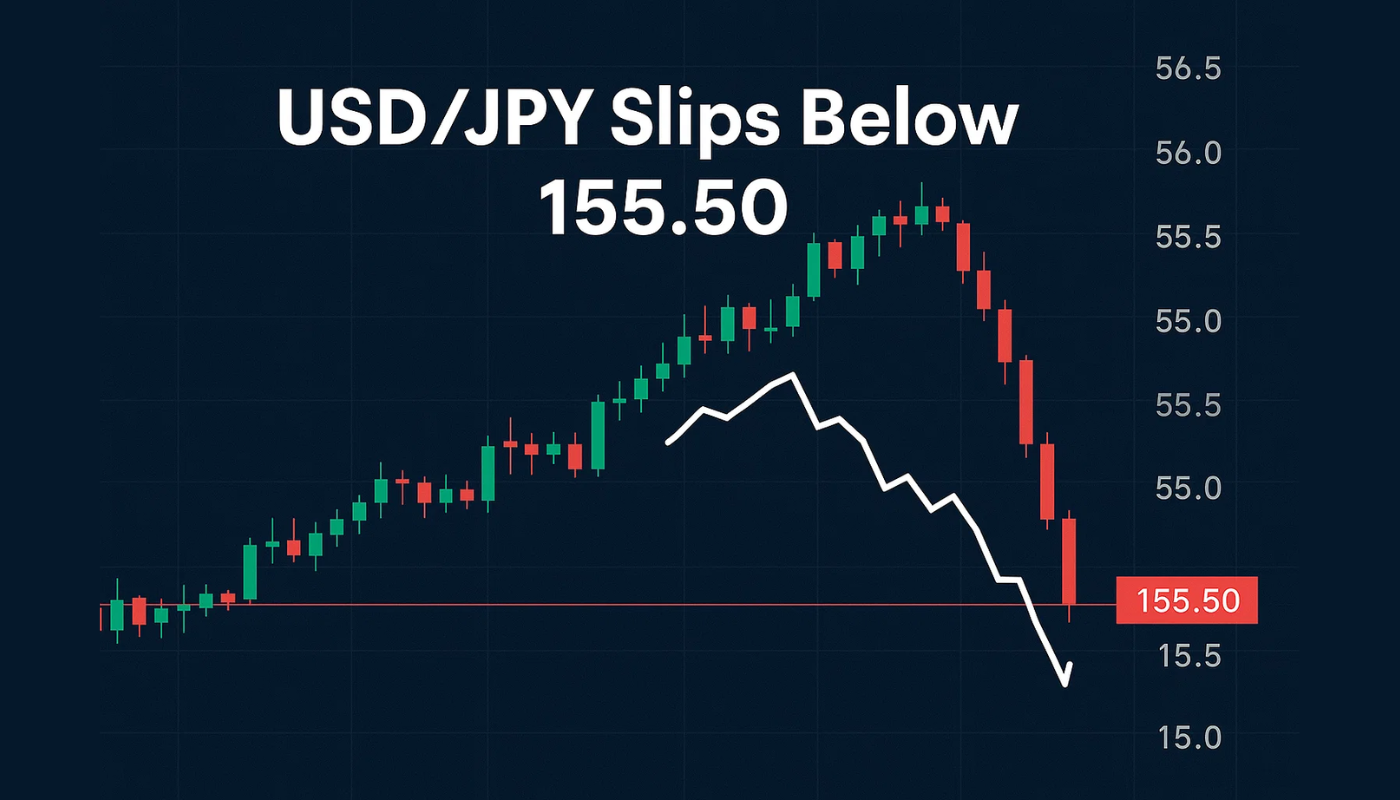
The U.S. dollar slid against the Japanese yen in early Asian trading, pushing USD/JPY below 155.50 as investors leaned into a widening divergence between U.S. and Japanese monetary policy. The move reflects a softer dollar following the Federal Reserve’s latest rate cut and a growing belief that the Bank of Japan (BoJ) is edging closer to policy normalization.
The Fed trimmed borrowing costs by 25 basis points last week and signaled a cautious path ahead, projecting just one additional rate cut in 2026. Chair Jerome Powell underscored downside risks to the labor market, reinforcing a dovish tone that has kept the dollar near a two-month low. In contrast, expectations are building that the BoJ could raise rates as soon as its December 18–19 meeting, a shift that continues to support the yen despite a generally risk-on global mood.
While stronger equity markets have reduced demand for traditional safe havens, yen sellers remain restrained by the prospect of a near-term BoJ move.
Technical Levels Signal Further Risk
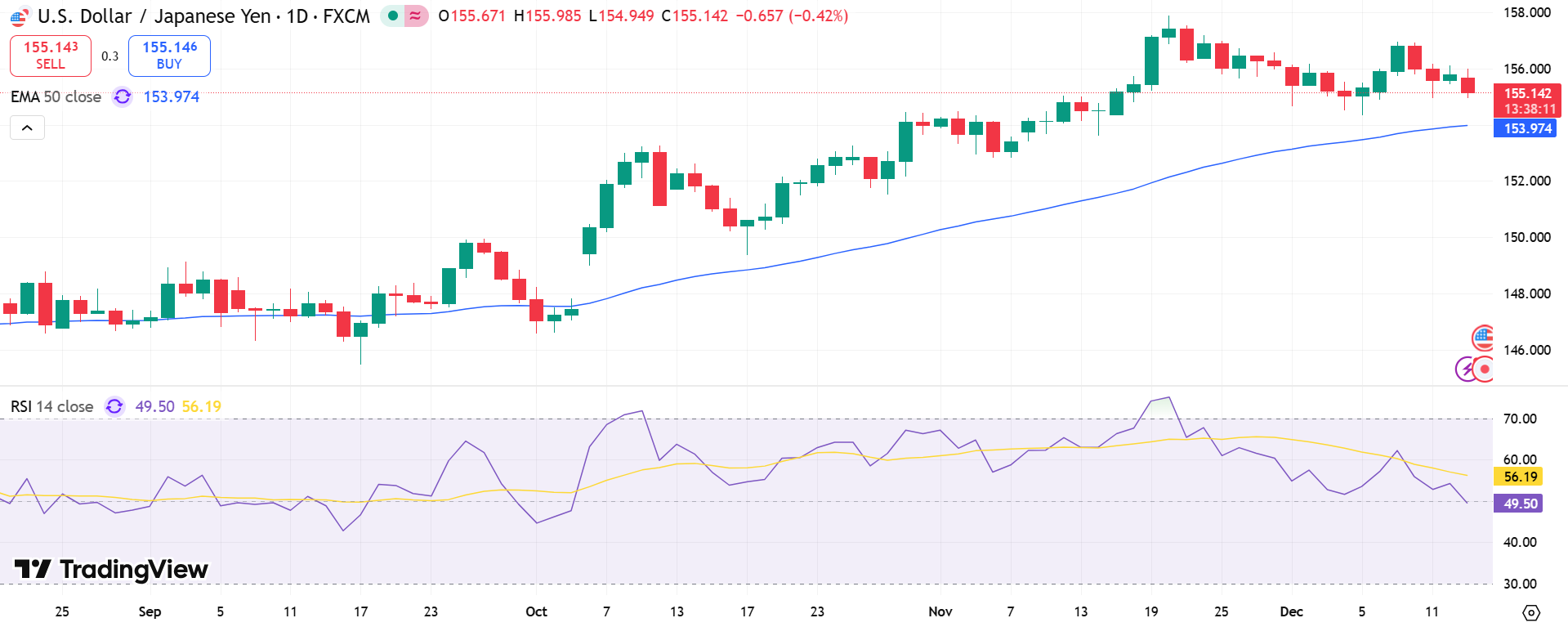
From a chart perspective, the pair’s inability to reclaim higher ground leaves downside risks intact. Resistance is clustered near 156.00, where the overnight swing high could cap any rebound. A sustained break above that level may spark short covering toward 157.00, followed by 157.45, with a more formidable ceiling near the 158.00 multi-month high set in November.
On the downside, traders are watching the 155.00 psychological mark as a key trigger. A confirmed move below it could accelerate losses toward last week’s monthly trough around 154.35, then 154.00.
Key technical reference points include:
- Immediate resistance: 156.00, then 157.00
- Near-term support: 155.00, followed by 154.35
- Deeper downside risk: 153.60 and potentially sub-152.00
Momentum remains cautious, suggesting rallies may struggle without a clear shift in fundamentals.
BoJ Signals Keep Yen Bulls Engaged
Despite softer safe-haven demand, yen bulls are not backing down. Japan’s Corporate Goods Price Index shows inflation holding above historical norms, reinforcing Governor Kazuo Ueda’s recent remarks that conditions for meeting the BoJ’s price stability goals are improving. Those data points strengthen the case for further policy normalization after years of ultra-loose settings.
Political noise around Japan’s public finances has added volatility, but it has not derailed expectations of a gradual tightening cycle. Meanwhile, the dollar continues to face headwinds as markets price in a slower U.S. economy and a Fed reluctant to tighten financial conditions further.
With no major U.S. data releases due, attention shifts to speeches from FOMC members, which could shape short-term dollar sentiment. Still, the dominant driver for USD/JPY remains next week’s BoJ decision, where any hint of a rate hike could reinforce the yen’s recent gains and keep the pair under pressure below 155.50.
Sources & Methodology
Primary-source standard: Market-moving facts should link to original data releases, regulator notices, company filings or official project announcements whenever available. Secondary reporting is used for additional context, not as a substitute for original evidence.
Page last reviewed: