
Oil prices declined for a second straight session as signs of progress toward a Russia-Ukraine peace agreement raised expectations that sanctions on Russian crude could eventually be eased. That prospect added fresh pressure to a market already grappling with concerns about oversupply.
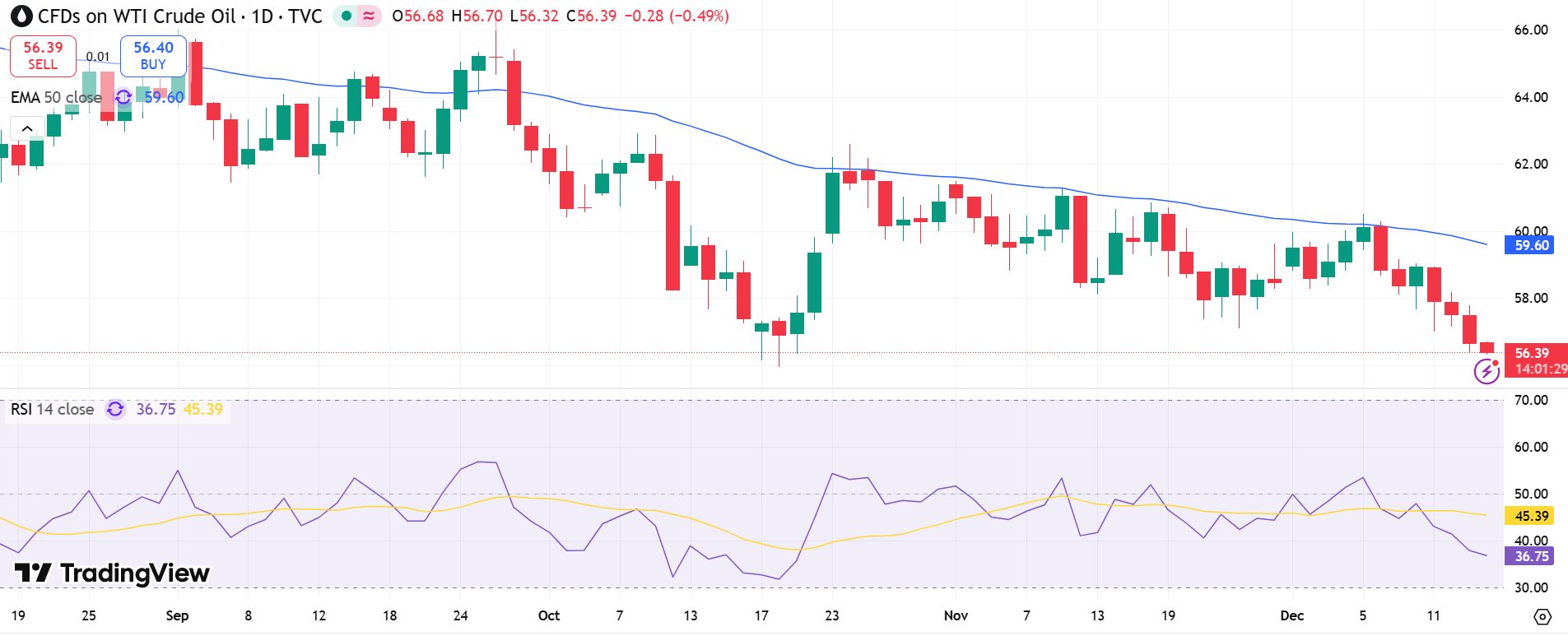
Brent crude fell 0.6% to $60.21 a barrel, while U.S. West Texas Intermediate (WTI) slipped 0.5% to $56.52 in early Asian trading. Both benchmarks are now trading near multi-week lows after failing to sustain recent rebounds.
Analysts say the market reaction reflects growing confidence that diplomatic momentum is building. Reports that the United States is considering NATO-style security guarantees for Ukraine, alongside positive feedback from European negotiators, have strengthened expectations that talks may move closer to a negotiated settlement. While territorial issues remain unresolved, even partial progress has been enough to shift sentiment.
According to ANZ, optimism around diplomacy has revived concerns that U.S. sanctions on Russian oil producers could be rolled back, potentially releasing additional supply into an already well-stocked global market.
China Data Raises Demand Concerns
Demand-side worries intensified after weaker-than-expected Chinese economic data signaled slowing momentum in the world’s largest crude importer. Official figures showed factory output growth slowed to a 15-month low, while retail sales rose at their weakest pace since December 2022, when China was still grappling with pandemic disruptions.
The data reinforced fears that China’s strategy of leaning on exports to offset soft domestic demand may be losing traction. A prolonged slowdown would weigh heavily on oil consumption at a time when structural shifts are already reshaping demand.
Key pressure points for oil demand include:
- Slower industrial activity reducing fuel and diesel use
- Weak consumer spending limiting transportation demand
- Rapid electric vehicle adoption cutting gasoline consumption
- Persistent deflationary risks dampening energy-intensive growth
Market analysts note that even modest demand disappointments in China can have an outsized impact on prices, given the country’s scale and its central role in global energy flows.
Supply Risks Fade Despite Venezuela Tensions
Concerns about supply disruptions eased despite recent U.S. actions against Venezuela. Last week’s seizure of a Venezuelan oil tanker initially raised fears of tighter flows, but traders say the impact has been muted.
A glut of floating storage, combined with heavy Chinese buying of Venezuelan crude ahead of potential sanctions, has cushioned the market. These factors have limited any sustained upside response to geopolitical risks in Latin America.
For now, oil prices appear caught between rising geopolitical optimism and weakening demand fundamentals. With the prospect of more Russian barrels returning and China’s economy losing momentum, traders remain cautious. Unless demand data improves or supply tightens unexpectedly, the balance of risks continues to tilt to the downside.
Sources & Methodology
Primary-source standard: Market-moving facts should link to original data releases, regulator notices, company filings or official project announcements whenever available. Secondary reporting is used for additional context, not as a substitute for original evidence.
Page last reviewed: