The UK Office for National Statistics releases its labor market report at 07:00 GMT, placing sterling traders on alert at the start of the European session. The data arrive as GBP/USD trades modestly lower, reflecting a cautious tone ahead of a packed global calendar that includes U.S. Nonfarm Payrolls, Retail Sales, and PMI surveys later in the week.
For currency markets, UK employment figures matter because they shape expectations for Bank of England policy. Evidence of a cooling jobs market or easing wage growth would reinforce the case for further rate cuts, potentially pressuring the pound. Conversely, resilience in hiring or earnings could delay easing expectations and offer near-term support to GBP.
The broader backdrop remains complex. Investors are balancing domestic UK risks—such as higher taxation following the autumn budget—against global drivers led by the U.S. Federal Reserve, where policy decisions continue to dominate dollar direction.
GBP/USD Technical Levels in Focus
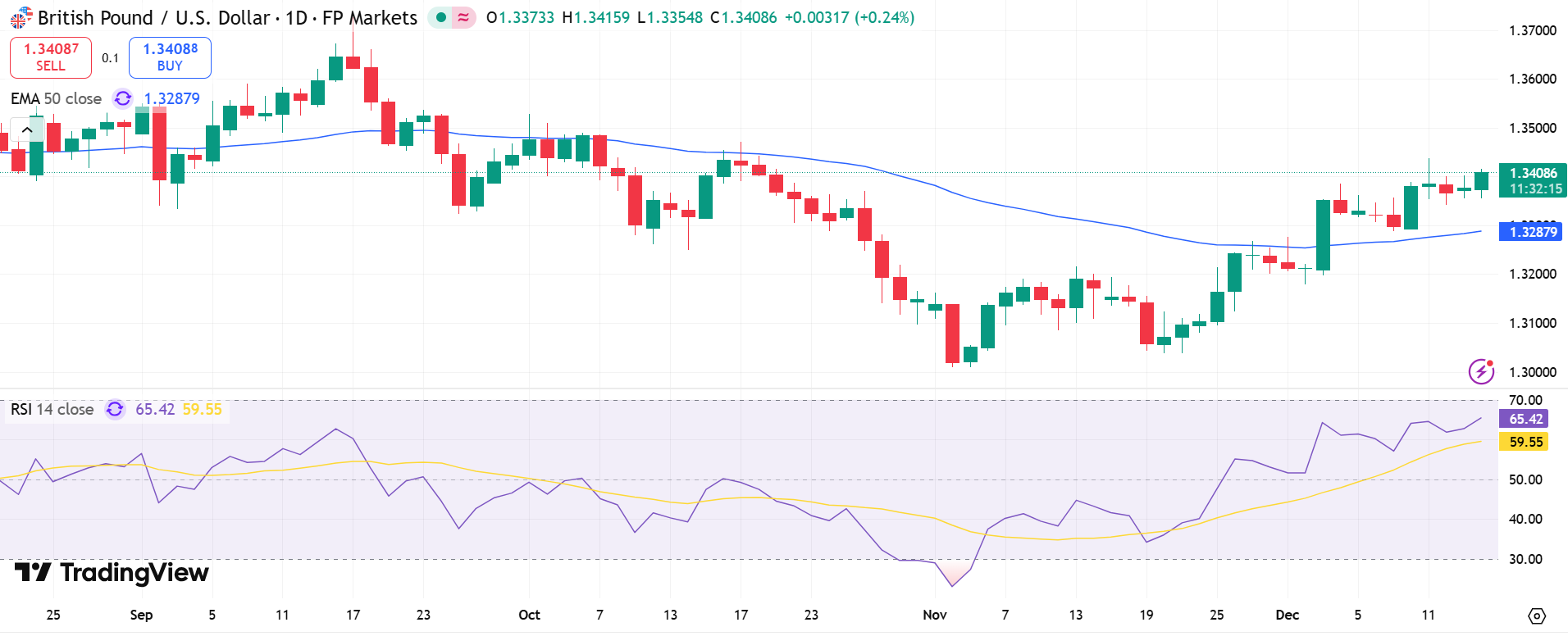
From a chart perspective, GBP/USD recently broke above a key 1.3275–1.3280 resistance zone, a confluence of the 200-day Simple Moving Average and the 38.2% Fibonacci retracement of the September–November decline. That move has strengthened the short-term bullish structure, with momentum indicators holding in positive territory.
Upside potential hinges on follow-through buying above the 1.3365 area, which marks the 50% retracement of the prior selloff. A sustained push could open the door to higher resistance levels:
- 1.3400, a psychologically important round number
- 1.3455–1.3460, aligned with the 61.8% retracement
- 1.3500, a longer-term sentiment marker
On the downside, pullbacks toward 1.3300 may attract dip buyers, while a deeper retracement could test 1.3225. A decisive break below 1.3200 would undermine the bullish bias and expose the pair to losses toward 1.3145 and potentially sub-1.3100 levels.
Fed and BoE Policy Expectations Drive FX
Monetary policy remains the dominant macro force. Markets are pricing in nearly a 90% probability that the Federal Reserve will cut rates by 25 basis points, lowering the target range to 3.50%–3.75%. However, investors anticipate a hawkish cut, with guidance signaling a potential pause in early 2026 due to sticky inflation and a resilient U.S. labor market. That stance could lend the dollar temporary support.
In the UK, expectations are moving in the opposite direction. Softer inflation readings and signs of labor market cooling have pushed markets to price an around 88% chance of a quarter-point BoE rate cut at the December meeting. If confirmed by the upcoming jobs data, this divergence could cap GBP/USD gains, even if the broader trend remains constructive.
In the near term, the UK labor report may set the tone—but sustained direction will depend on how swiftly policy expectations evolve on both sides of the Atlantic.
Sources & Methodology
Primary-source standard: Market-moving facts should link to original data releases, regulator notices, company filings or official project announcements whenever available. Secondary reporting is used for additional context, not as a substitute for original evidence.
Page last reviewed: