
Oil prices edged higher in Asian trading on Thursday, extending a rally driven by renewed geopolitical risk and tightening supply expectations. Brent crude futures for February delivery rose 0.7% to $60.08 a barrel, while U.S. West Texas Intermediate gained 0.8% to $56.39. The move kept both benchmarks near their strongest levels in weeks, despite mixed signals from U.S. inventory data.
The immediate catalyst was a directive from U.S. President Donald Trump ordering a blockade of oil tankers carrying Venezuelan crude already subject to American sanctions. The action escalates pressure on President Nicolás Maduro’s government and injects fresh uncertainty into global oil flows at a time when spare capacity is limited.
Markets have been sensitive to political risk since late November, with traders quick to price in potential disruptions even before physical supply is affected. That dynamic was evident again as prices held firm despite signs of softer fuel demand in the United States.
Venezuela and Russia Supply Risks
Venezuela’s oil sector has struggled for years under U.S. sanctions, with exports already well below historical levels. The new blockade raises the risk of further declines if enforcement tightens or shipping insurers pull back. Analysts say the impact will hinge on how aggressively Washington implements the measure and how long it remains in place.
At the same time, reports that the U.S. is preparing tougher sanctions on Russia’s energy industry have added to bullish sentiment. Russia remains one of the world’s largest crude exporters, and any curbs on its production, shipping, or export infrastructure could ripple quickly through global markets.
Key supply-side concerns now in focus include:
- Potential disruption to Venezuelan crude exports
- Possible restrictions on Russian oil shipping and logistics
- Limited short-term spare capacity among major producers
ING analysts noted that with Brent trading near $60 a barrel and markets expecting a surplus next year, Washington may see room to take a harder line without triggering an immediate price spike.
U.S. Inventory Data Tempers Rally
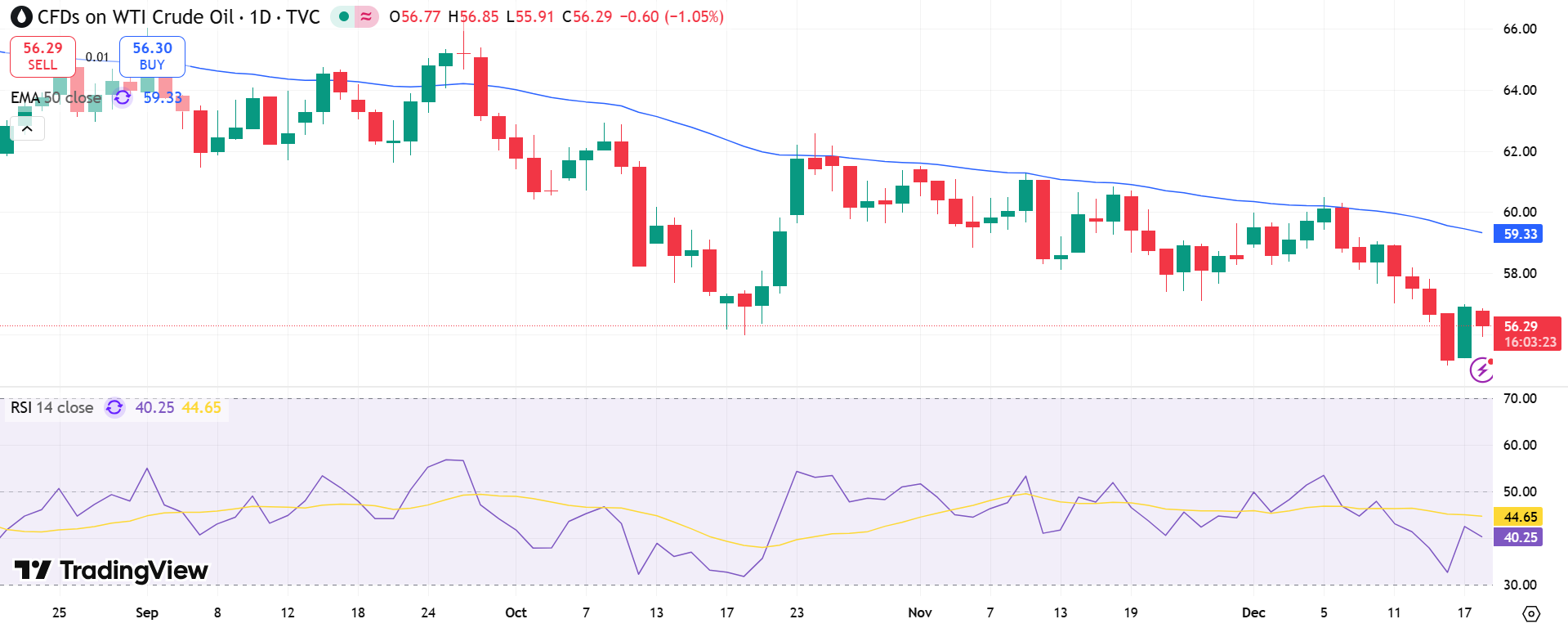
On the demand side, U.S. inventory data offered a more cautious signal. The Energy Information Administration reported that crude oil stockpiles fell by 1.27 million barrels in the week ended Dec. 12, smaller than forecasts for a 2.4 million-barrel draw. The muted decline suggested steady but unspectacular refinery demand.
More notably, refined fuel inventories climbed sharply. Gasoline stocks rose by 4.81 million barrels, while distillate fuel inventories increased by 1.71 million barrels. Those builds point to softer end-user demand, particularly as seasonal consumption slows.
For now, traders appear more focused on geopolitical risk than near-term demand weakness. With multiple supply flashpoints emerging at once, oil prices are finding support above recent lows, underscoring how quickly sentiment can turn when politics intersects with energy markets.
Sources & Methodology
Primary-source standard: Market-moving facts should link to original data releases, regulator notices, company filings or official project announcements whenever available. Secondary reporting is used for additional context, not as a substitute for original evidence.
Page last reviewed: