
Oil prices steadied in Asian trading on Wednesday, holding onto gains built over the past five sessions as investors weighed strong U.S. economic data against renewed supply risks tied to Venezuela. With global markets operating at reduced capacity during the Christmas holiday period, price movements were muted but directionally firm.
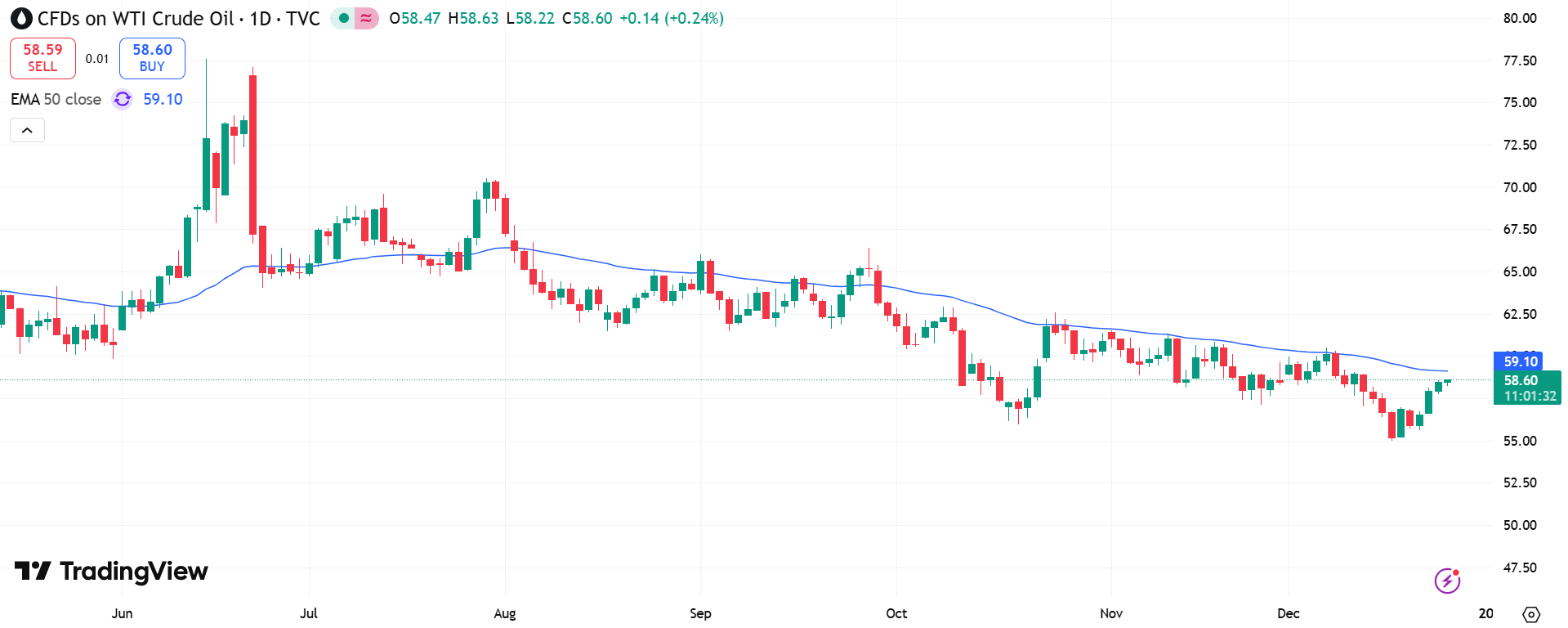
Brent crude futures for February hovered near $62.42 a barrel, while West Texas Intermediate (WTI) traded around $58.42 a barrel, each posting marginal gains of about 0.1%. The stability followed a sustained rally driven by geopolitical concerns and optimism over demand from the world’s largest oil consumer.
Oil Prices Stabilize After Five-Day Rally
The recent advance in oil prices reflects a market increasingly sensitive to supply-side risks, even when volumes are thin. Five consecutive sessions of gains pushed crude benchmarks to multi-week highs, supported by expectations that disruptions—however localized—can tighten balances in a finely tuned global market.
Holiday conditions tempered volatility. U.S. financial markets are set to close early for Christmas Eve and remain shut on Christmas Day, while trading activity across Europe and Asia has also slowed. In such environments, traders tend to avoid large positions, keeping prices range-bound despite supportive fundamentals.
Venezuela Tensions Add Supply Premium
Geopolitical developments involving the United States and Venezuela remained a central factor underpinning crude prices. Washington has intensified enforcement actions against vessels associated with Venezuelan oil exports, reviving concerns over potential interruptions to supply from the OPEC member.
Although Venezuela’s production is relatively small compared with major exporters, analysts note that any constraint reinforces a broader risk premium, particularly at a time when global energy markets remain vulnerable to sudden shocks.
Key geopolitical considerations include:
- Increased scrutiny of Venezuelan crude shipments
- Potential bottlenecks in export logistics
- Heightened sensitivity to regional instability
Strong U.S. Growth Offsets Inventory Surprise
Oil prices also drew support from robust U.S. economic data. The U.S. economy expanded at an annualized 4.3% in the third quarter, exceeding expectations and highlighting resilient consumer spending and business investment. The data eased fears of a near-term slowdown in fuel demand across the world’s largest oil-consuming nation.
However, sentiment was partially tempered by fresh inventory figures. Data from the American Petroleum Institute (API) showed U.S. crude stockpiles rose by approximately 2.4 million barrels in the week ended December 19, surprising markets that had anticipated a draw.
Traders are now focused on the forthcoming Energy Information Administration (EIA) report, which is expected to shed further light on refinery utilization, fuel demand, and overall supply trends. Until then, oil prices appear set to consolidate, balancing solid demand signals against emerging signs of ample supply.
Sources & Methodology
Primary-source standard: Market-moving facts should link to original data releases, regulator notices, company filings or official project announcements whenever available. Secondary reporting is used for additional context, not as a substitute for original evidence.
Page last reviewed: